What is a Baritone?
…and for that matter, what is a tenor horn?
Of all the different kinds of brass instruments out there, conical alto and tenor brass have by far the most confusing names. Even brass players often get the names of these instruments wrong, and you can hardly blame them when very different instruments are called the same thing in different parts of the world. There’s information around the Internet about each of these regional instruments, but I figured it was a good idea to collate all of them into one place, where they can be compared directly and we can hopefully clear up any confusion that anyone (from non-musician to brass nerd) might have.
Alto Horns
Alto horns aren’t quite the focus of this article, but we need to include them as there is some overlap with the instruments called tenor horns.
There are several types of instruments typically referred to as alto horns, and we’ll start with the two most common: German oval alto horns/althorns, and American alto horns.
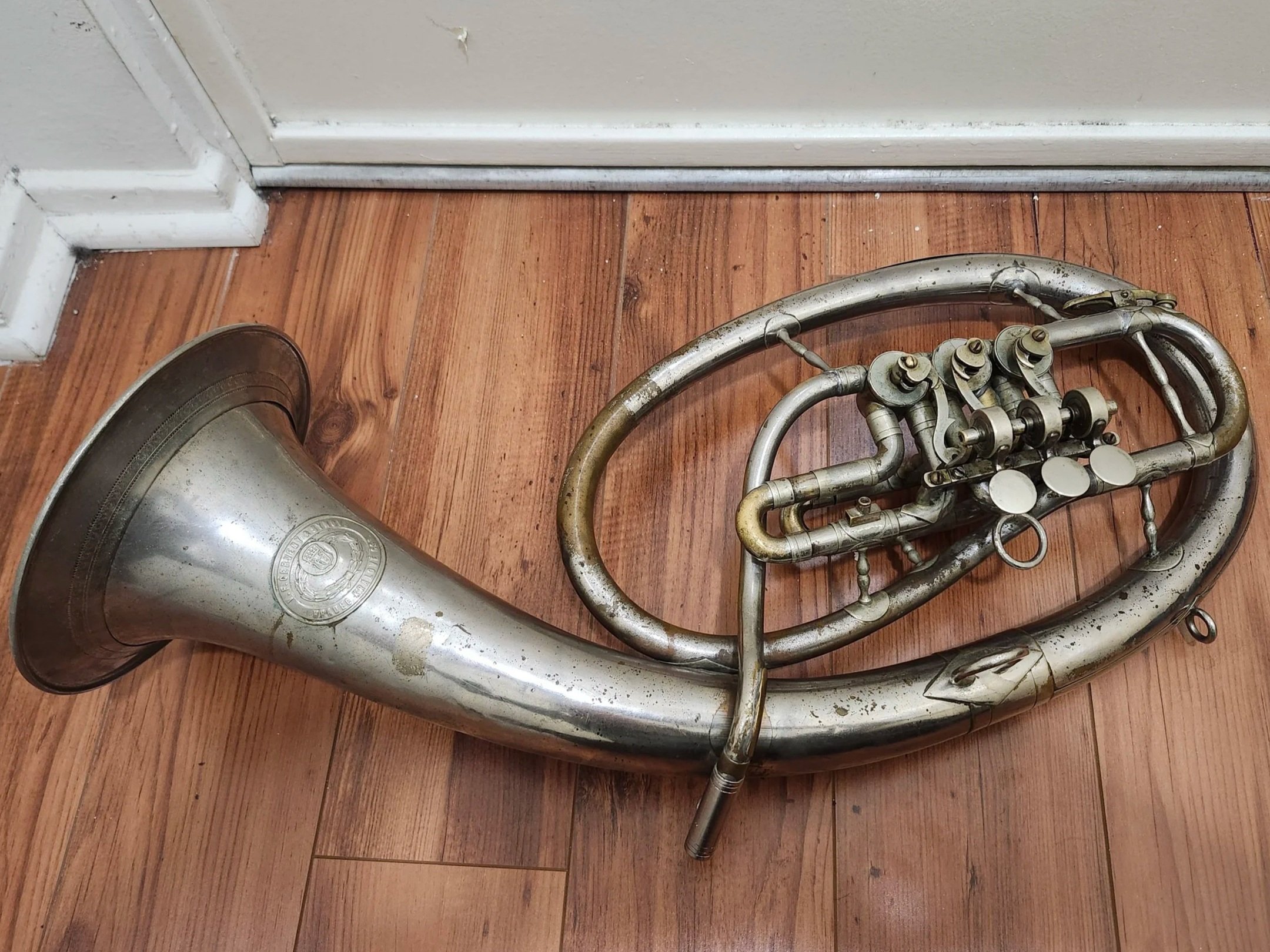
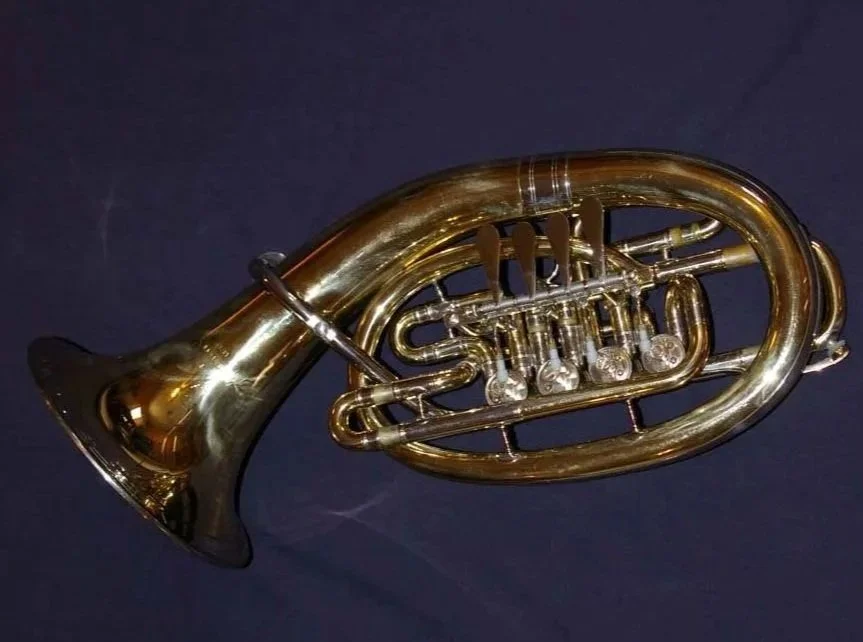
German oval alto horns are usually spelled althorn in German, and are the smallest standard member of the rotary valve conical oval instrument family. Jestaedt makes an oval flugelhorn above it, but that’s more of a novelty than a standard member of the family. These oval altos, especially those by Cerveny and Miraphone, are really alto tubas in taper and sound. They are mostly in E-flat, but some Miraphones are in F. There is even a 4-valve Miraphone with left-handed valves, for use by French horn players.
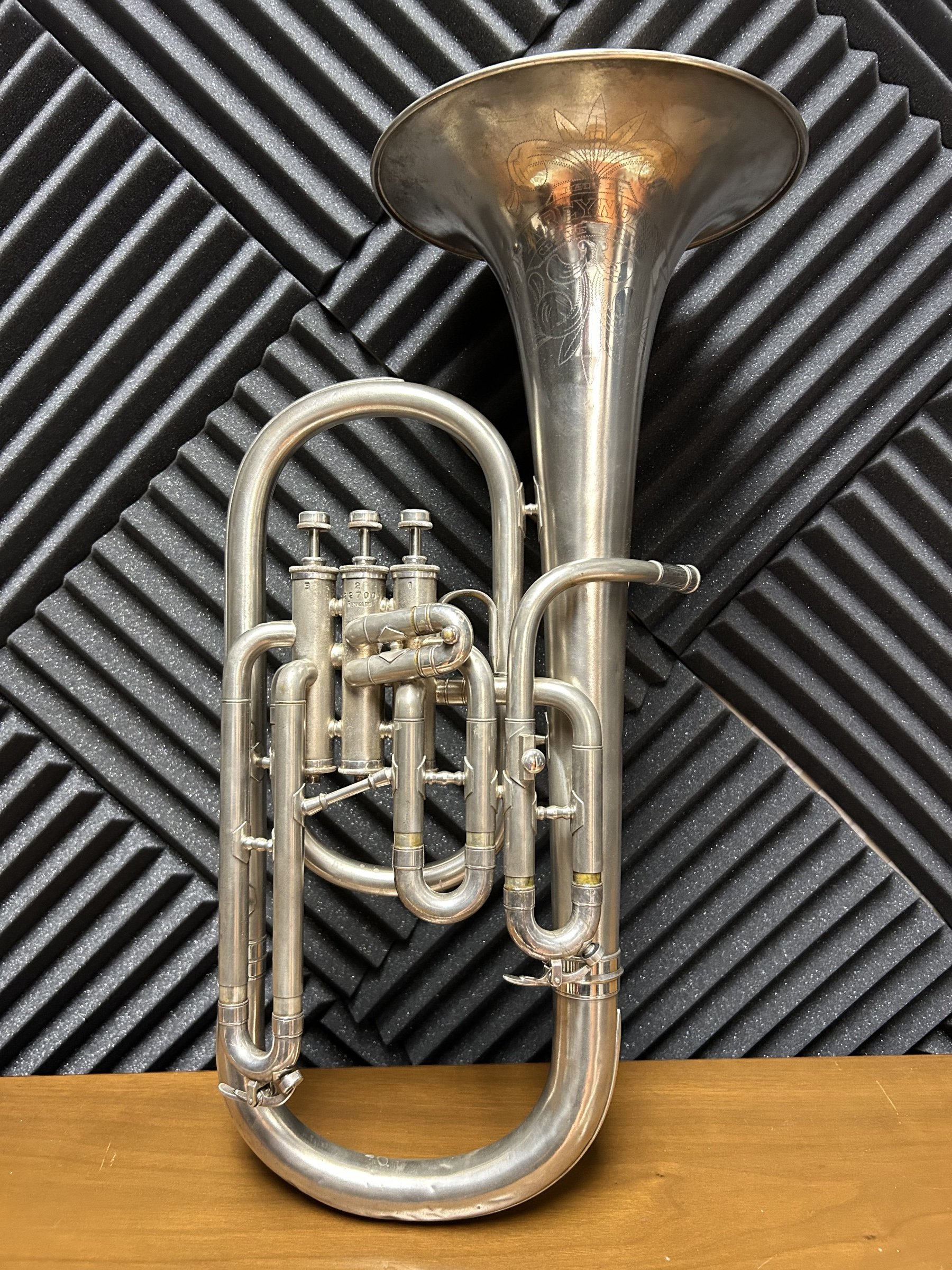
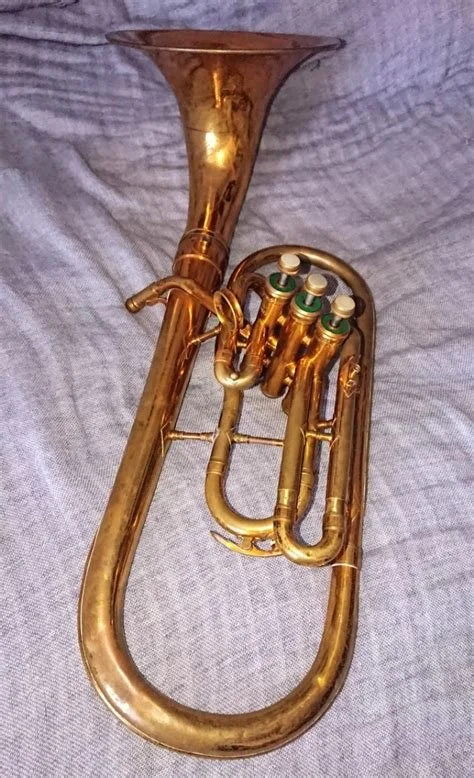
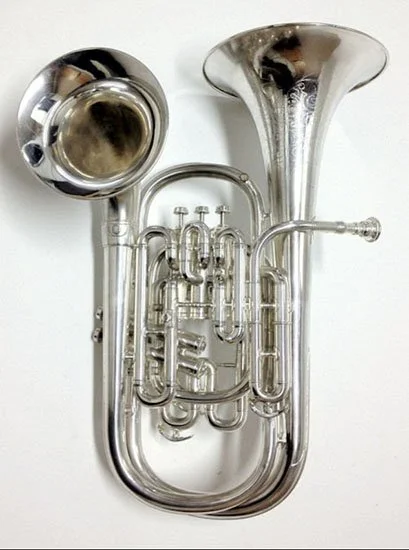
American alto horns were made in both upright bell and recording bell (bell-front) versions, with either top or front action pistons. Bore size also varied significantly, with some Conns being as large as .500”. Otherwise, they are the same basic instrument as what the British call a tenor horn, and the French historically called a tenor saxhorn. American alto horns were usually in E-flat like the British instrument, but there were plenty of models in F as well. In the later years of American alto production, King marketed their alto horns as “altoniums”, to match their trombonium.
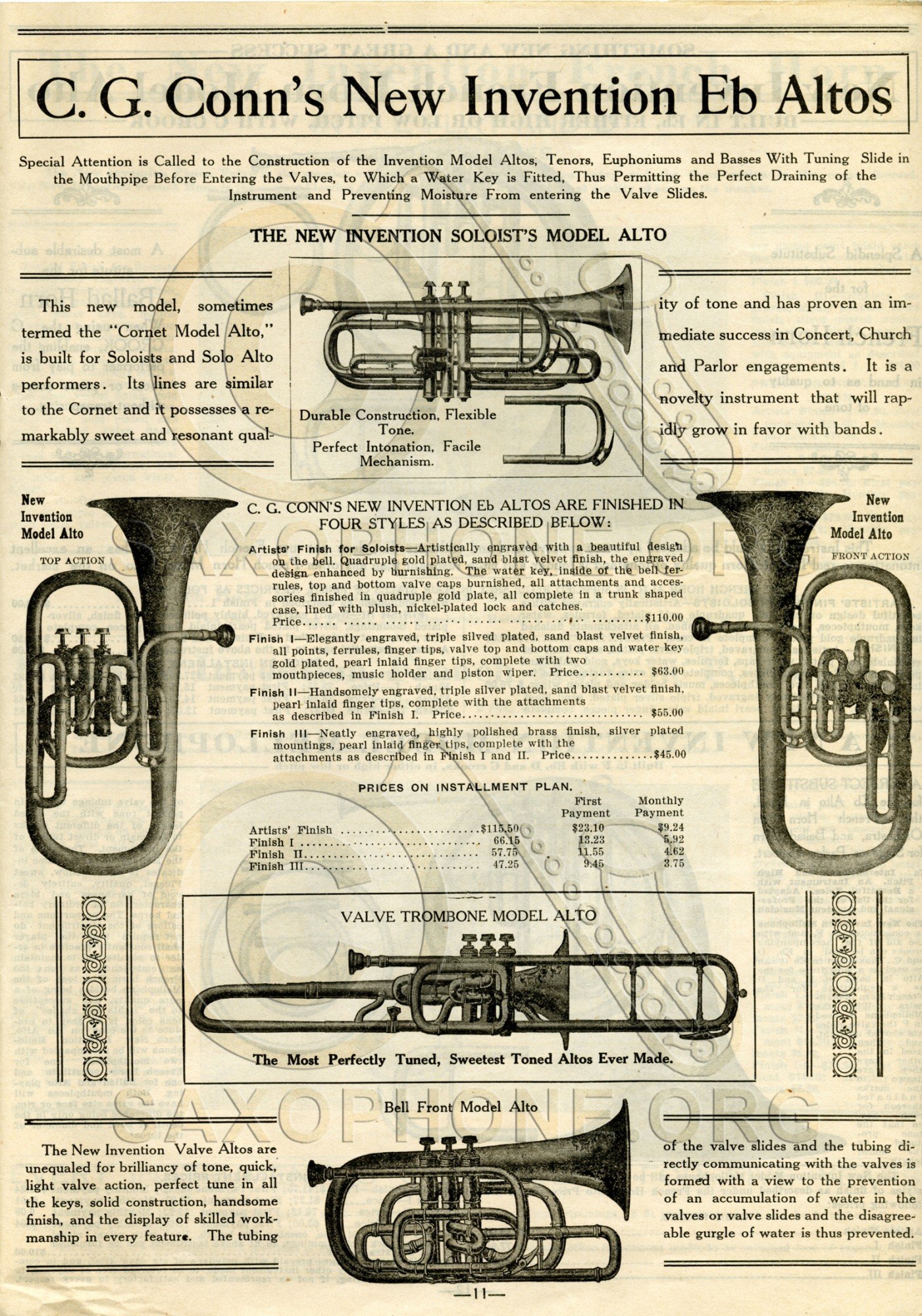
1913 Conn catalog excerpt (via saxophone.org)
Shown to the left is a page from a Conn catalog from 1913, which illustrates how the waters get further muddied as to what an “alto horn” can be, and what American makers will market various instruments as. We see top and action and front action alto horns as discussed above, but also shown are two different models of what was typically called a solo alto, i.e. an alto horn in trumpet shape. However, the two trumpet-shaped altos shown here have very different wraps and likely also totally different bell tapers, that are themselves different from the upright altos just by virtue of having a much smaller bell diameter. Yet they are all just called…altos.
This is only a preamble to the nonsense to come from American manufacturers later in this article.
Another type of alto horn is the European circular alto horn, which is sometimes called a Bohemian alto horn.
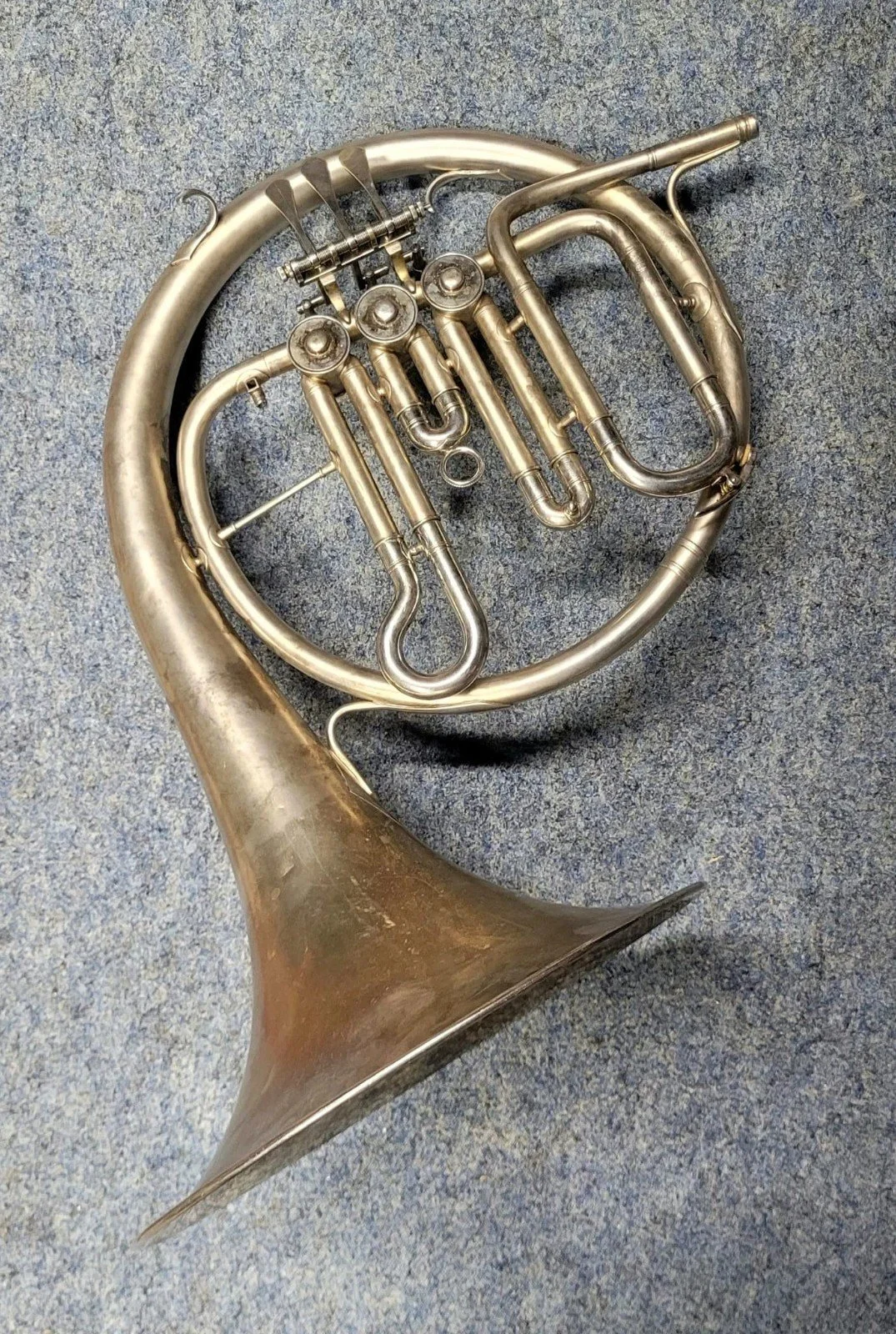
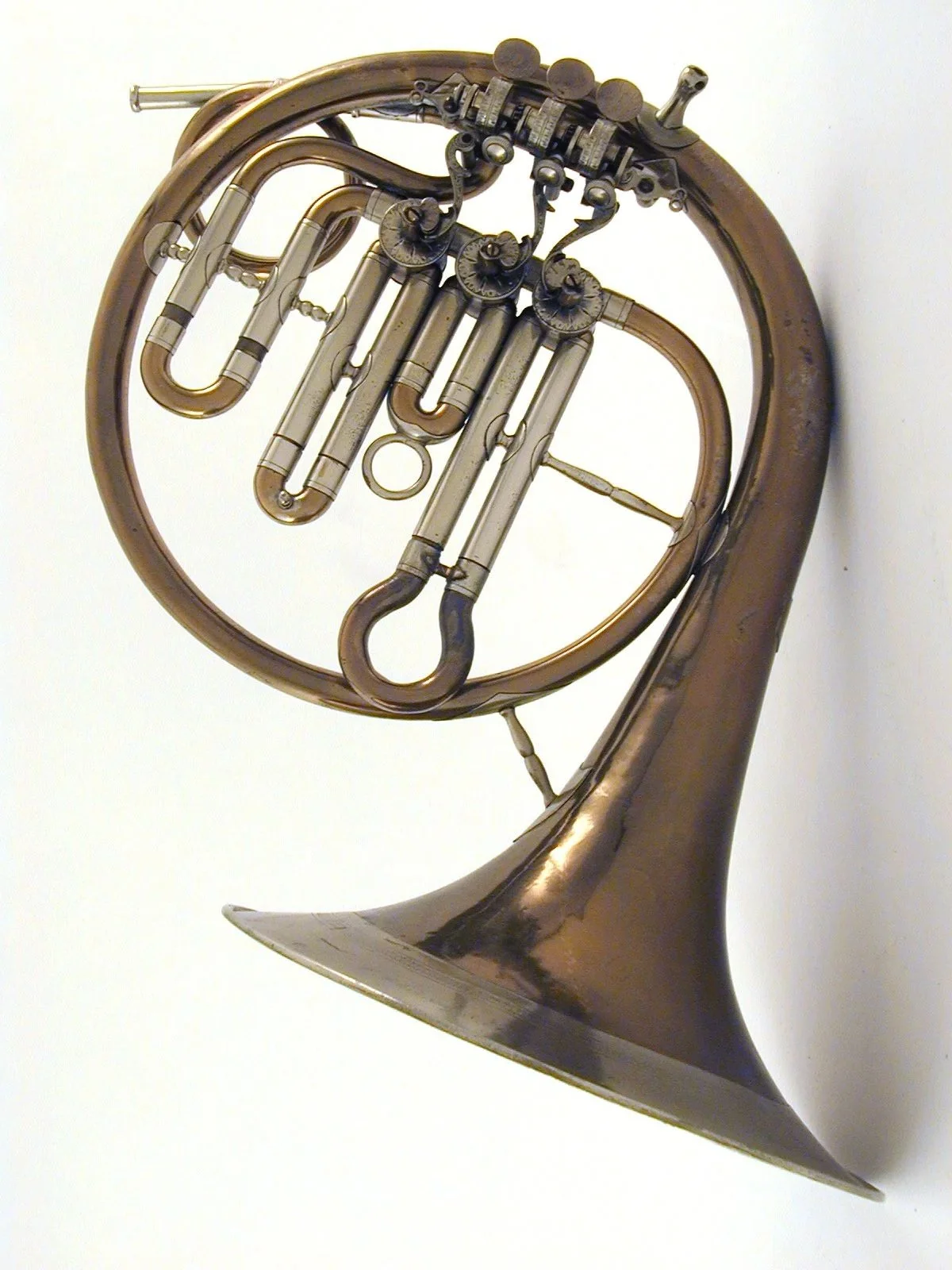
These rotary instruments are made in both right-handed and left-handed versions, and despite appearing to be French horns at first glance, they are closer to circular mellophones and are usually in E-flat. Circular mellophones themselves were sometimes marketed as circular altos in early-20th century American catalogs, along with other terms such as “concert horn” and “band/orchestra horn”, before everyone finally settled on “mellophone”.
V.F. Cerveny is usually credited as the inventor of the family of oval rotary instruments and the Bohemian alto. They still make both the circular alto (model CAH-501) and oval alto (CAH-511) to this day.
Tenor Horns
The British also have their own upright E-flat instrument like the American altos above, but they call it a tenor horn. This instrument really should be called an alto horn along with rest of them, but thanks to Adolphe Sax’s naming convention of his saxhorn family, what the French called the tenor saxhorn is called the tenor horn in the United Kingdom (and in British-style brass bands elsewhere in the world). This is the most developed and widely-used upright alto-type instrument in the world, and outside of the United States is the second most-used alto brass instrument of any sort behind the French horn.
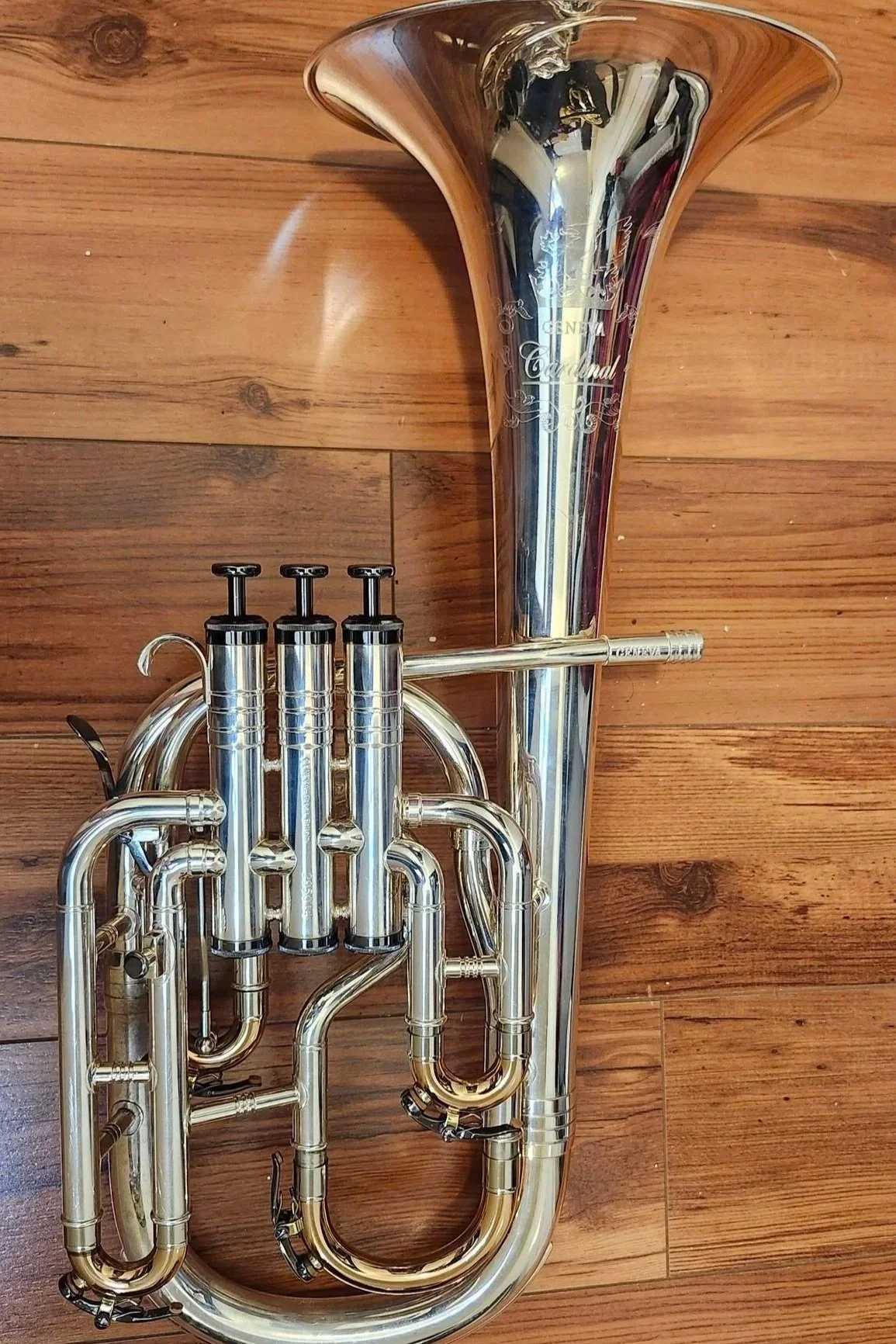
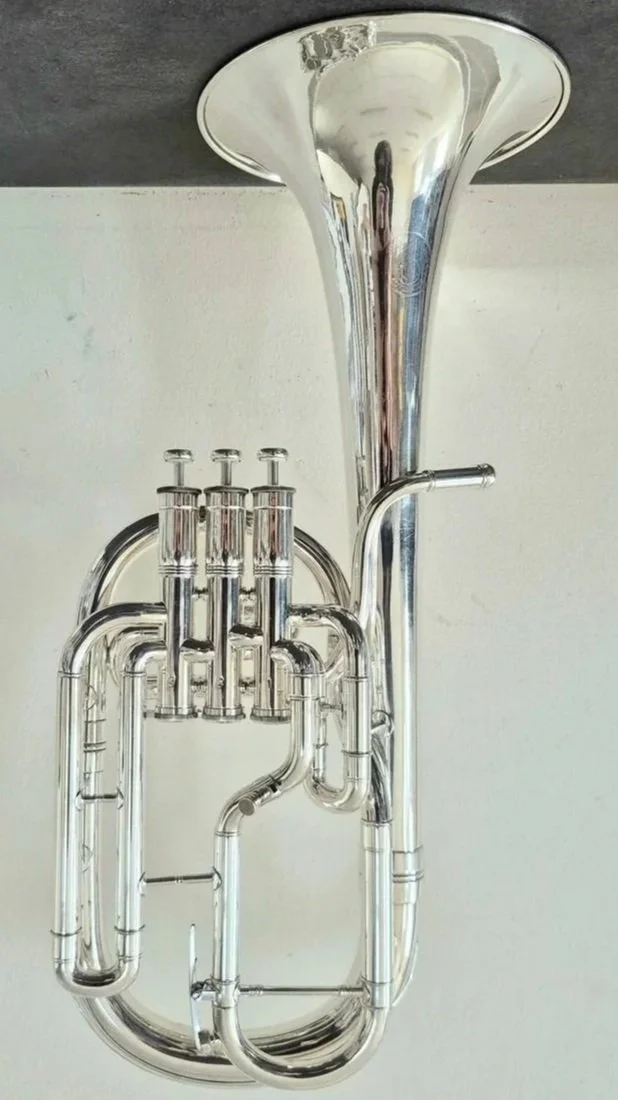
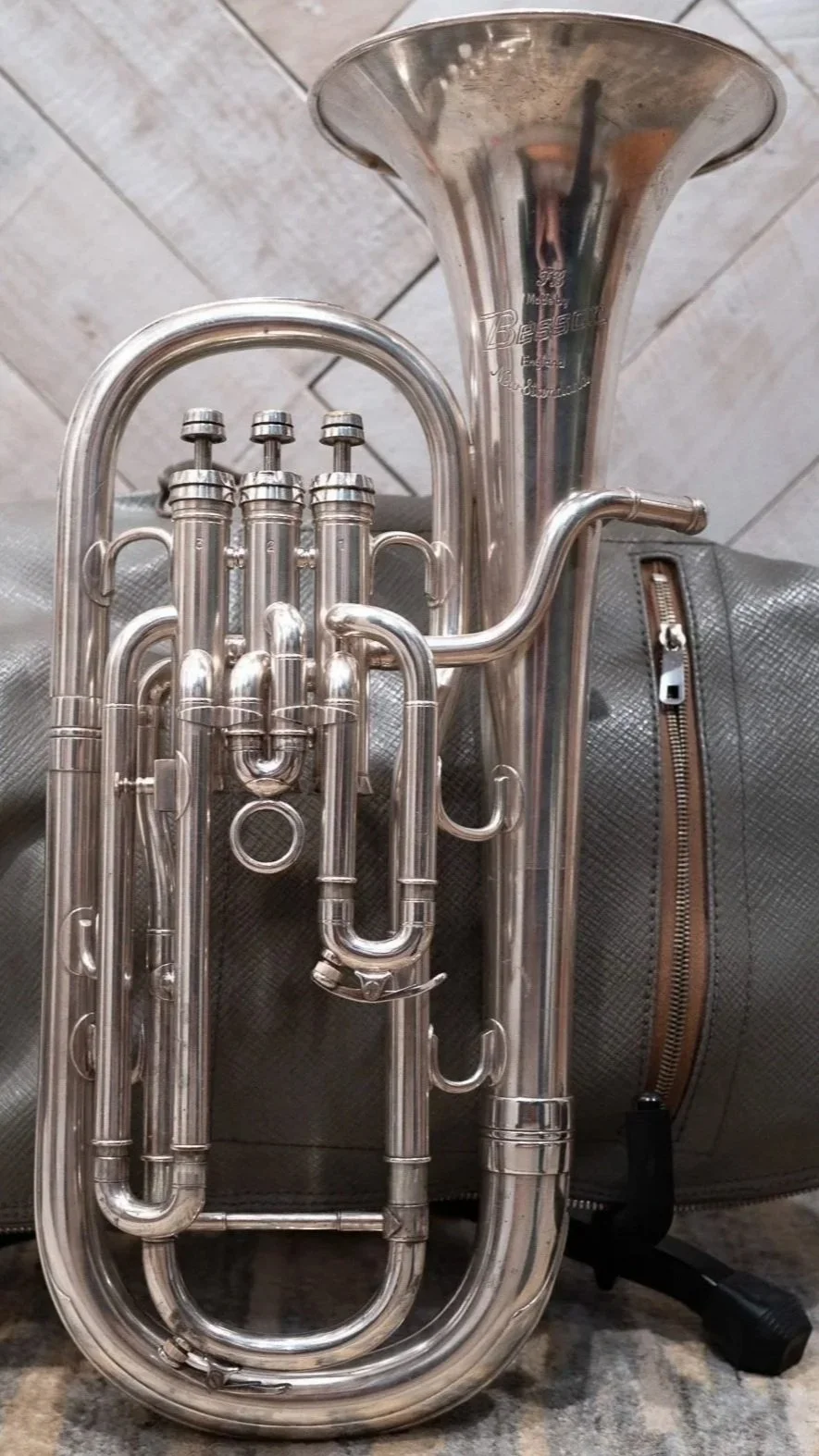
In other parts of the world, the British-style instrument is often called an alto horn, including by non-British manufacturers of the instrument. Yamaha alto horns carry the “YAH” designation, short for Yamaha Alto Horn. But because the British brass band has been the main location of the instrument’s use and development since its inception, and nearly all makers of the instrument are either British or copying British designs, it is appropriate to consider “tenor horn” not only an acceptable term, but the “correct” name. Furthermore, alto horn isn’t the only other name regularly given to this type of instrument. French brass ensembles that use the instrument (such as the Elephant Tuba Horde) variously call it an altohorn, tenor saxhorn, or just saxhorn. In Italy, where it is still used in concert bands, it is called a flicorno contralto, linking it with the flugelhorn (flicorno soprano, or just flicorno). And in Mexican banda, it is mostly called a charcheta. When speaking in English, banda players and retailers refer to at as an alto horn, or sometimes an “E-flat baritone”.
Thankfully, the British tenor/alto horn is the only alto instrument that is commonly referred to as a tenor horn. The rest are all properly tenor instruments, but most aren’t used anymore. The one that still sees common use is the German tenorhorn, properly spelled as one word. The German tenorhorn is one of the most common oval brass instruments, and is the next size larger than the previously discussed althorn. It is a common sight in German folk music, but occasionally branches out beyond that. Gustav Mahler wrote an important part for the B-flat tenorhorn in his 7th symphony, though outside of Germany this part is usually played on a euphonium.
Stowasser oval tenorhorn
German tenorhorns can have 3 or 4 valves, and are the smallest of the three 9-foot B-flat instruments in the German rotary oval family. They roughly compare to a British baritone horn in function, though the taper is very different and the bore size is on the large side for British baritones, with a range of around 13 to 14mm (.512”-.551”).
American tenor horns are long obsolete, but were similar to the German tenorhorn in size. These instruments were sold in the late 19th and early 20th centuries alongside baritones, euphoniums, and 9’ basses. They had a typical bore size similar to the middle of the range of German tenorhorns, such as the Conn tenors with their bore size of .531”, but usually had a larger bell flare. They were sometimes used as trombone substitutes in wind bands. Like American alto horns, they were sold in with an upright or recording bell, and top action or front action valves. Unlike the larger baritones and euphoniums, they did not typically have double bell versions. American tenor horns didn’t last past World War 2, at which point only the American baritone remained. American tenor horns are very rare to find today, and there is little on the Internet about them.
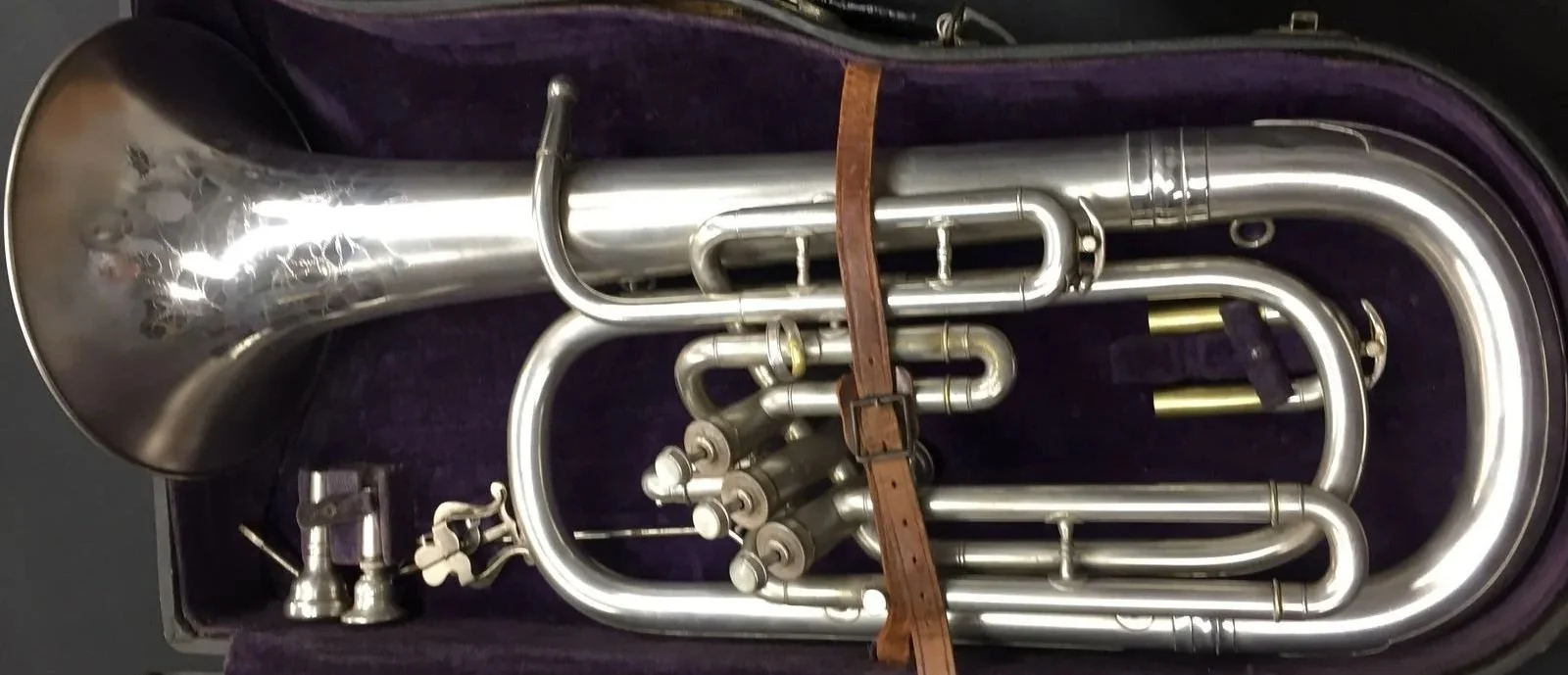
Conn 5F B-flat tenor horn
Baritone Horns
Now we get to the real meat of this article: the American baritone horn. Though this instrument is now essentially obsolete, there is so much to say about it. One could write an entire book about its history.
We’ll start with the age old debate, which is largely unique to the United States for reasons that will soon be explained. Is it a baritone, or is it a euphonium? Is the baritone the same thing as a euphonium? Why does everyone have different opinions that they feel very strongly about, and why do older generations tend to call the euphonium a baritone while younger generations take more of an issue with that?
The answer is simple: in the early 20th century, American manufacturers threw around the words “baritone” and “euphonium” in any way they pleased, with absolutely no standard or consistency. And they did it so often that it resulted in all of the different opinions that you still hear to this day:
A baritone has three valves, while a euphonium has four.
A baritone has one bell, while a euphonium has two.
A baritone’s bell points forwards, while a euphonium’s points upwards.
A baritone is the same thing as a euphonium.
A baritone is NOT the same thing as a euphonium.
Every one of these opinions can be traced back to a catalog where an American manufacturer labeled their instruments in exactly that way.
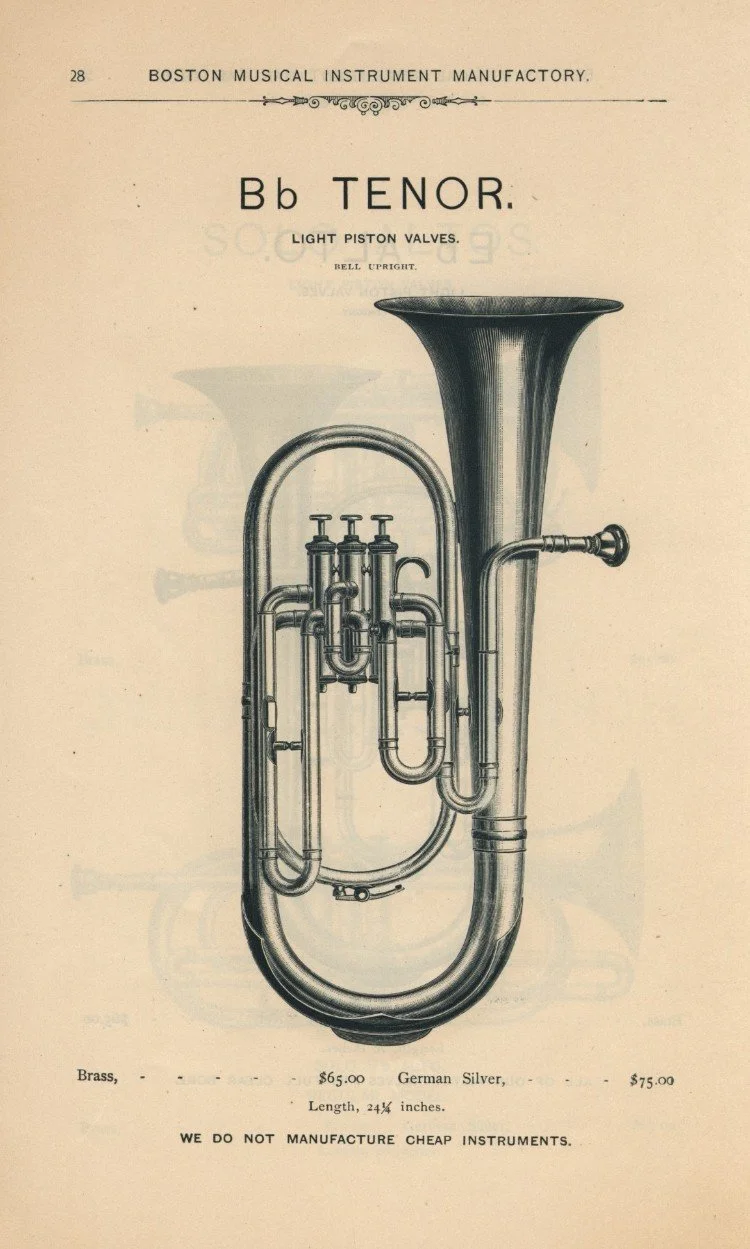
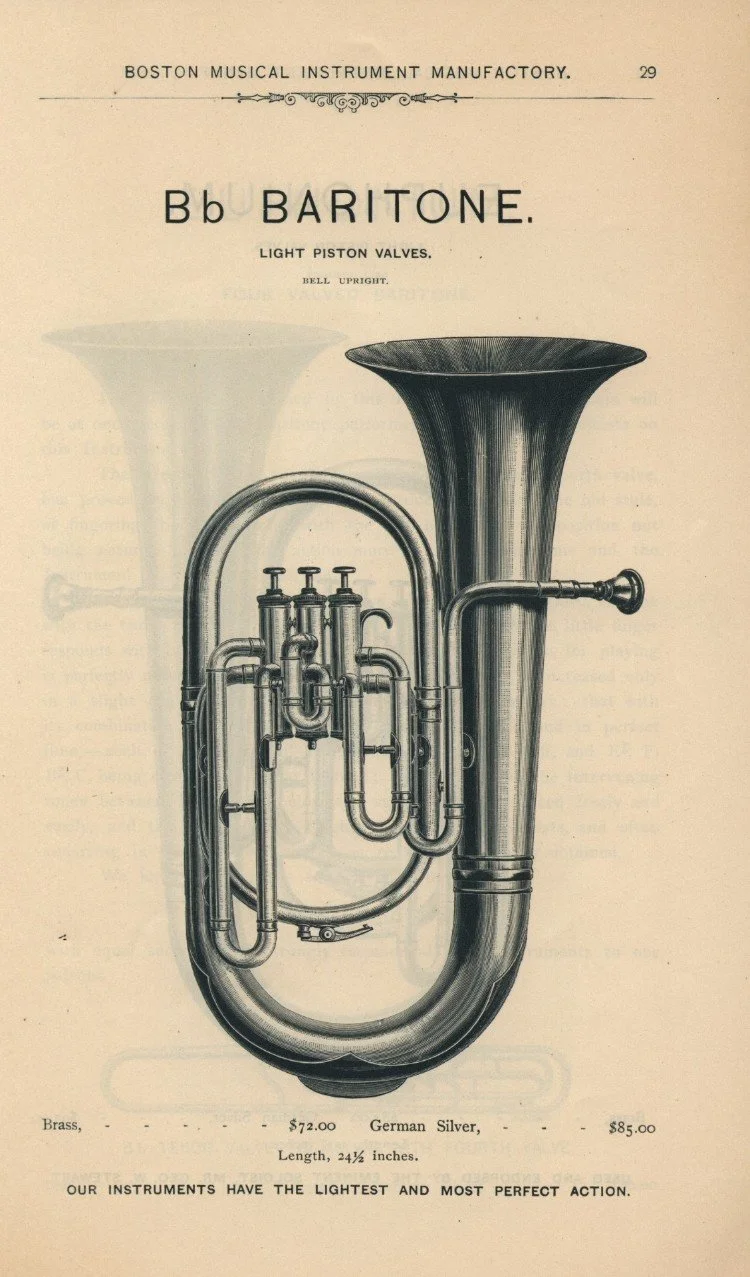
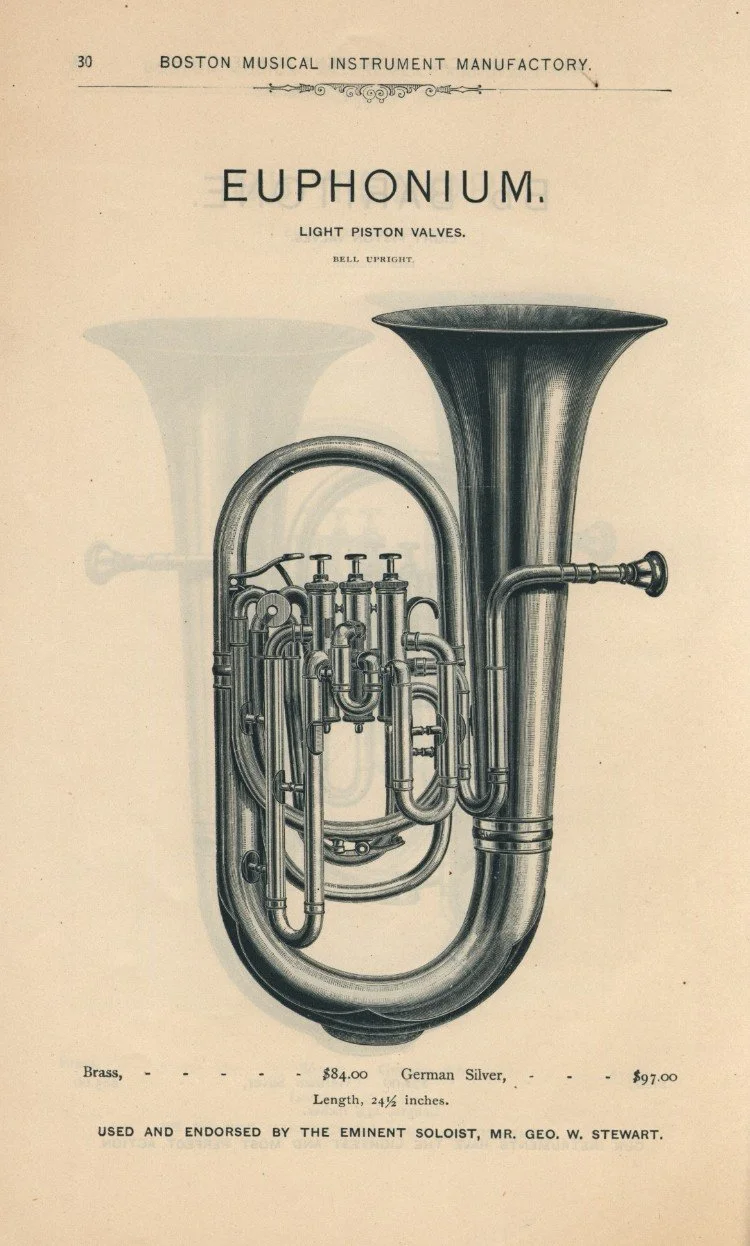
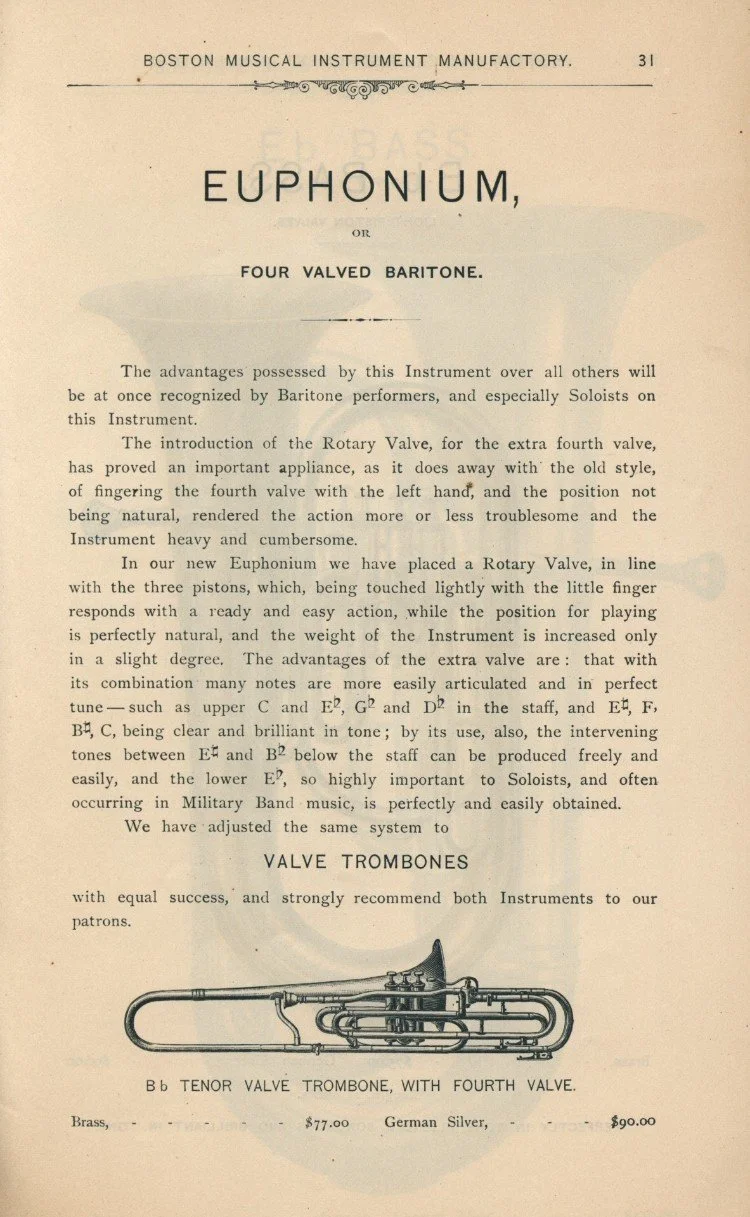
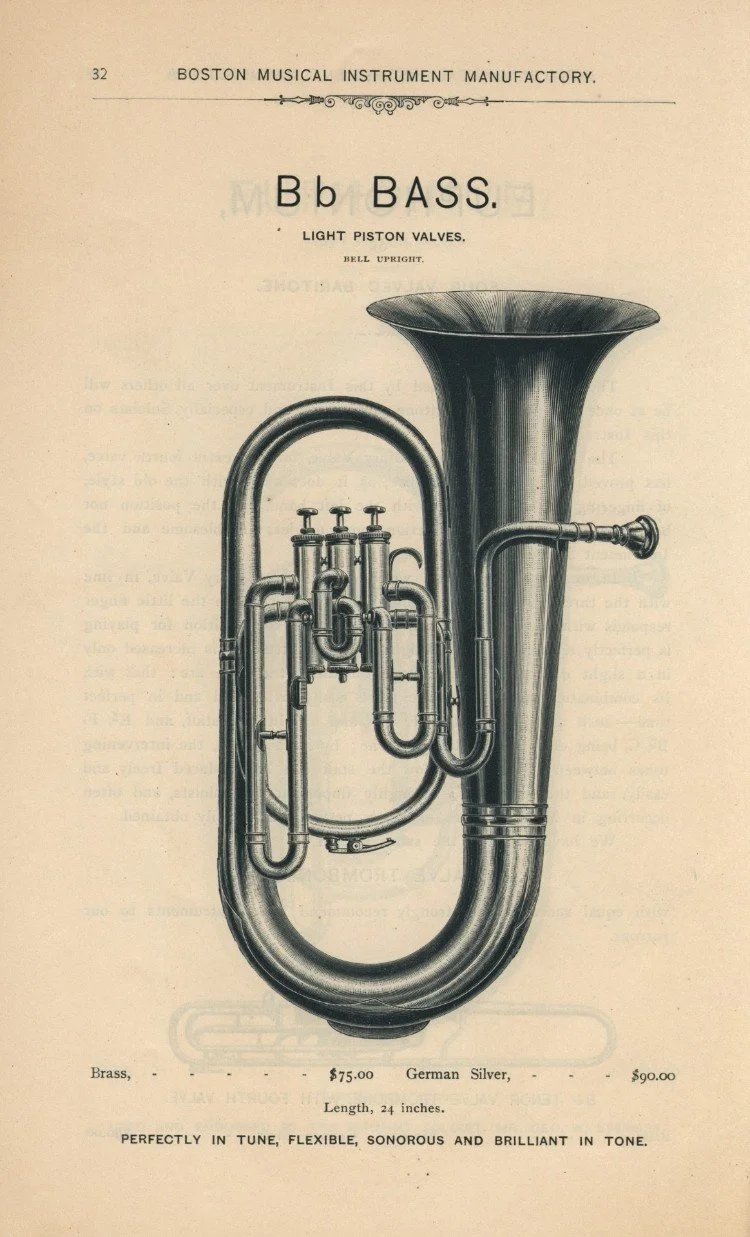
A Boston Musical Instrument Company catalog from 1887 lists an a tenor, a baritone, a euphonium, and a bass, all in 9-foot B-flat. Sadly no specs are listed, but the descriptions tell the story: the tenor is an American B-flat tenor horn. The baritone has 3 valves, while the euphonium is the same thing as the baritone but with a 4th rotor valve. The description page even calls it “Euphonium, or Four Valved Baritone”. The bass is larger than the baritone and euphonium, and based on other catalogs one can infer that the baritone and euphonium are the size of a typical American baritone, with around a .562” bore, while the bass is the same size or even a bit larger than a modern British-style euphonium.
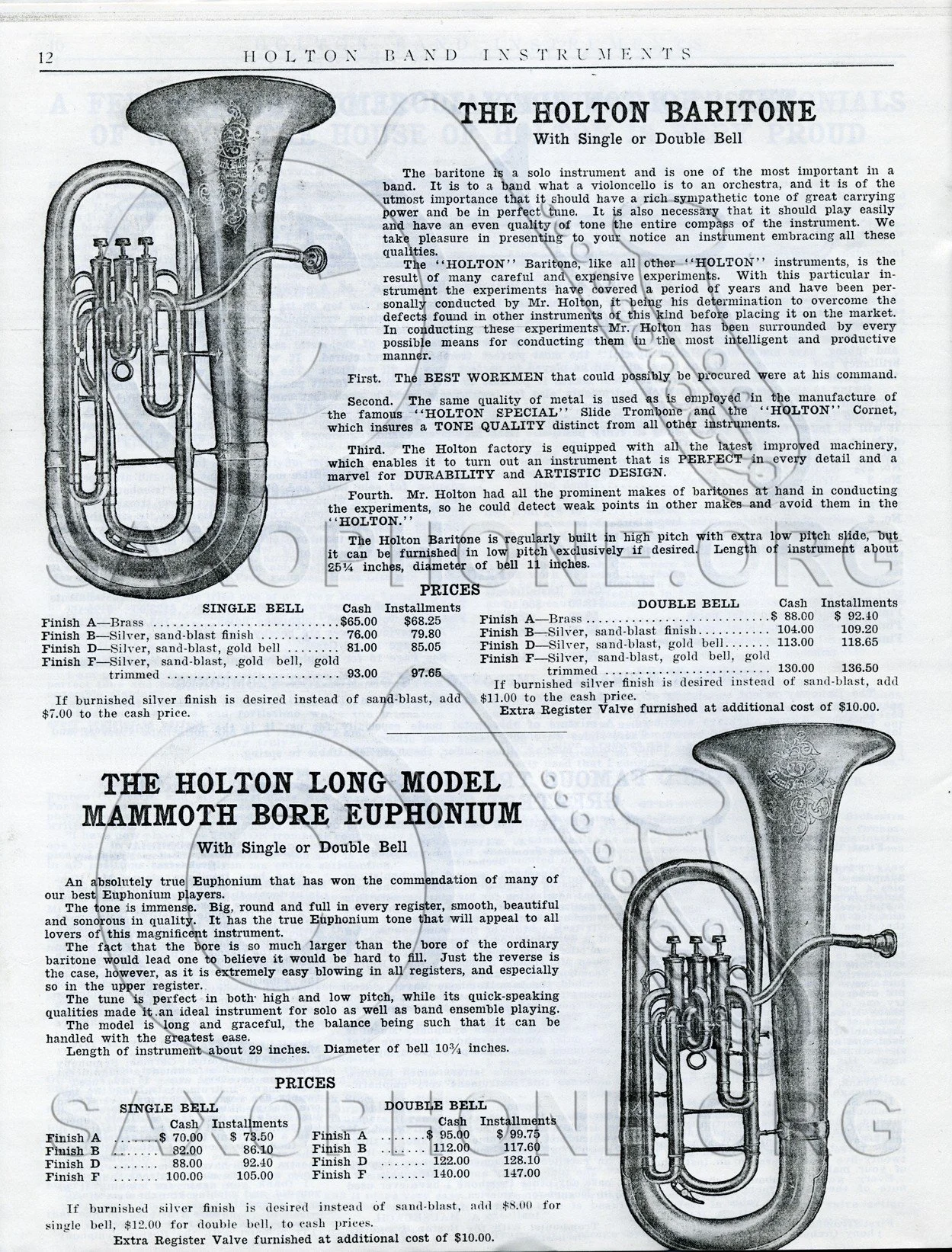
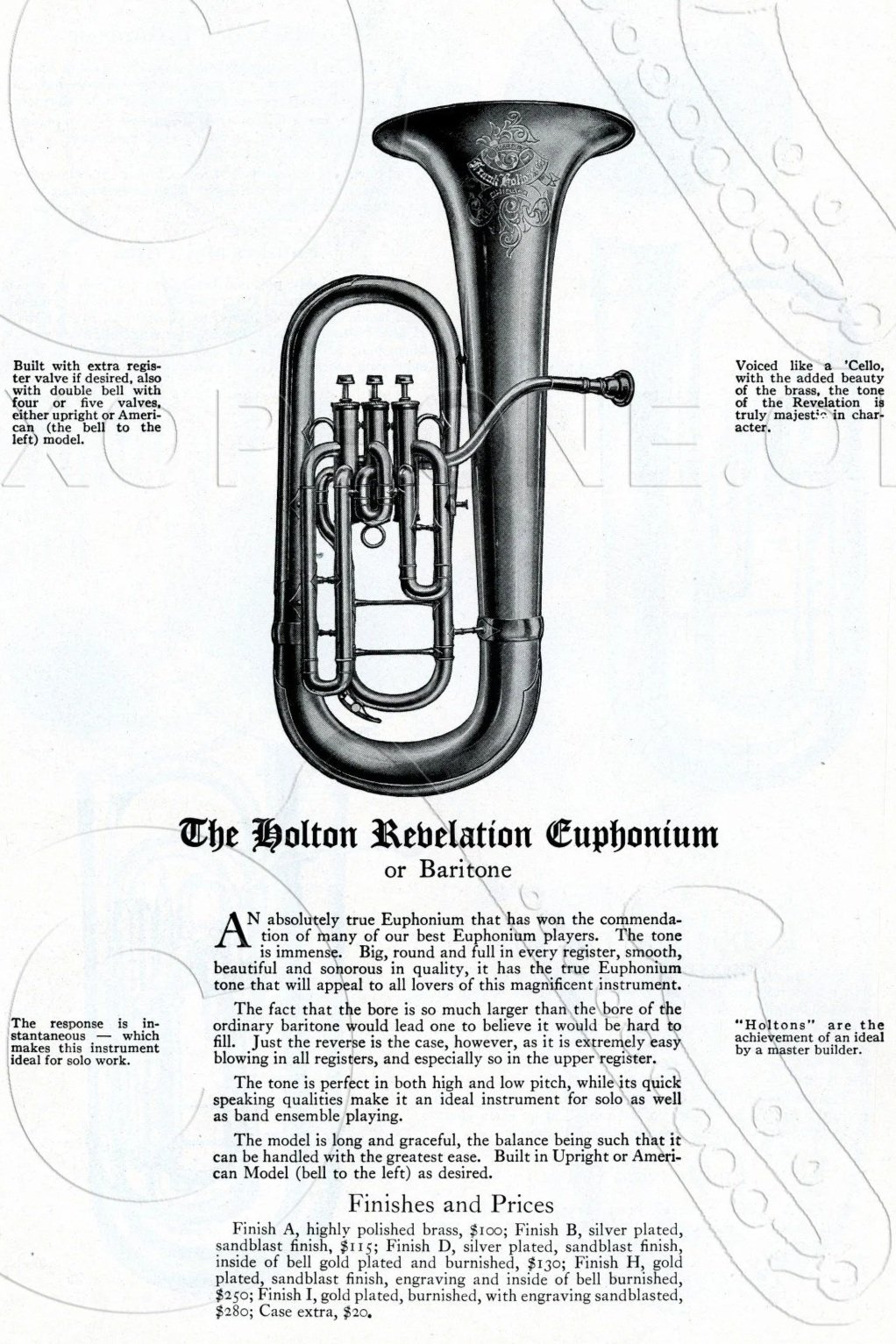
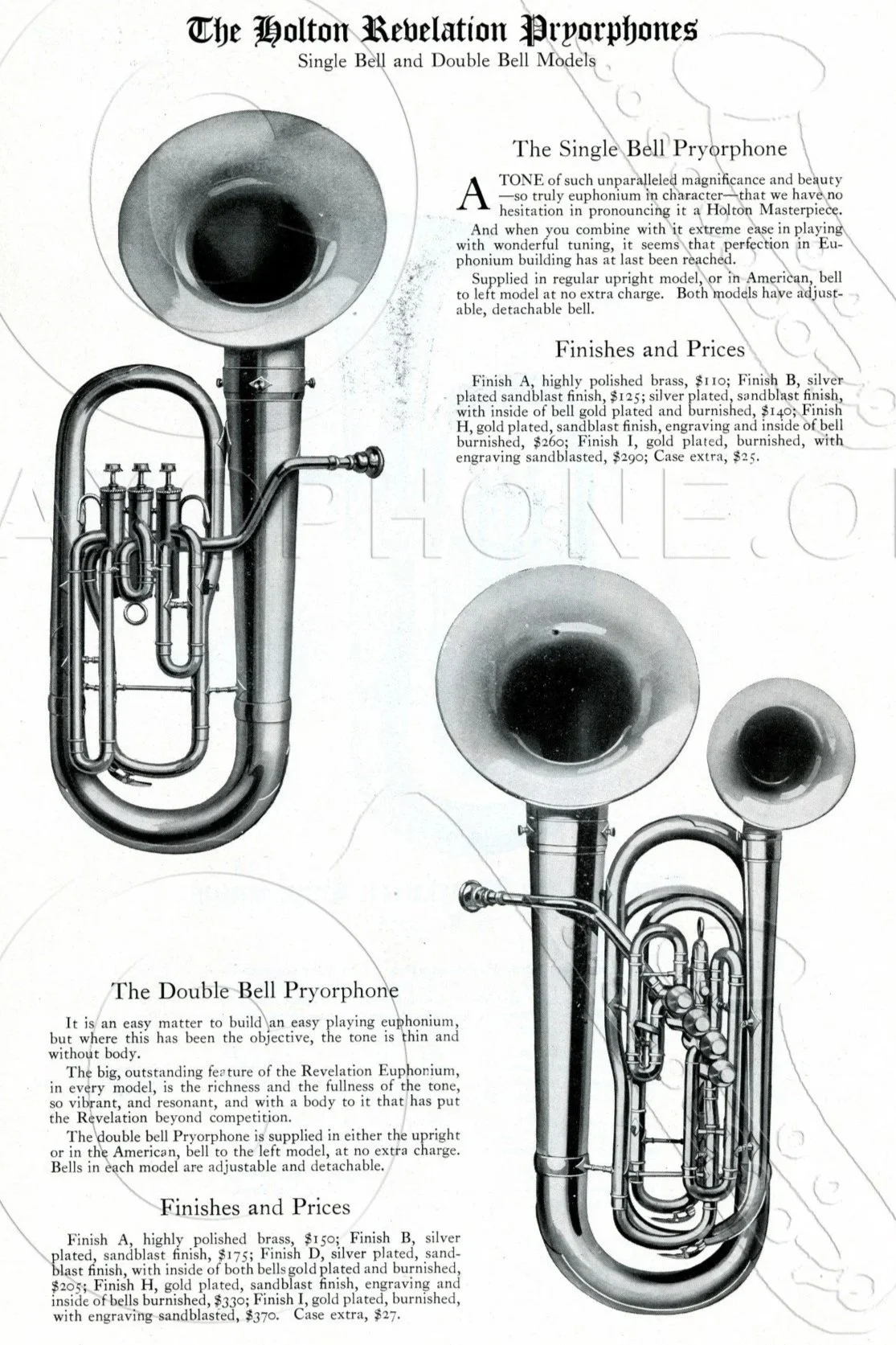
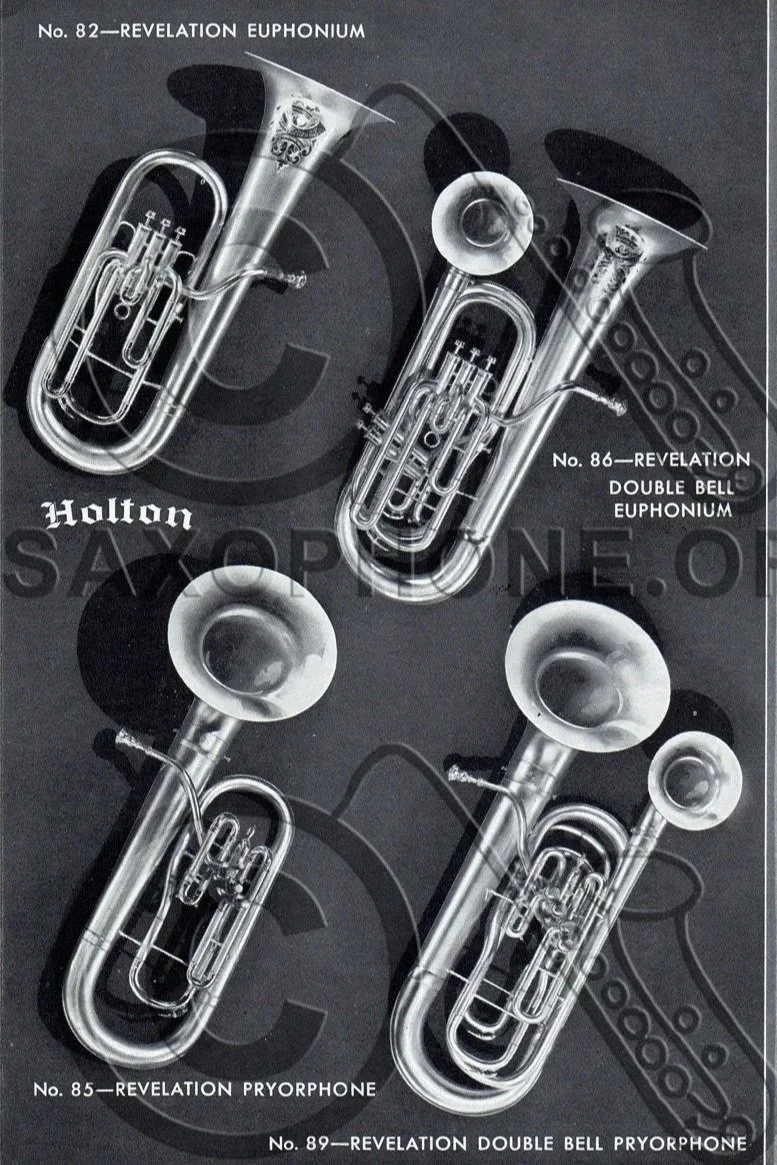
A 1915 Holton catalog lists a baritone and a euphonium. The baritone is available with either 3 valves or 4, and either one bell or two. The euphonium, meanwhile, is a larger instrument with a “Mammoth Bore”, and is also available with either 3 or 4 valves, and 1 or 2 bells. But Holton changes it up in a 1924 catalog, selling a “Euphonium or Baritone” with essentially the same description as the “Mammoth Bore” euphonium from the 1915 catalog, and sold in top or front action but with upwards bell only. The recording bell models are on the next page, and are called “Pryorphone”. In a 1932 Holton catalog the upright bell models are labeled “euphonium” (no more “or Baritone”), this time with the option of a second bell, while the recording bell models are still called “Pryorphone”.
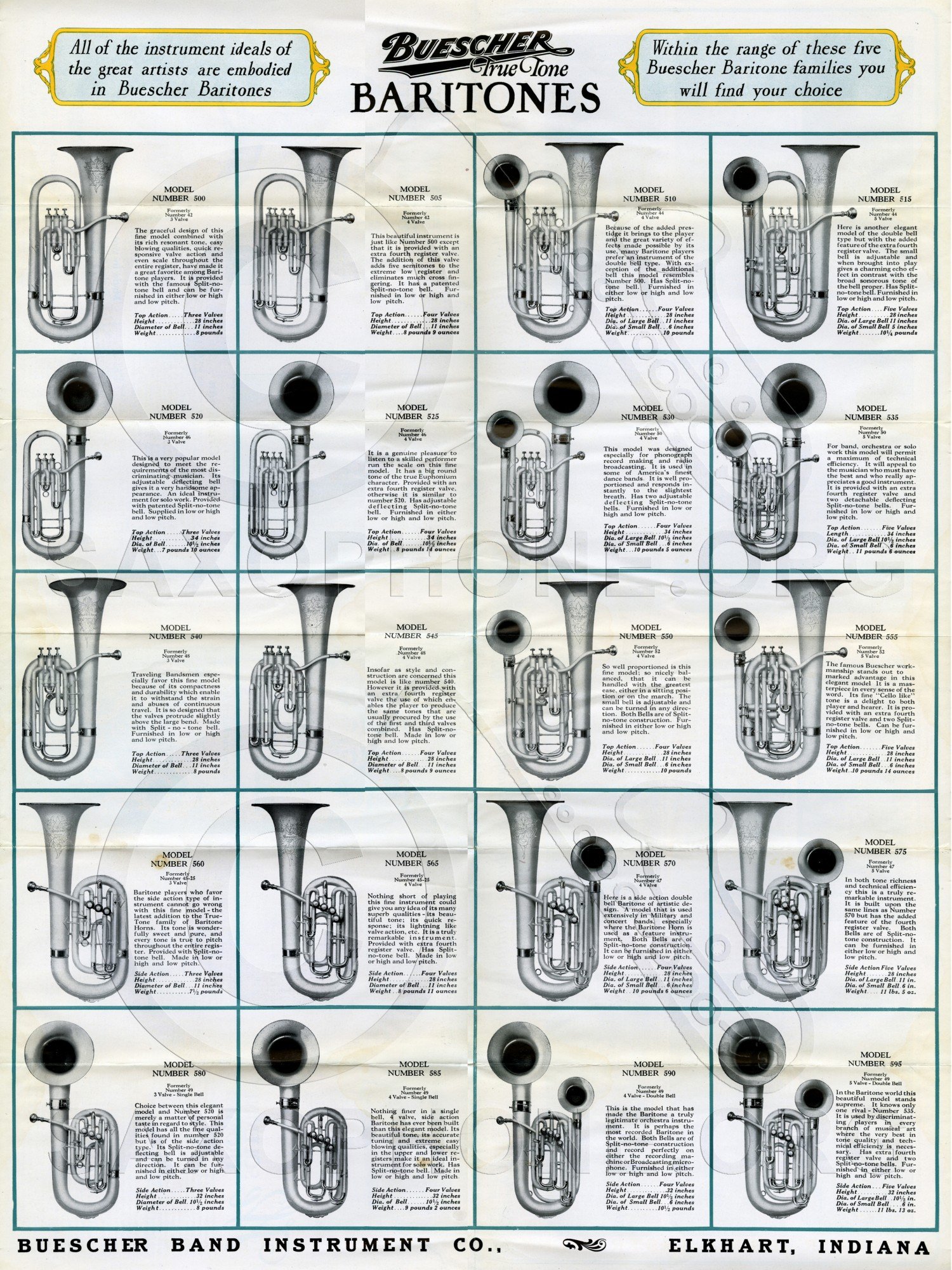
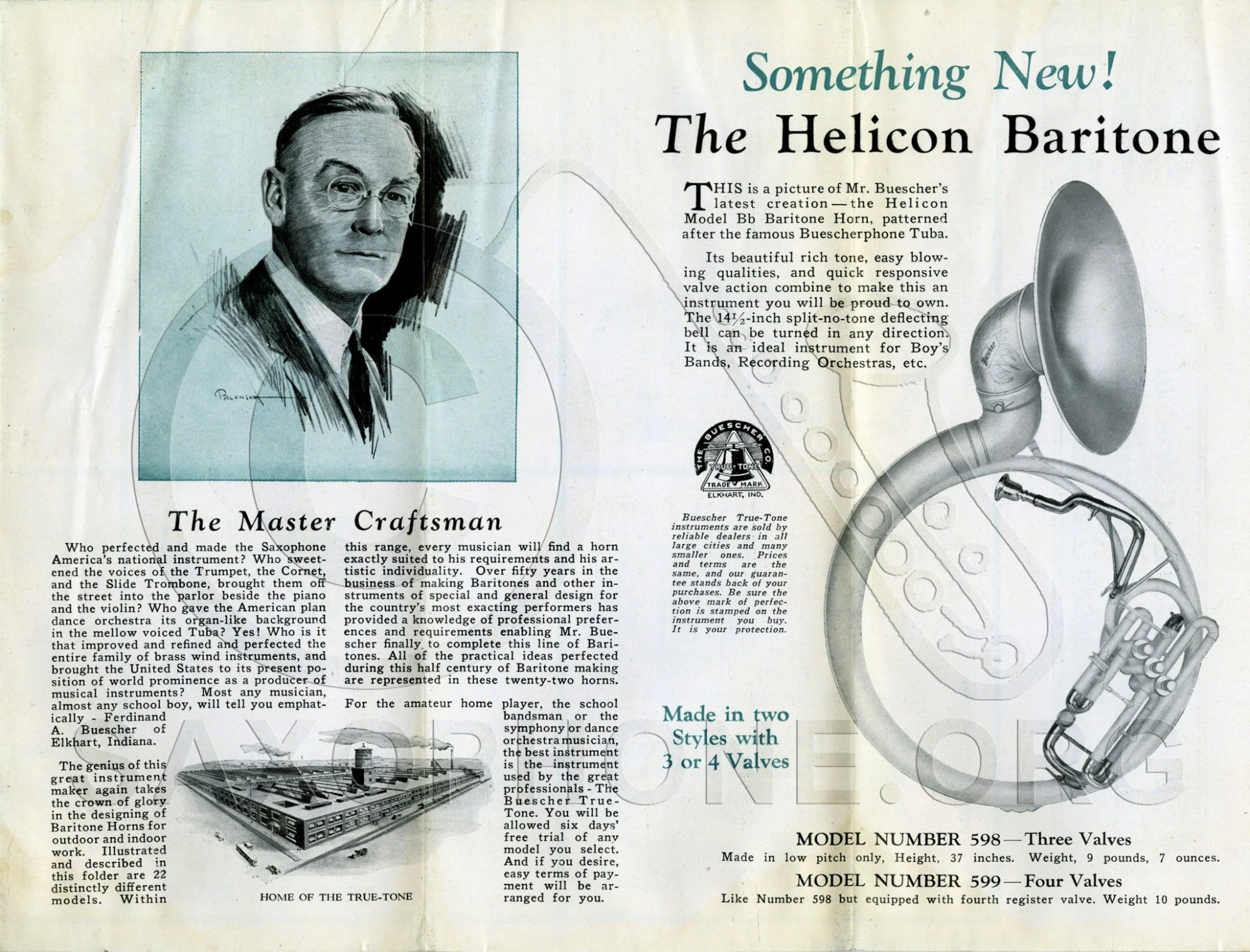
In Buescher’s 1927 catalog, they list a whopping twenty different models, all of which are called baritones. As a bonus, they also list a sousaphone in 9-foot B-flat they call a “Helicon Baritone”.
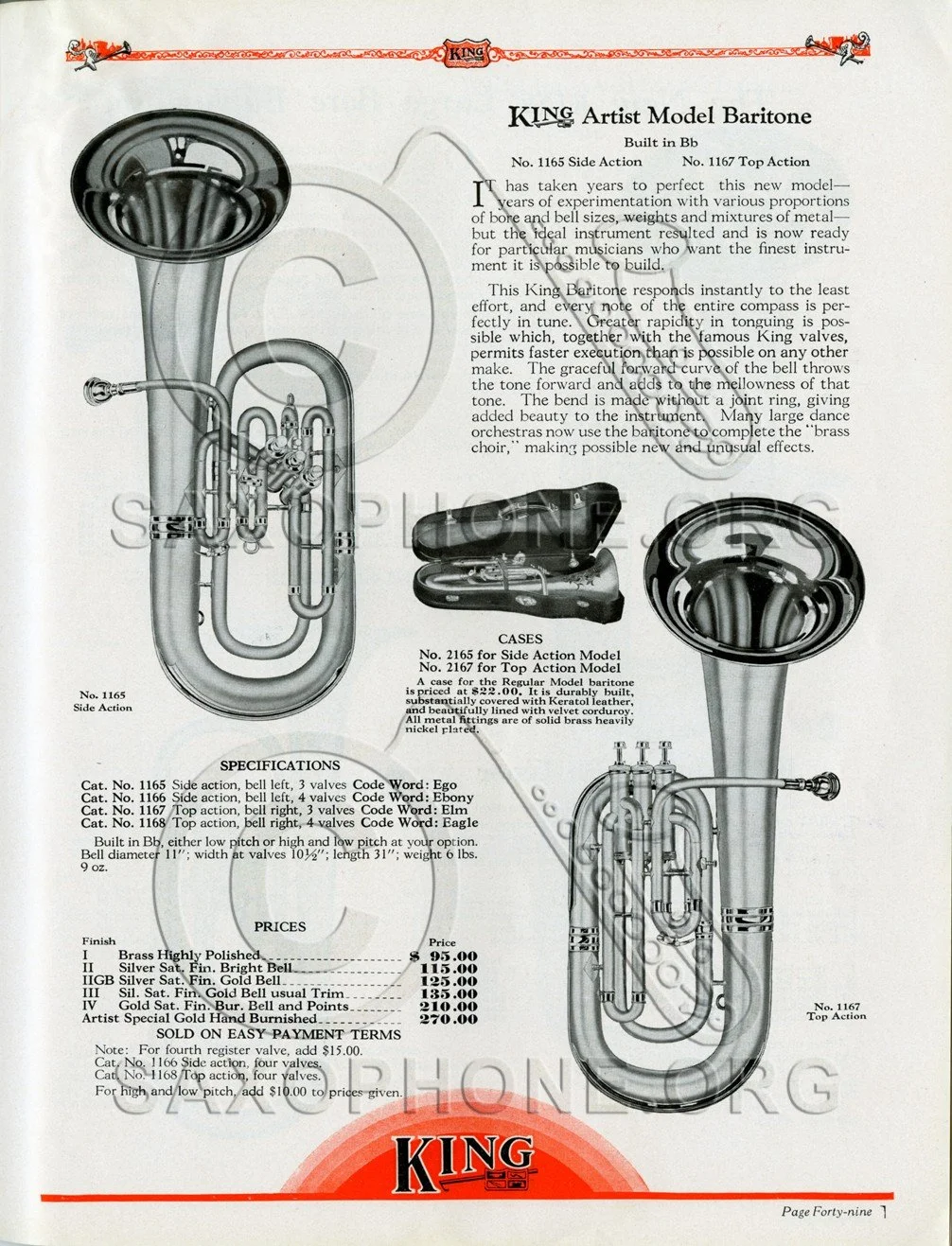
Finally, in a 1932 catalog King offers tenor horns, baritones, and euphoniums. The baritones are available in top or front action, bell up or bell front, and 3 valves or 4. The euphonium is listed as having a larger bore, and the description makes at least King seem aware that the typical American baritone and British euphonium are different enough to not call the same thing, and apparently by this time American bandsmen were already aware of the larger, darker sound of the British euphonium. The double bell euphonium in this catalog is the question mark. King does not describe it as having the same large bore as the single bell euphonium, so the important question is whether or not it is a baritone with a second bell, or that large bore euphonium with a second bell. Unfortunately King does not list the bore size for the double bell euphonium, so it remains a mystery. The drawings do seem to show a wider flare than the baritones, like that of the large bore euphonium.
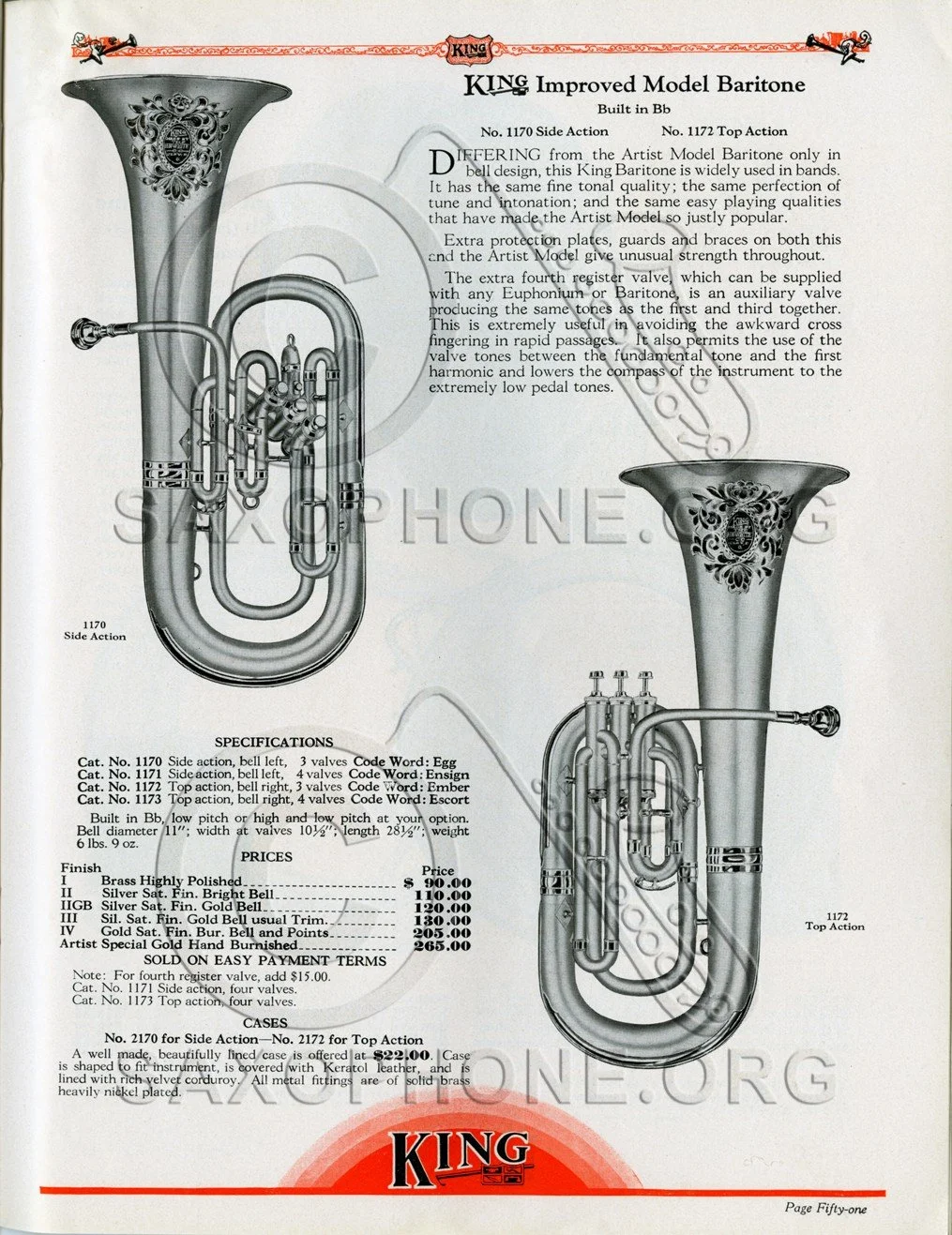
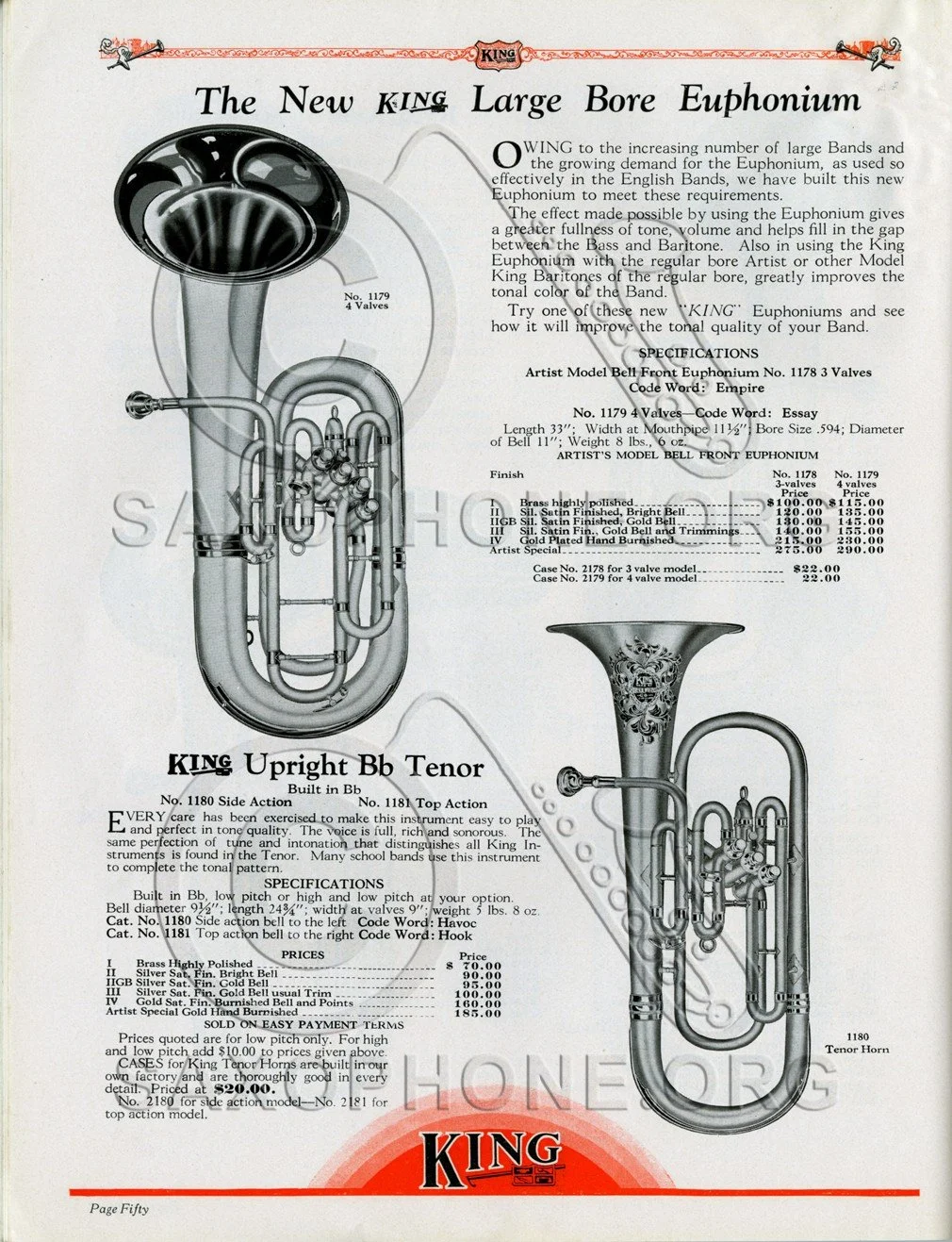
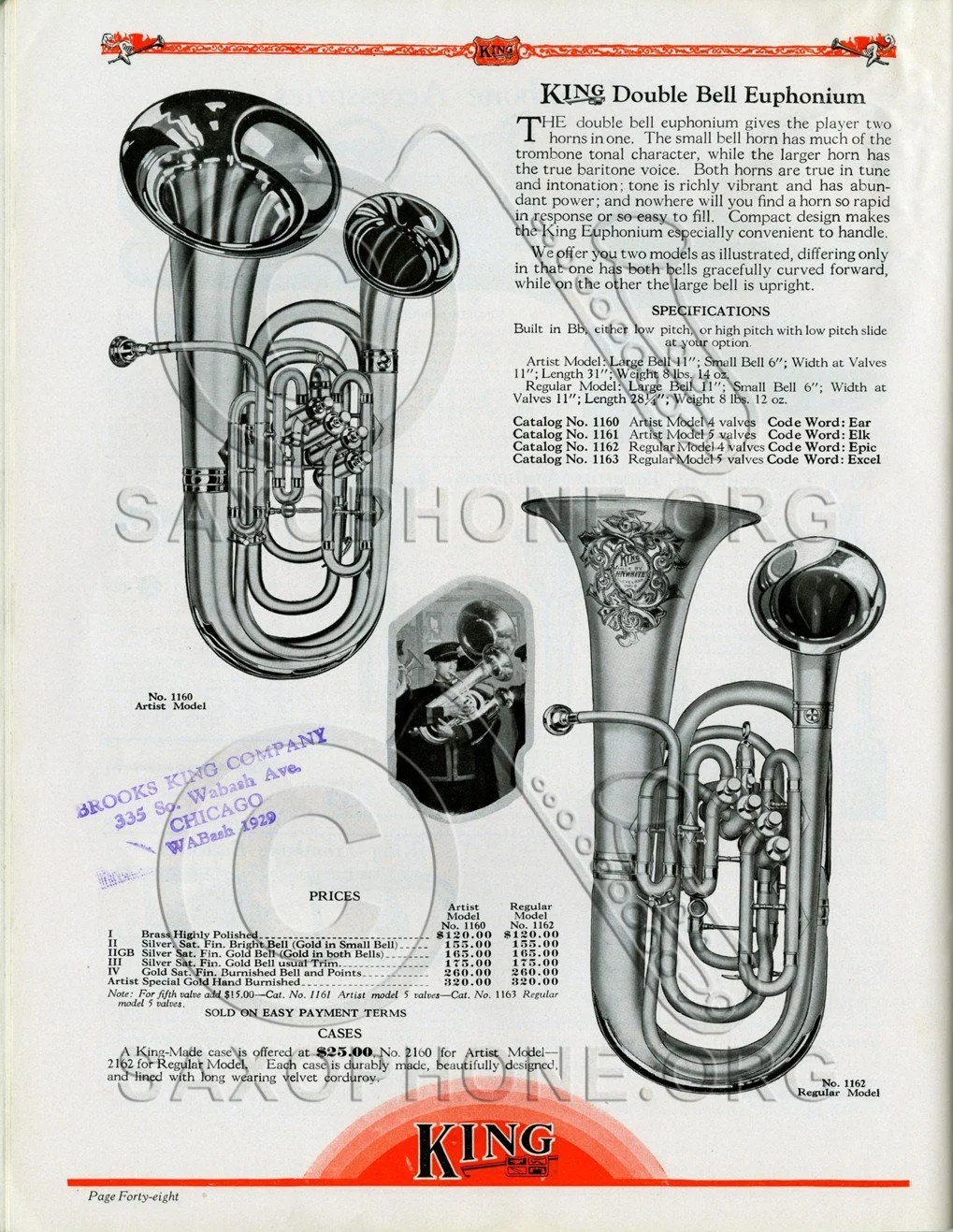
Eventually, the name “baritone” won out as the larger bore and double bell instruments fell out of use and out of the lineup, and the bell front (and occasionally bell up) front action baritones were all that remained. The vast majority of early to mid-20th century wind band parts written by American composers label the parts for this instrument as “Baritone”, and the American baritones manufactured today are still usually called baritones by their makers. The notable exception is Yamaha, which refers to its an American-style baritone model (YEP-211) as a euphonium and gives it the euphonium letter designation (YEP) instead of the baritone horn designation (YBH).
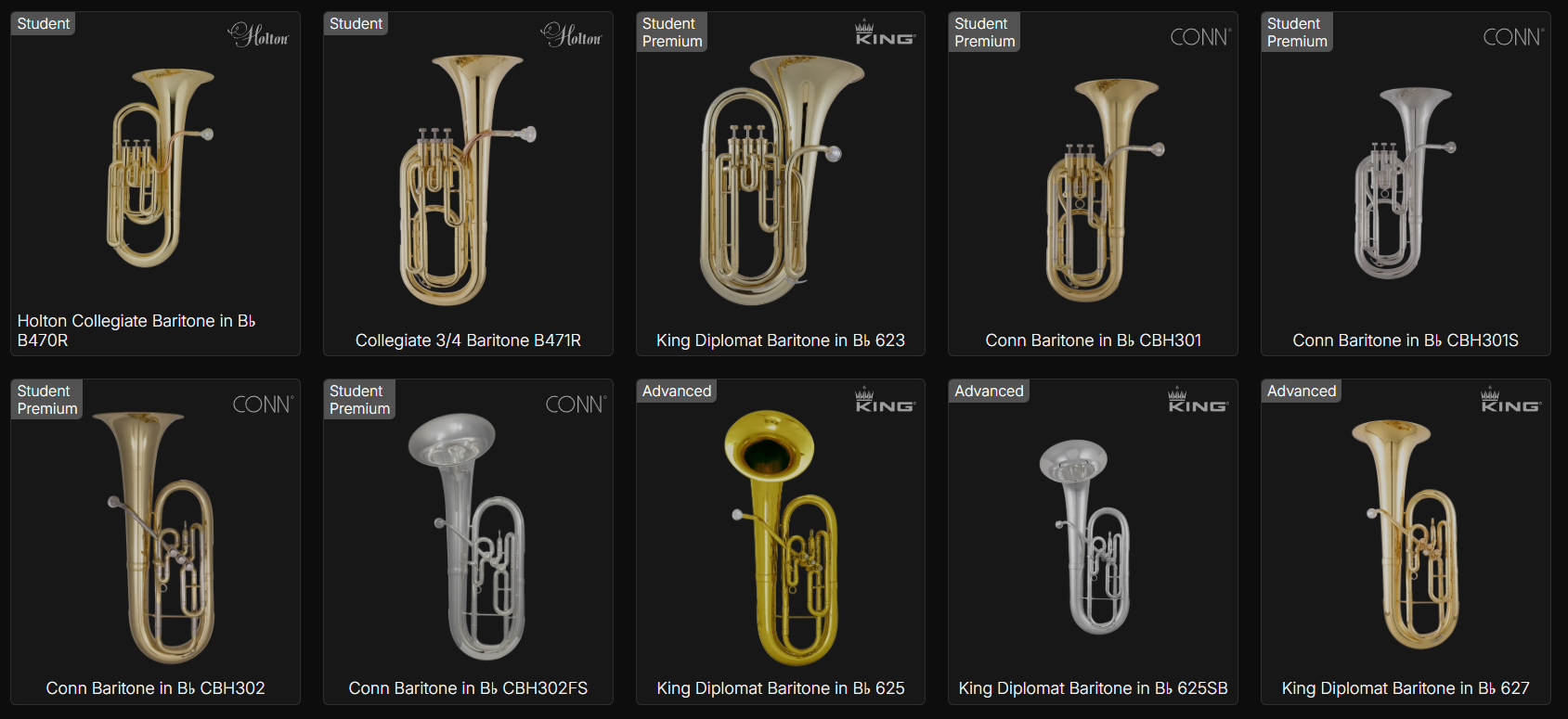
Conn-Selmer’s lineup of baritones as of September 2026
American baritones were ubiquitous in American concert bands for decades, especially in schools. When bands started replacing them with British-style euphoniums, it was easy for students and band directors alike to just call them all baritones, as they all played the same part and sounded similar enough. And true British-style baritone horns are something many American band musicians are unaware of, so there was no real reason to differentiate it. Nowadays euphonium is ubiquitous in concert bands everywhere in the United States, so players and band directors are a lot more used to calling them euphoniums.
What do I think it should be called? Personally, I think American baritone is the best name for it based on the history of the name and how it was relatively consistently applied to the one-bell instrument, and how almost all parts written for this genre of instrument by American composers were labeled “Baritone”. And although it’s tempting to consider it an American euphonium, the fact that there were actually larger bore instruments much closer in size to the British euphonium leads me to think it’s not accurate to call all American baritones euphoniums. Nor do I think it’s necessary to call them “bariphoniums”, although that is a fun word.
They’ve stayed pretty consistent in size and specs to this day. The King and Holton models shown above have the same .562” bore that most American baritones have had throughout history, while the Yamaha YEP-211 and the Conn CBH302 shown above have a .571” bore like a modern student or intermediate euphonium. The tapers remain smaller than a euphonium, however, so even with the slightly larger bore I don’t think it’s accurate to call the Yamaha or Conn a euphonium.
An interesting footnote in the American baritone’s history is that it is actually still used regularly in western Europe. A form of folk music called Oberkrainer music, originally from Slovenia and now popular there as well as in neighboring Austria and Germany, uses American-style baritones so often they are locally referred to as Oberkrainer baritones, and are manufactured by renowned local makers (e.g. Lechner) specifically for that purpose.
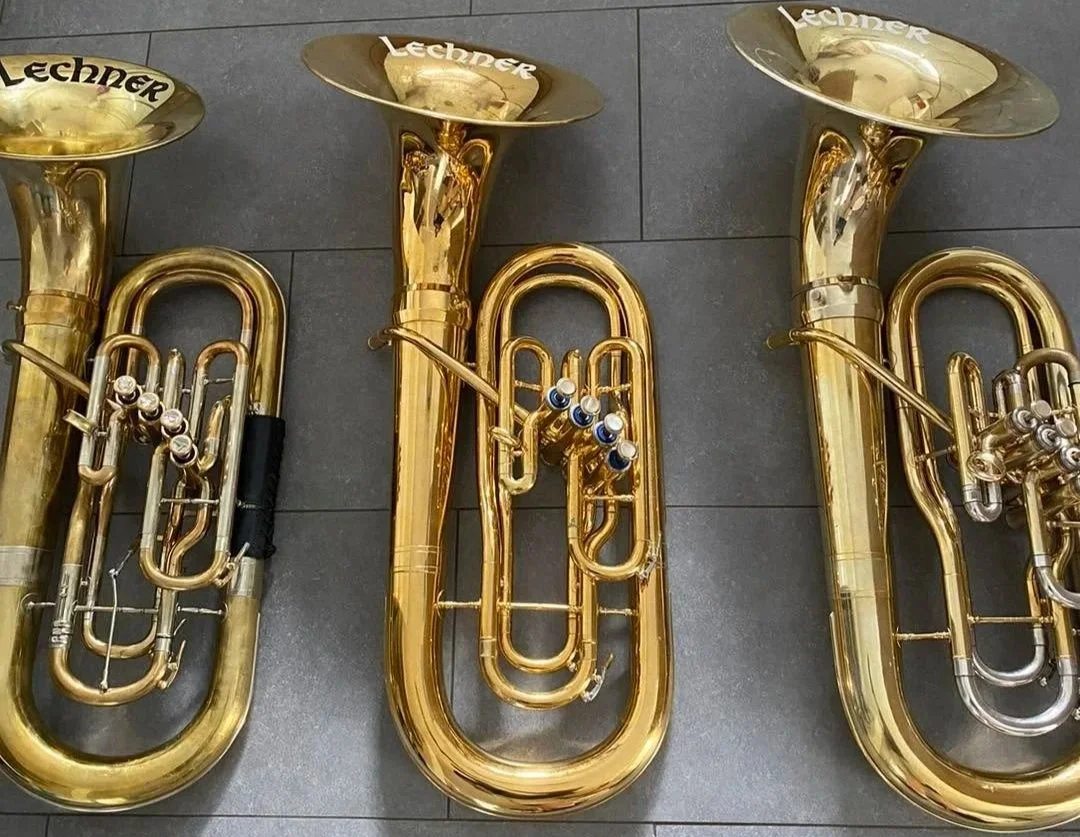
three Lechner Oberkrainer baritones
Let’s move on to a much easier subject, the British baritone horn.
Unlike with American baritones which are rarely referred to as baritone horns in conversation, the British baritone horn is often referred to as a baritone horn. This instrument is much smaller than a euphonium or American baritone, and has a significantly lighter sound.
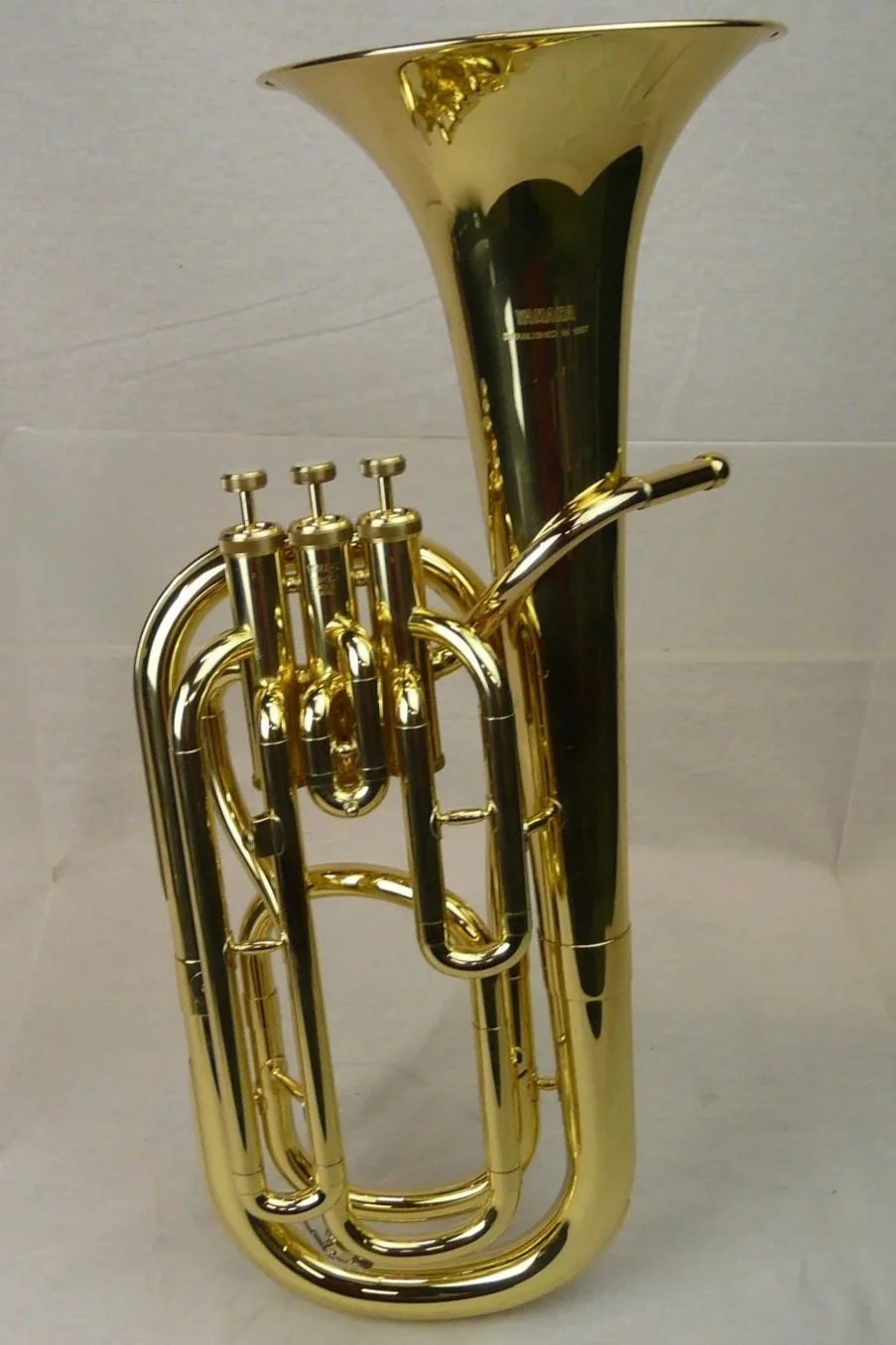
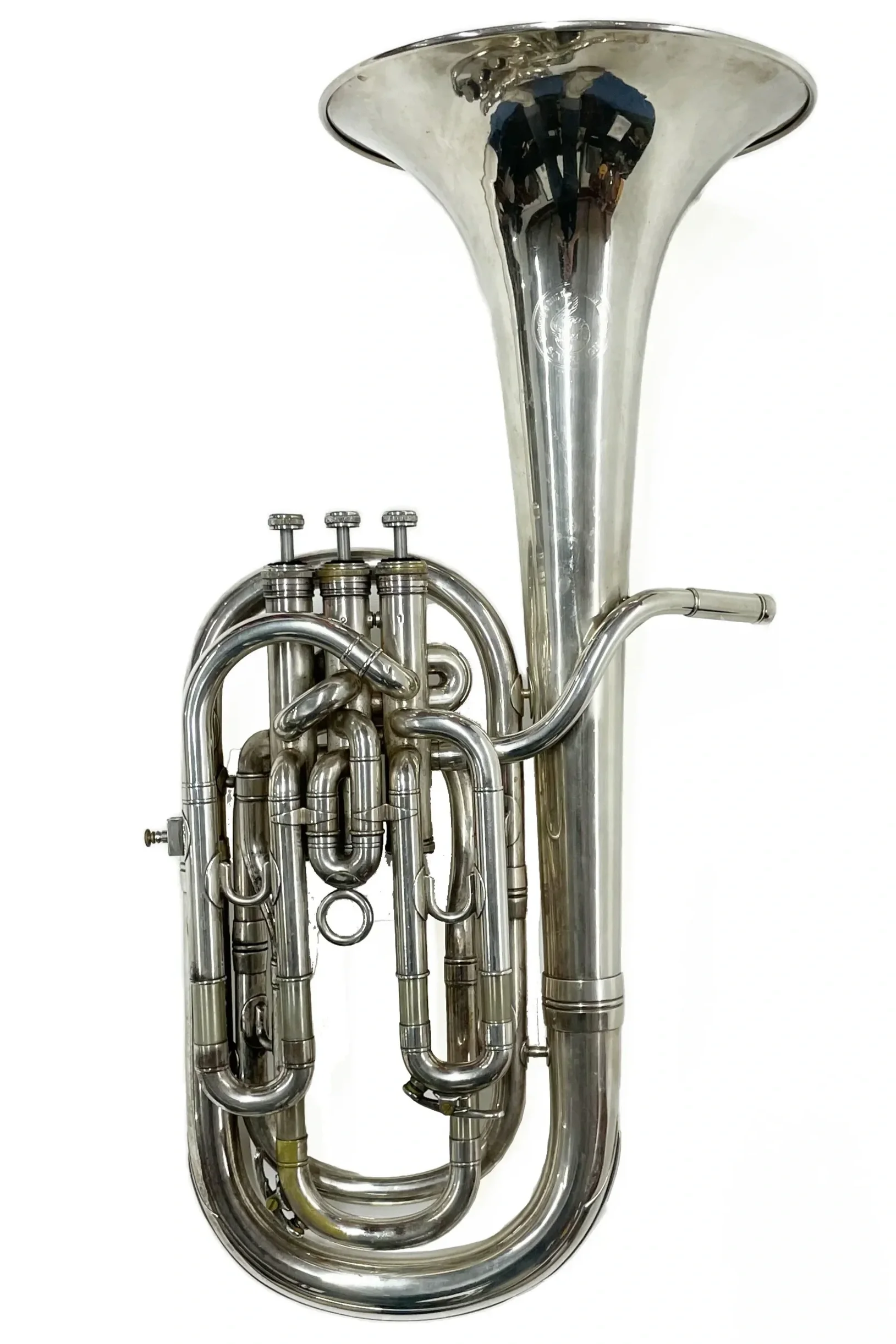
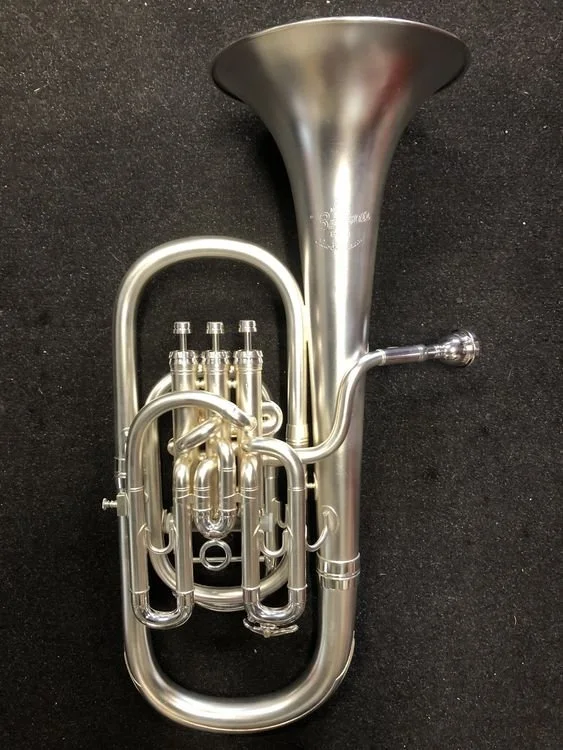
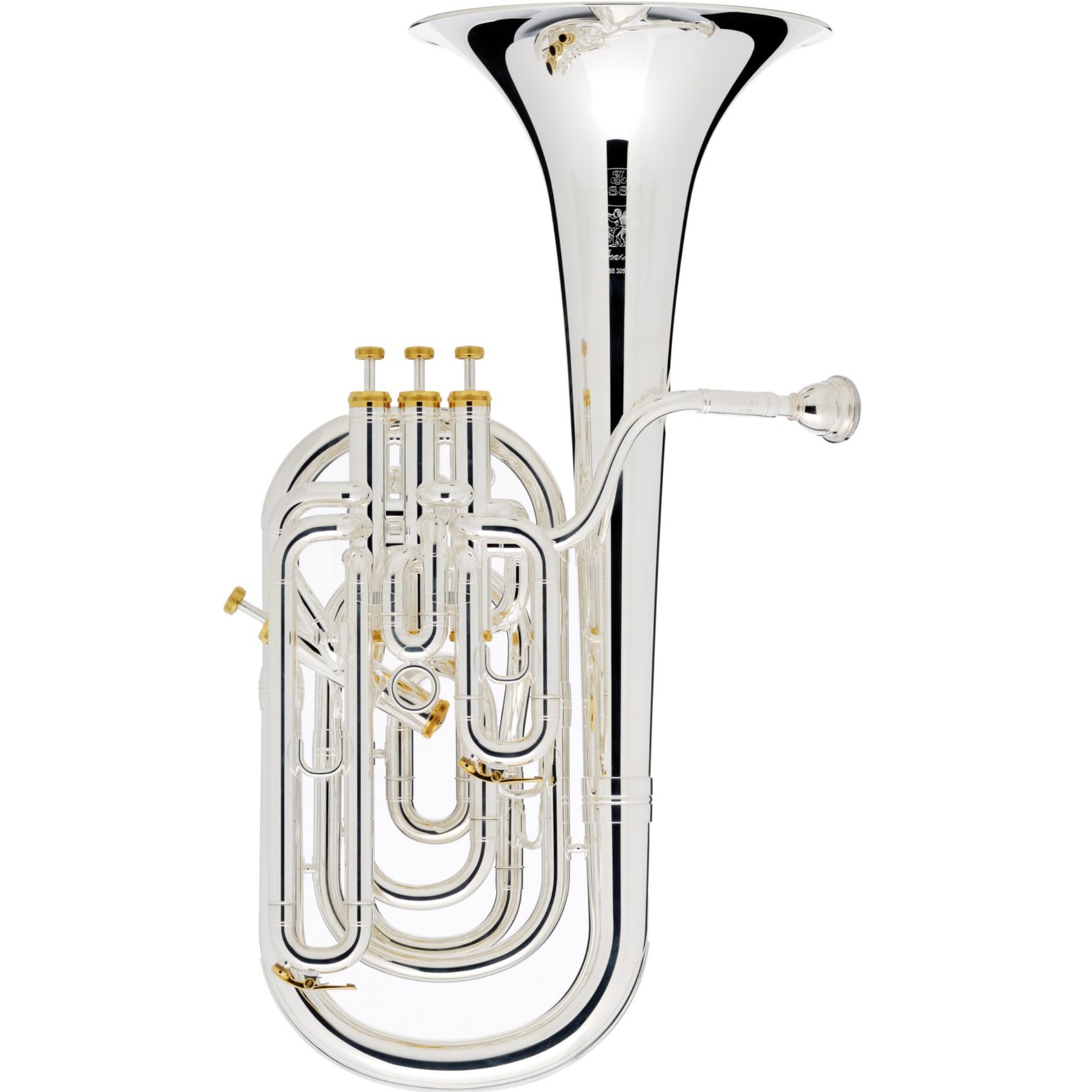
The British baritone horn has traditionally had a bore around .510”, smaller than most German tenorhorns, but in recent decades there has been significant size creep. Instruments like the Besson Sovereign 956, Besson Prestige 2056, and Wessex BR144 have bores as large as .547”, putting them close to the upper end of German tenorhorn bores. Of note is that British baritones have seen the most frequent application of the 3-valve compensating system of any instrument. It is the only instrument that is still manufactured with this system, and most professional models have it by default. In recent years more 4-valve and even 4-valve compensating baritone horns have been introduced, but most baritone players in the British brass band scene still use 3-valve compensating instruments such as the Besson Sovereign 955 or Yamaha Neo YBH-831.
As an important aside, one of the most common tropes that has been floating around band circles for years is that the difference between (British) baritone and euphonium is that baritone is cylindrical while euphonium is conical. This has never been true, as they are both 100% conical instruments. The euphonium has a much wider bore and conical taper, but they are both conical.
With that out of the way, let’s talk about the two largest sizes of the German oval instruments: the baritone and Kaiser baritone.
Much like the old American trio of tenor horn/baritone/euphonium, the German oval instruments have three different instruments of roughly equal size to their obsolete American counterparts. We’ve already discussed the tenorhorn, the smallest of the three. The oval baritone and Kaiser baritone are the middle and large sizes, respectively. The baritone is typically around the size of a smaller euphonium, with the Miraphone 54L baritone having a bore of .579” and a bell of 11.4”. The Kaiser baritone, meanwhile, is the size of the largest euphoniums, with the Miraphone 56L Kaiser baritone having a bore of .610” and a bell of 12.2”. Miraphone in particular is very clear in calling these baritones and Kaiser baritones, as they also manufacturer large British-style euphoniums such as the M5050, which is one of the only euphoniums as large as that 56L Kaiser baritone.
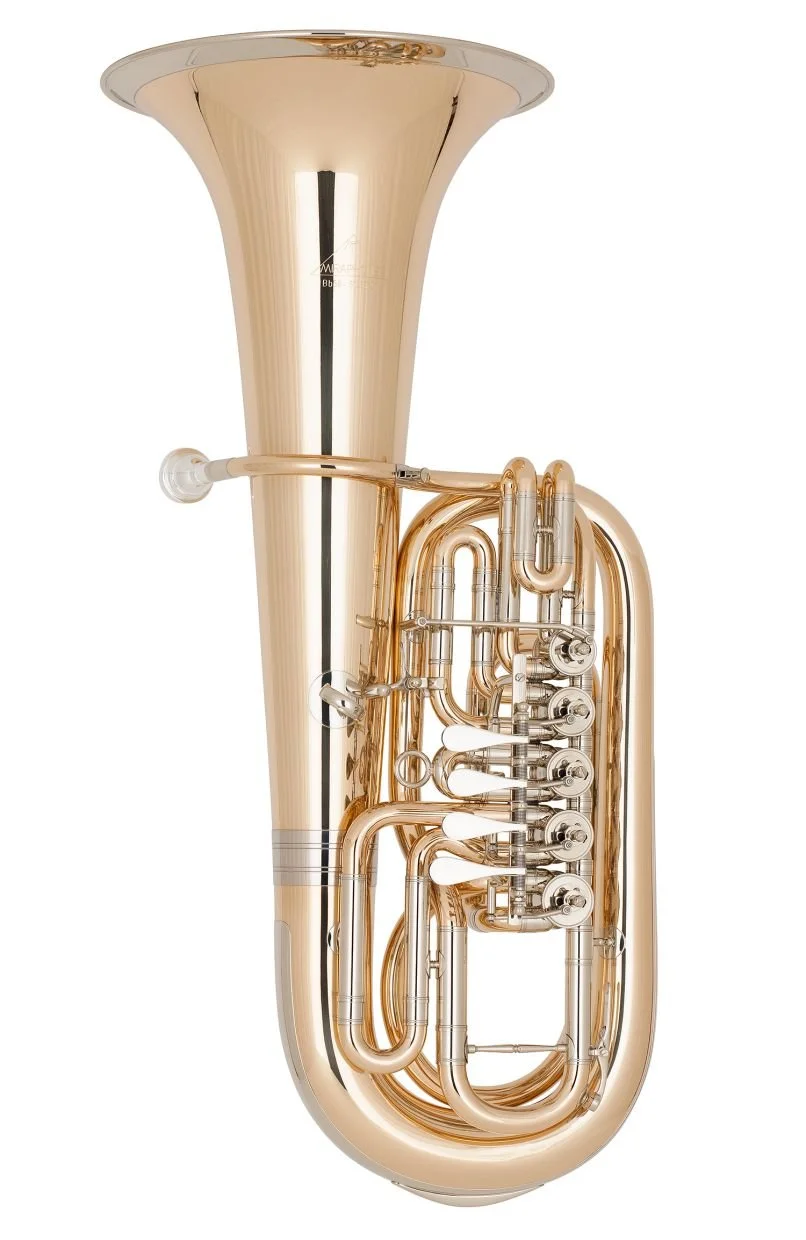
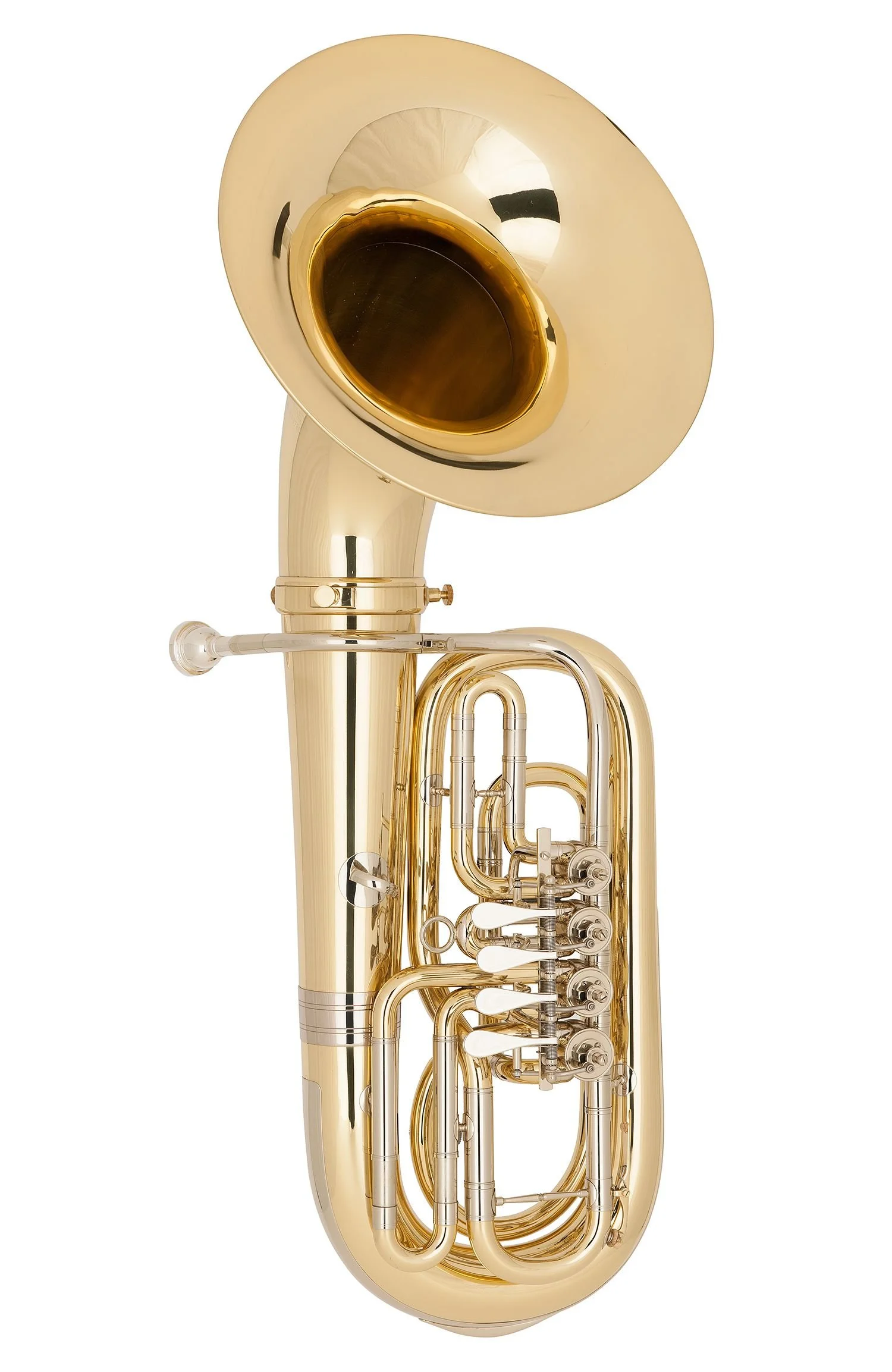
It is worth noting that while some prominent manufacturers like Miraphone have clearly defined sizes for oval baritones and Kaiser baritones, some manufacturers don’t quite fit into those boxes. Cerveny, for instance, only makes one size of oval baritone in several different models, with a bore of .598” and a bell anywhere between 10.2” and 11.8”. This fits right in between Miraphone’s two sizes, and while we can certainly debate whether or not this size qualifies as a baritone or Kaiser baritone, Cerveny calls them all baritones. In this sense the term “Kaiser baritone” is not so black and white, but at the same time it has a clear meaning just like a Kaiser (contrabass) tuba.
It’s also important to point out that while most German tenorhorns, baritones, and Kaiser baritones are in the Cerveny-style oval shape, not all of them are. Pictured to the right are two Miraphone models of Kaiser baritone, the 565 (left) and 56B (right). The 565 is what orchestral low brass players love to call a tenor tuba, and get all mystical about it. In reality the German tenorhorn, German baritone, Kaiser baritone, British euphonium, American baritone, true American euphonium/Bb bass, possibly the American tenor horn (not sure on that one), and the French bass saxhorn are all just regional forms of tenor tuba.
Miraphone also used to make an upright-form Kaiser baritone in C, the model C56A. It no longer appears on their website, so I assume it’s no longer available.
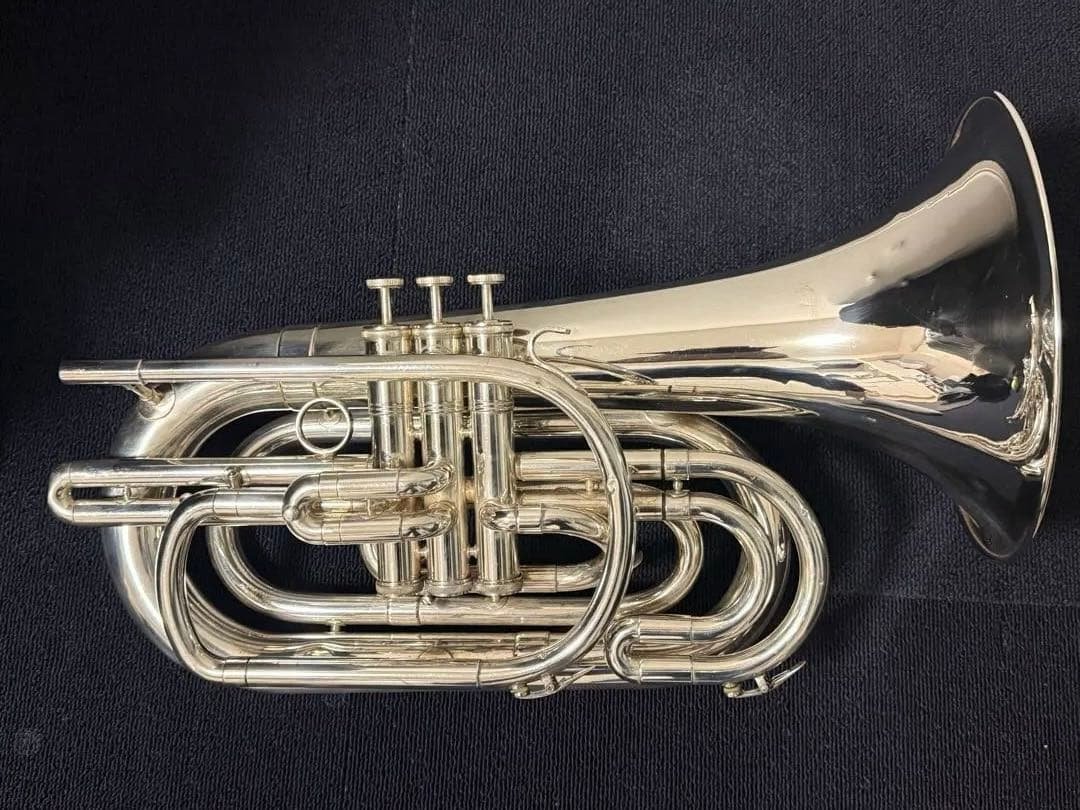
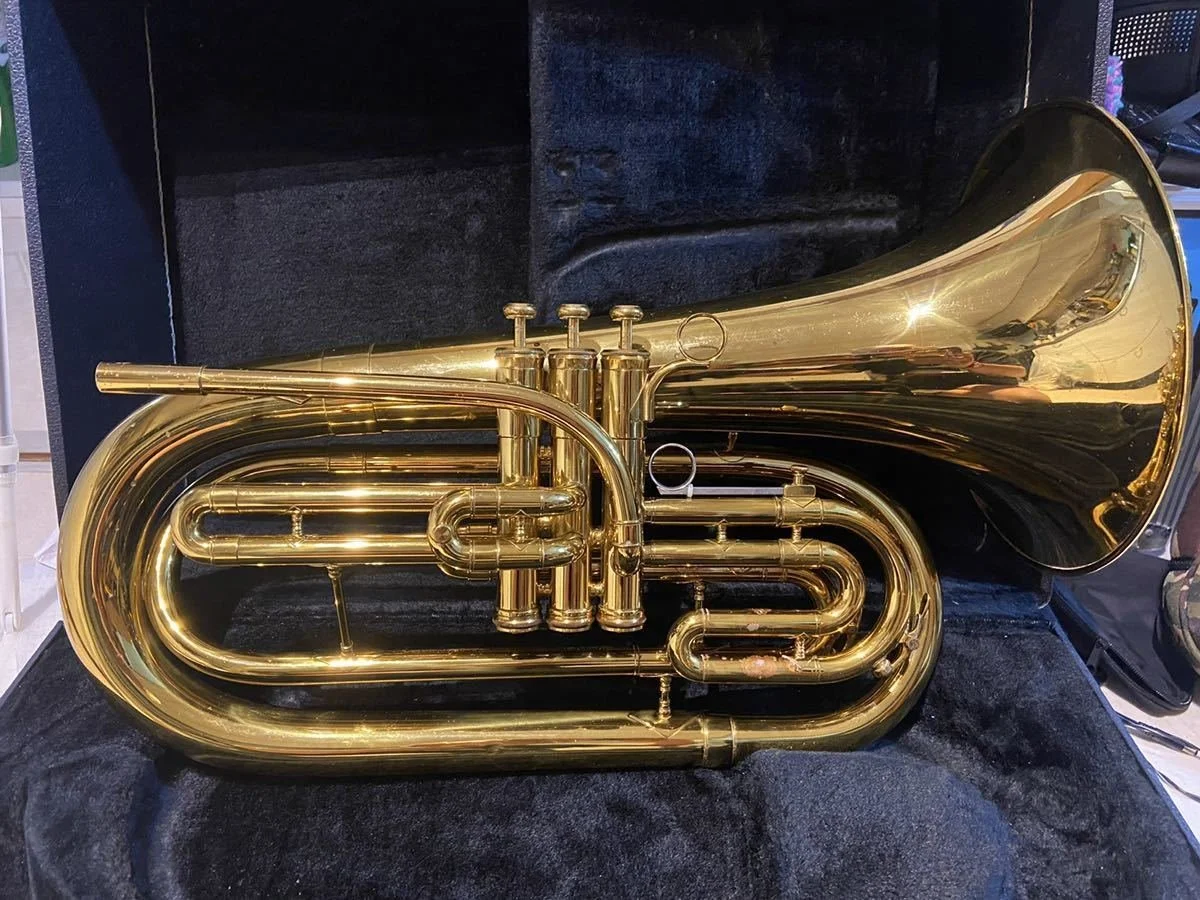
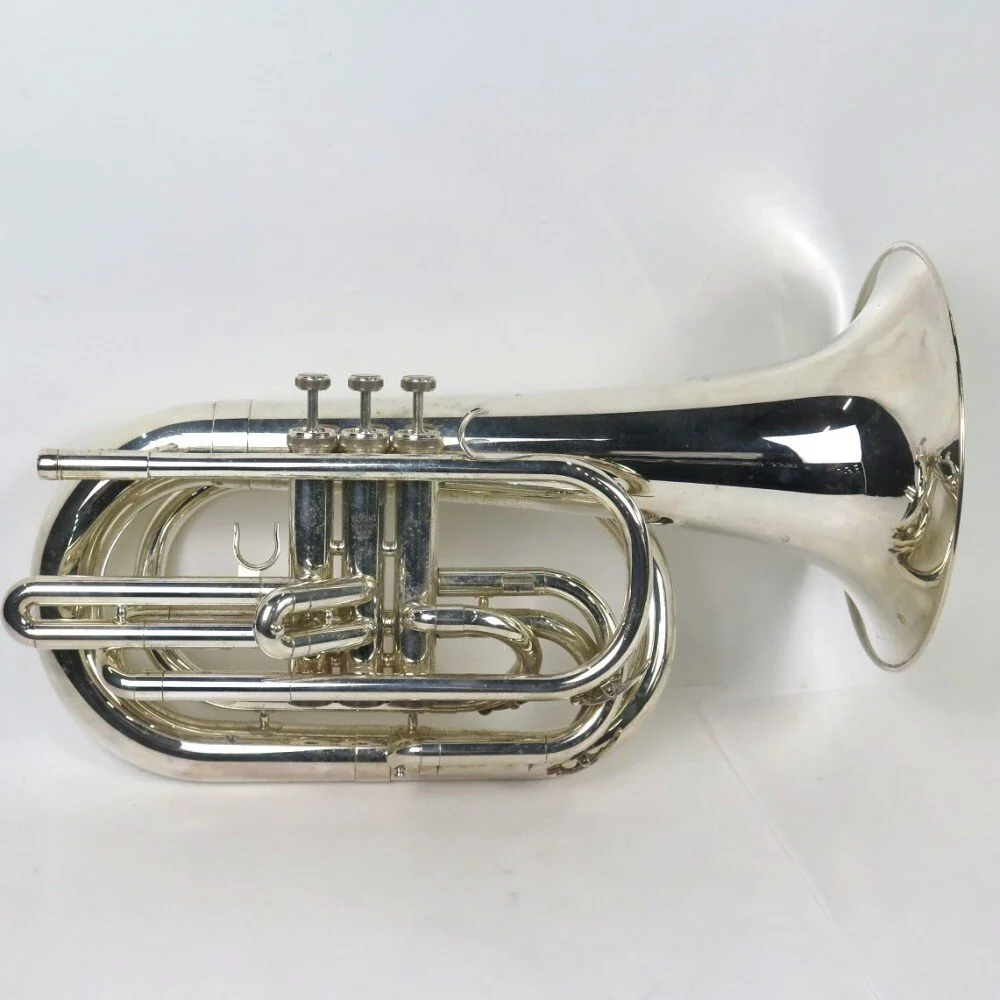
To finally end this article, we should discuss the marching baritone. This is an American invention that was originally essentially an American baritone wrapped like a trumpet. As with most modern marching brass, they were first drum corps bugles in G, initially with incomplete valve arrangements like one piston and one rotor before eventually gaining 3 valves. These instruments were made with the tooling from B-flat concert instruments, with added cylindrical tubing to drop them down to G. They were eventually reverse-engineered by their manufacturers into B-flat marching instruments for scholastic marching bands. Early models like the King 1124 and Blessing M-300 Artist were eventually superseded by newer and larger models, including the now-ubiquitous Yamaha YBH-301M. This instrument is really just a smaller euphonium, and is related to the Yamaha YEP-202M marching euphonium in the same way the Miraphone 54L baritone is related to the Miraphone 56L Kaiser baritone.
Summary
Hopefully all of the information above helps to clear up some long-standing confusion about why certain things are called certain things, and inform those interested about variations of these kinds of instruments that you might have been unaware of. Here’s a quick TL;DR summary:
American alto horn - in F or E-flat, bell front or bell up, front action or top action pistons, sometimes called “altonium” by King (even though they made one “altonium” that’s actually very different)
Solo alto - cornet-shaped alto horn, small bell
Bohemian alto - also called circular alto, rotary valves, wrapped like a French horn, usually in E-flat, can be left or right handed
British tenor horn - in E-flat (very rarely F), really should be called an alto horn, most-used alto horn in the world, called “charcheta” in Mexican banda
German althorn - oval-shaped, rotors, usually in E-flat but sometimes F (Miraphone), really an alto tuba
German tenorhorn - oval-shaped, rotors, 3 or 4 valves, ~.512-.551” bore size range
German baritone - usually oval-shaped, rotors, 3 to 5 valves, approximately smallish euphonium size
Kaiser baritone - usually oval-shaped, rotors, 3 to 5 valves, typically very large bore
Rotary tenor tuba - an upright Kaiser baritone, but it looks like a small tuba so people get all wistful about it
American tenor horn - obsolete, roughly analogous to German tenorhorn, ~.531” bore
American baritone - the middle size between the smaller tenor horn and larger XL euphonium-sized true American euphonium/B-flat bass, usually .562” bore, all sorts of variations including double bells
Oberkrainer baritone - American-style baritones used in western European Oberkrainer music, including those built new by European makers for that purpose
American euphonium - fairly rare, larger than even most modern British euphoniums (~.594”)
Pryorphone - what Holton called its bell-front euphoniums for awhile for some reason
British baritone horn - much smaller than euphonium or American baritone, lighter sound, uses 3-valve compensating a lot, ~.510-.547” bore size range, still conical
British euphonium - typical euphonium used everywhere today, a regional form of tenor tuba like most things below alto in this article
Bass saxhorn - quirky French tenor tuba (very cool)
Marching baritone - baritone wrapped like a trumpet for marching band use, originally around American baritone in size, now often just a smaller euphonium (e.g. Yamaha YBH-301M)
Baritone bugle - the drum corps instrument in G that led to the B-flat marching baritone
Helicon baritone - what Buescher called their tenor sousaphone
It’s that easy!