Trombonium
The trombonium is a fairly obscure brass instrument that has a Seussian name. But what actually is it?
Fortunately, that’s a simple answer: it’s a valve trombone wrapped like a bell-front American baritone horn. Case closed! But you can get that information from Wikipedia, and you come to a nerdy brass website like this one to find out more nitty-gritty details. So, let’s dive in a little more.
Those who have heard of the trombonium have probably only heard of two models: the King trombonium, and the Conn 90G. The King trombonium, model 1140, is the originator of the name “trombonium”. King loved giving whimsical new names to their marching instruments, like flugabone and mellophonium. The King 1140 enjoyed a brief period of brass stardom when legendary jazz trombonists J.J. Johnson and Kai Winding used them on two albums: Jay and Kai + 6 (1956) and Jay and Kai (1957). As I’ve learned myself through the two 1140s I’ve owned, the 1140 is a wonderful instrument that plays better than just about any other type of valve trombone (in any form) out there. So, I’m not surprised JJ and Kai pulled them out to record with more than once. The 1140 has pretty typical small bore trombone specifications, with a .500” bore and 8” bell. These are the same specs as the King 1130 flugabone and a few King slide trombone models (606, 306 Tempo, 1306 Tempo, and 2115 2B+).
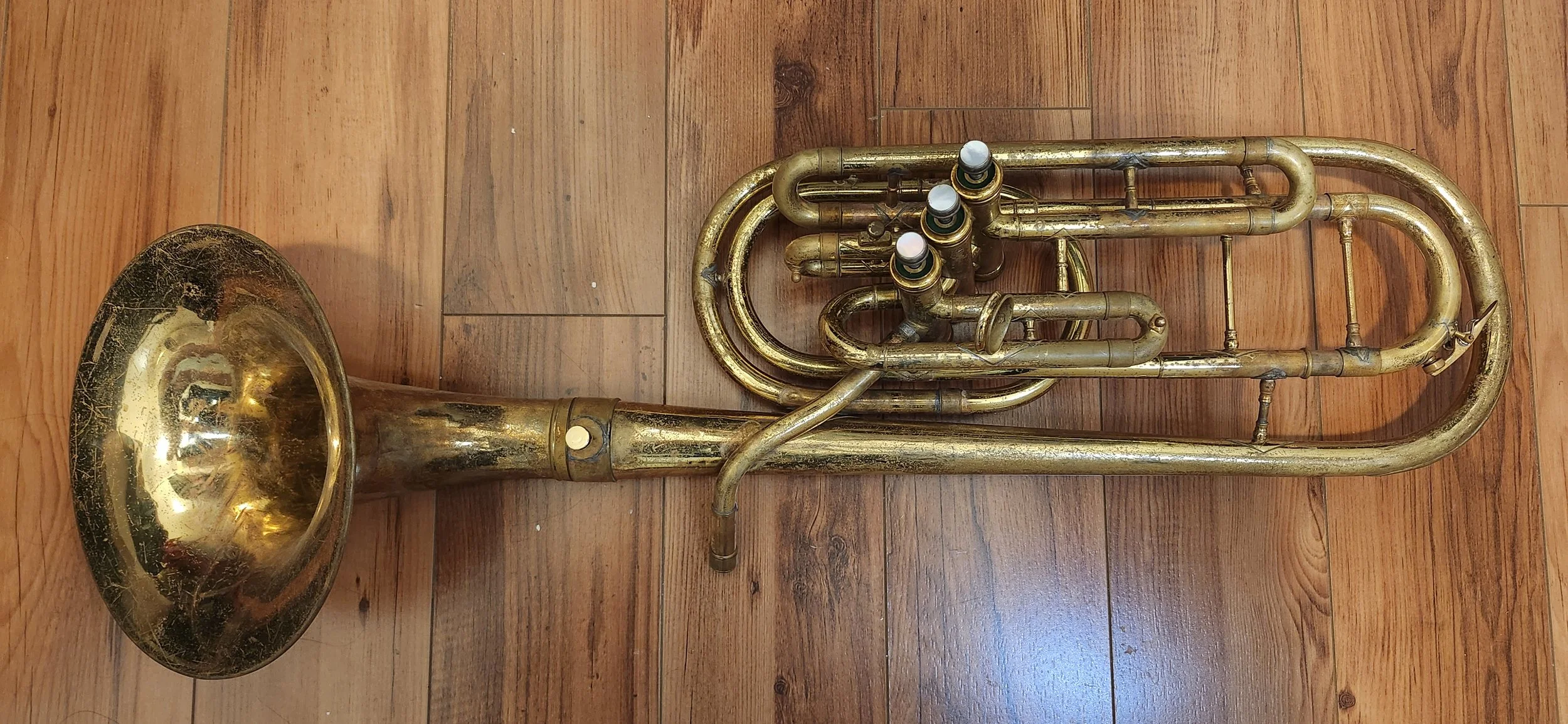
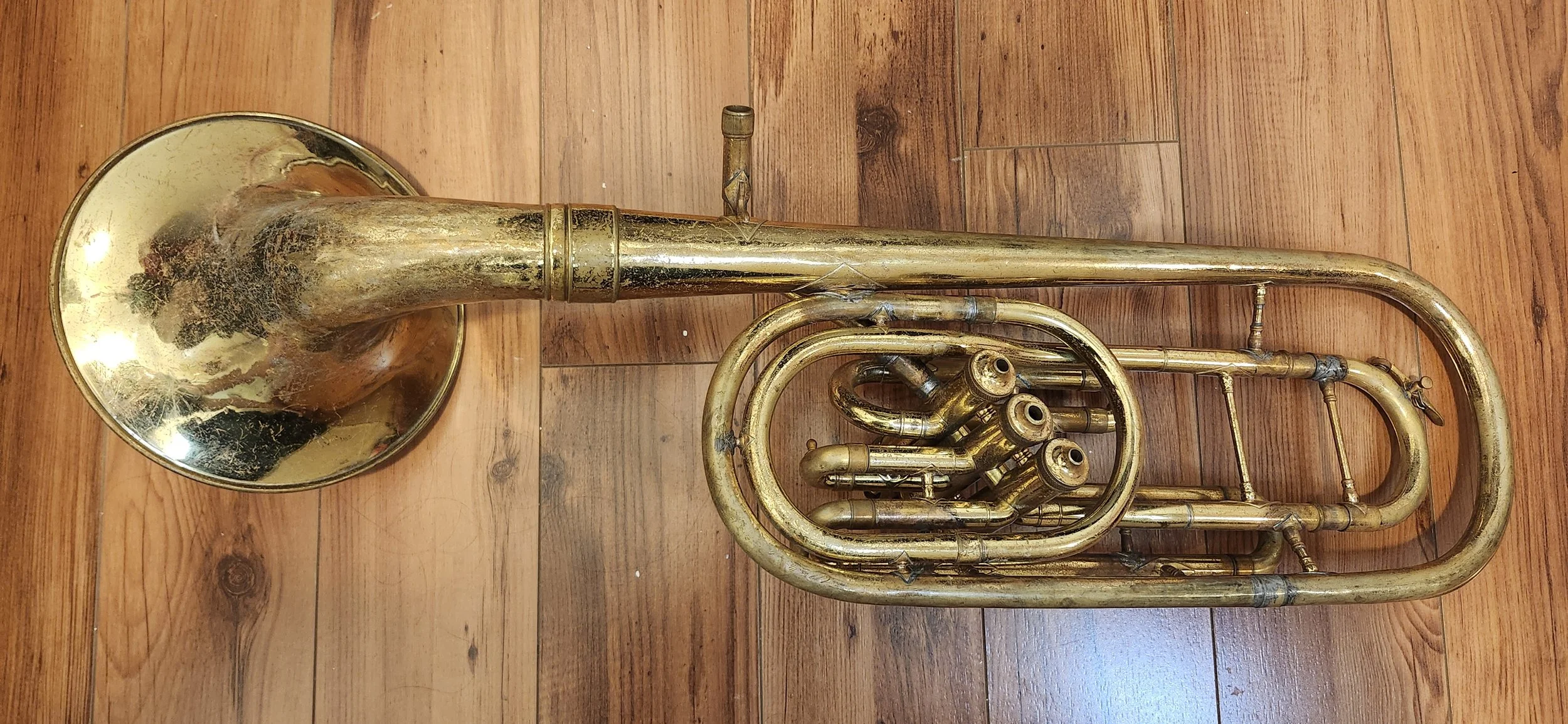
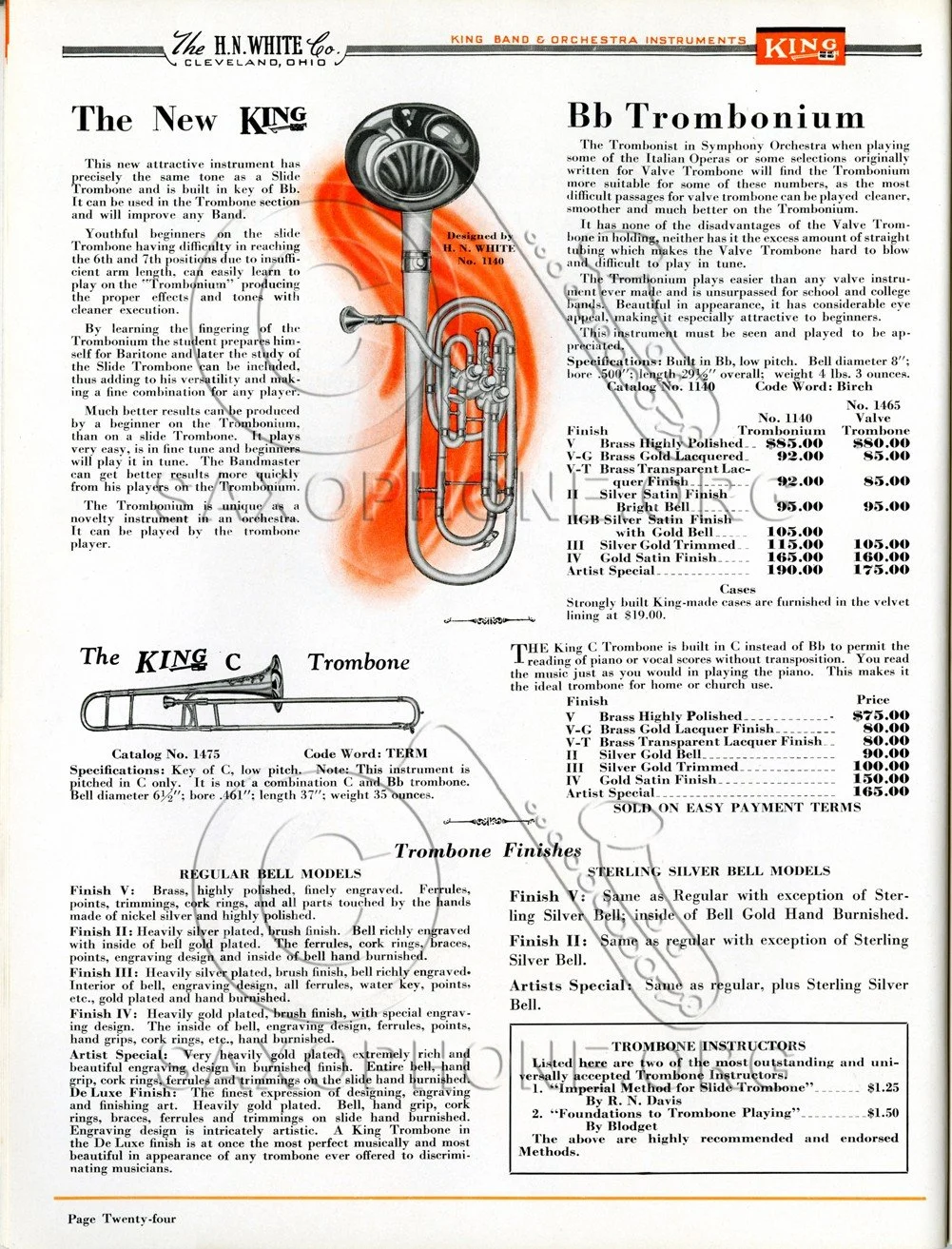
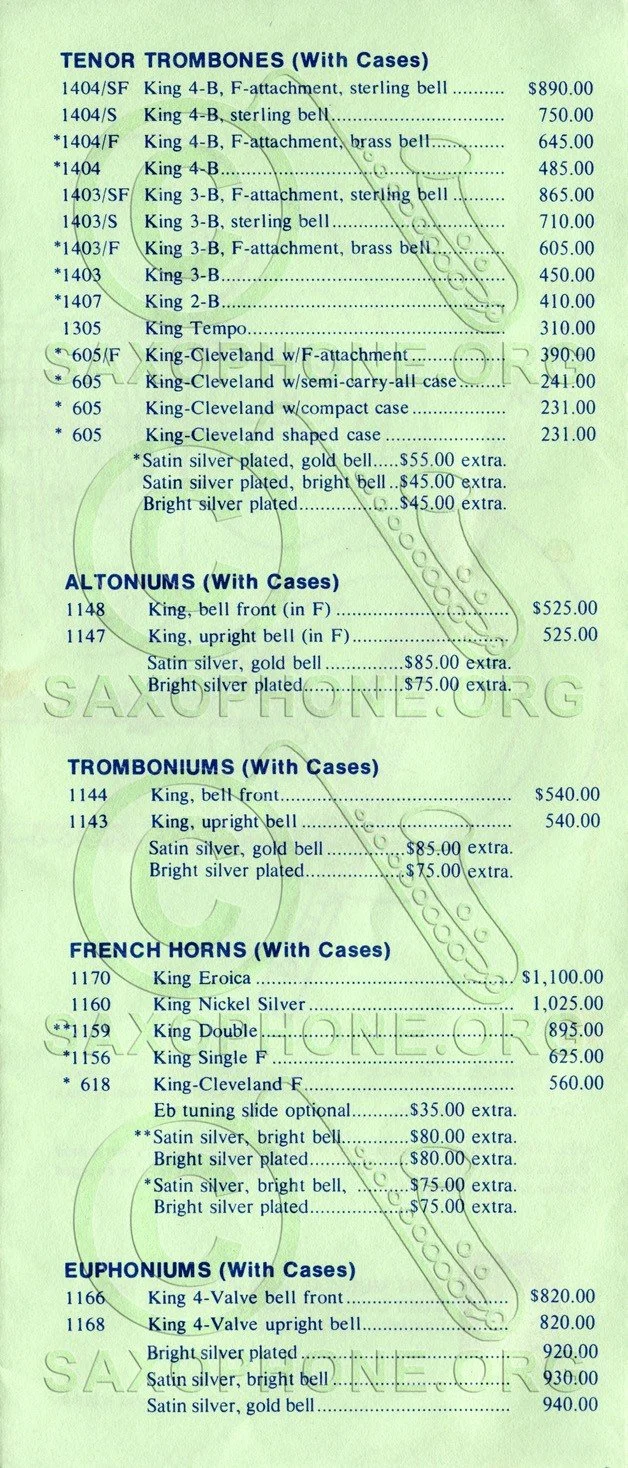
Using King catalogs as a guide, the King trombonium appears to have been introduced in either 1937 or 1938, making the two I’ve owned (1939 and 1940) very early examples. It was at least produced through 1976, which is the latest King catalog on saxophone.org. I’d love to track down later King catalogs to see when the trombonium was finally axed from the lineup. Note the model numbers in the 1976 price list above. Sometime in the mid-1970s, the 1140 was replaced by an updated model 1144, with the 1143 added as an upright bell option. A few 1144s have come and gone on the Internet, but they are much rarer to find than the 1140, and I’ve never seen an 1143. I have to assume that the 1143/1144 didn’t last long and not very many were made.
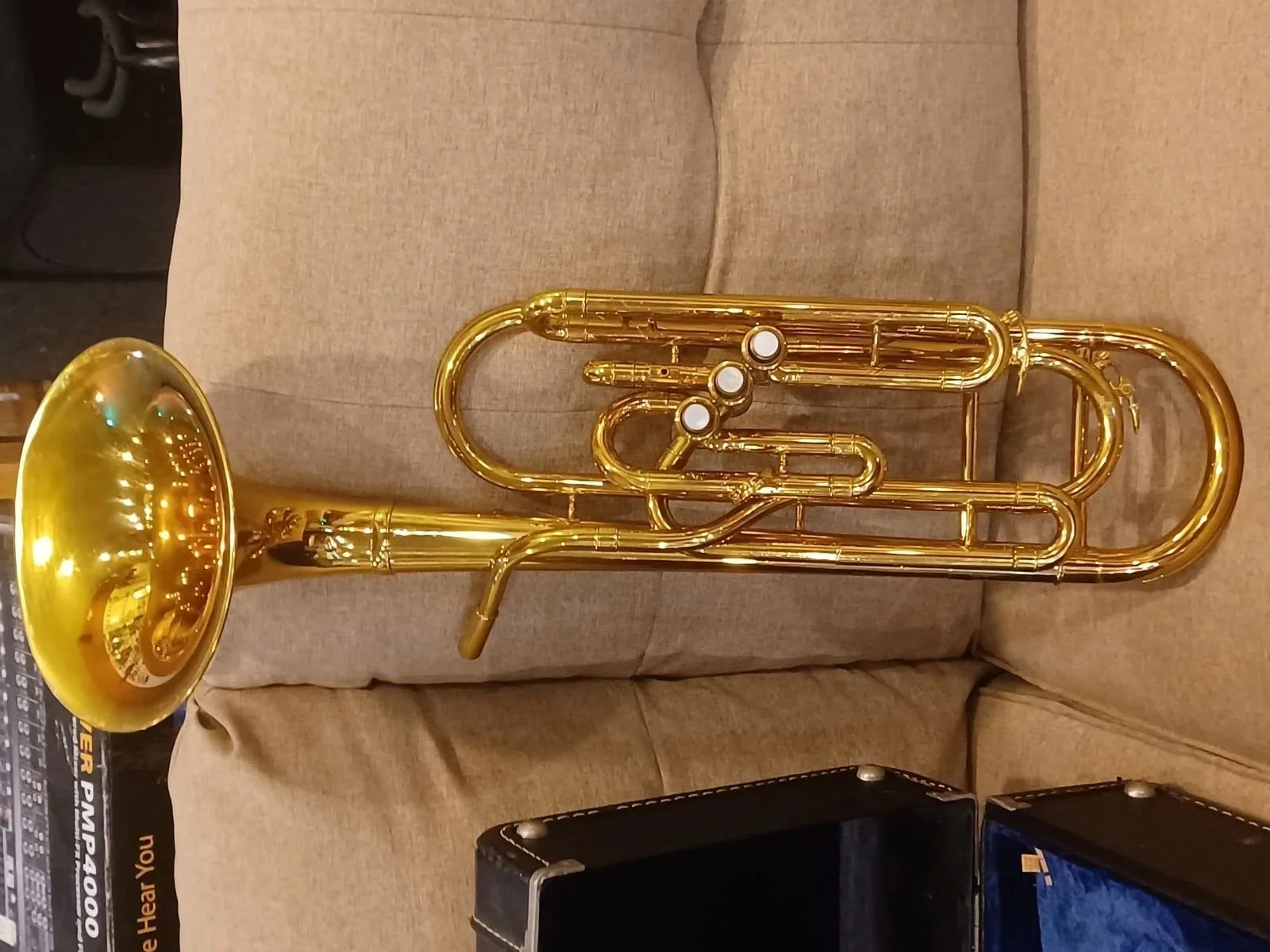
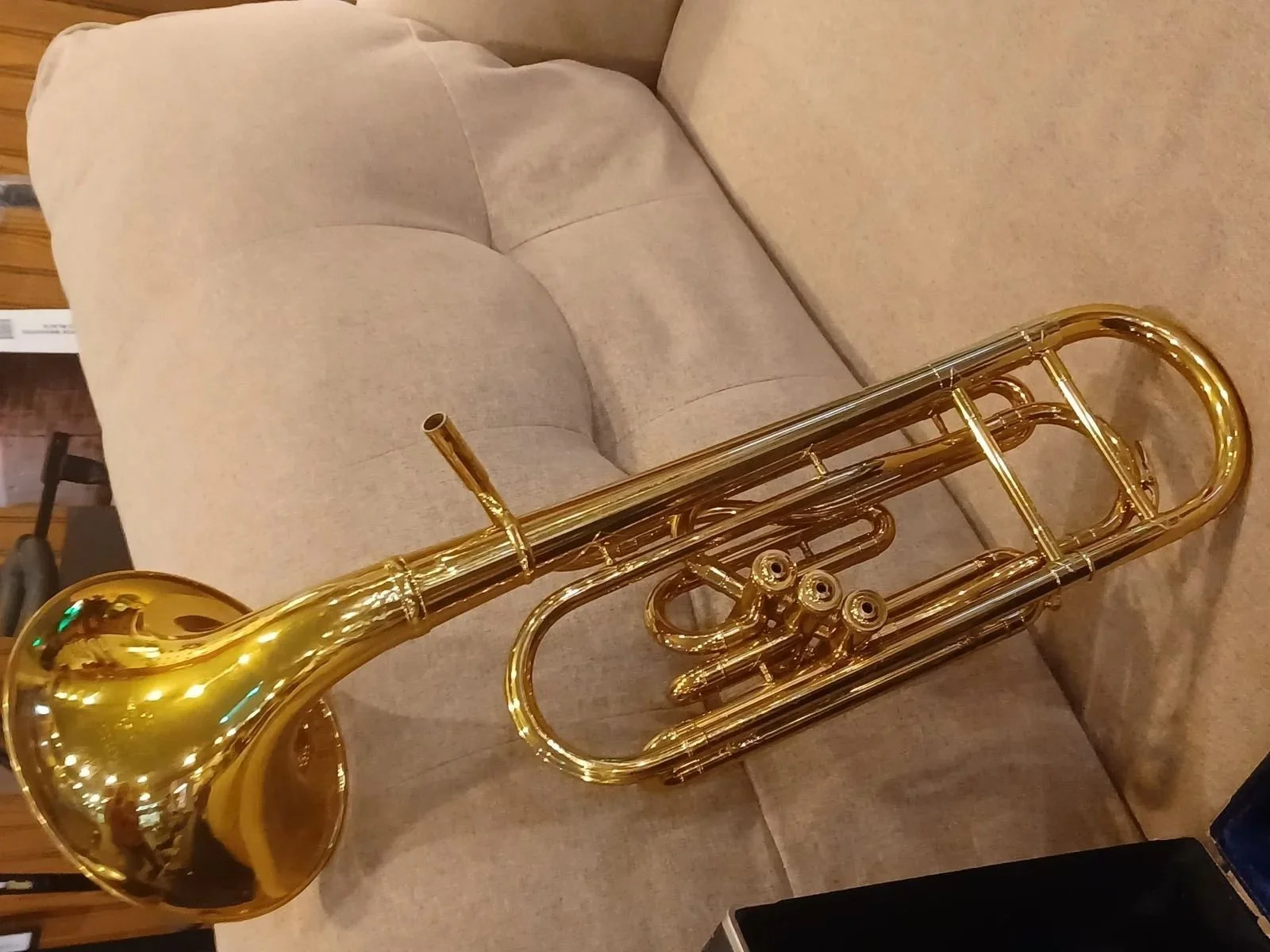
There are a few key differences between the 1140 and the 1144. The most obvious can be seen when looking at the back of the 1144: that is absolutely an existing trombone bell section shoved into the middle of the trombonium. I suspect this was to cut costs by streamlining production and using the same parts for multiple instruments. It could have also been inspired by the Conn 90G, which was around by then and used a complete trombone bell, right down to the slide receiver. You can also see that the bell no longer has the old-style thick collar on the bell to remove it via the one large screw, and instead has a small ring that’s likely just a fixed ferrule. Other notable differences include the leadpipe routing, which goes down into a narrow tuning slide first before coming back up to go into the valve block. Finally, the 3rd valve slide is more evenly distributed above and below the valves than on the 1140.
How do all these changes effect how the 1144 plays? I wish I knew, but I have yet to even see an 1143 or 1144 in real life, let alone get the opportunity to play one. Hopefully one day!
On the other end of the King trombonium’s production life, King also made an American Standard version of the 1140. I did see a silver-plated American Standard trombonium sell on eBay in the past couple of years, but that’s the only one I’ve seen. I’d love to know how many were made, how long they were produced, and most importantly how they differ from the King 1140. Considering the 1140 has no nickel trim whatsoever, I’m not sure what they could have done to make it more cheaply except using lower-grade brass. The American Standard trombonium was listed in 1939 for $60 ($1,441 in 2026 dollars), as opposed to the King 1140’s $85 ($2,042).
1939 American Standard catalog (via saxophone.org)
Ever one to compete with King, Reynolds introduced a similar instrument in 1952 that they called the “tromhorn". This was the Reynolds Contempora 95, which was produced from 1952 to 1964. It fought a losing battle against the King, which was well-established by 1952 as it had already been on the market for 14 years. The specs are similar to the King, with the same .500” bore but a slightly smaller bell at 7.5”. The wrap is clearly inspired by the King, but is not quite the same. The most notable visual difference is that the two loops in the back aren’t right next to each other at the top like they are on the 1140.
Reynolds Contempora 95 “tromhorn”
Of course, you can’t talk about tromboniums without talking about the Conn 90G. This was a .547” bore trombonium using a complete Conn 8H bell section (8.5”) that was made for the Ohio State marching band, who wanted a larger bore trombonium than the King (or Reynolds). According to the Conn Loyalist, it was produced from 1970 to at least 1974.
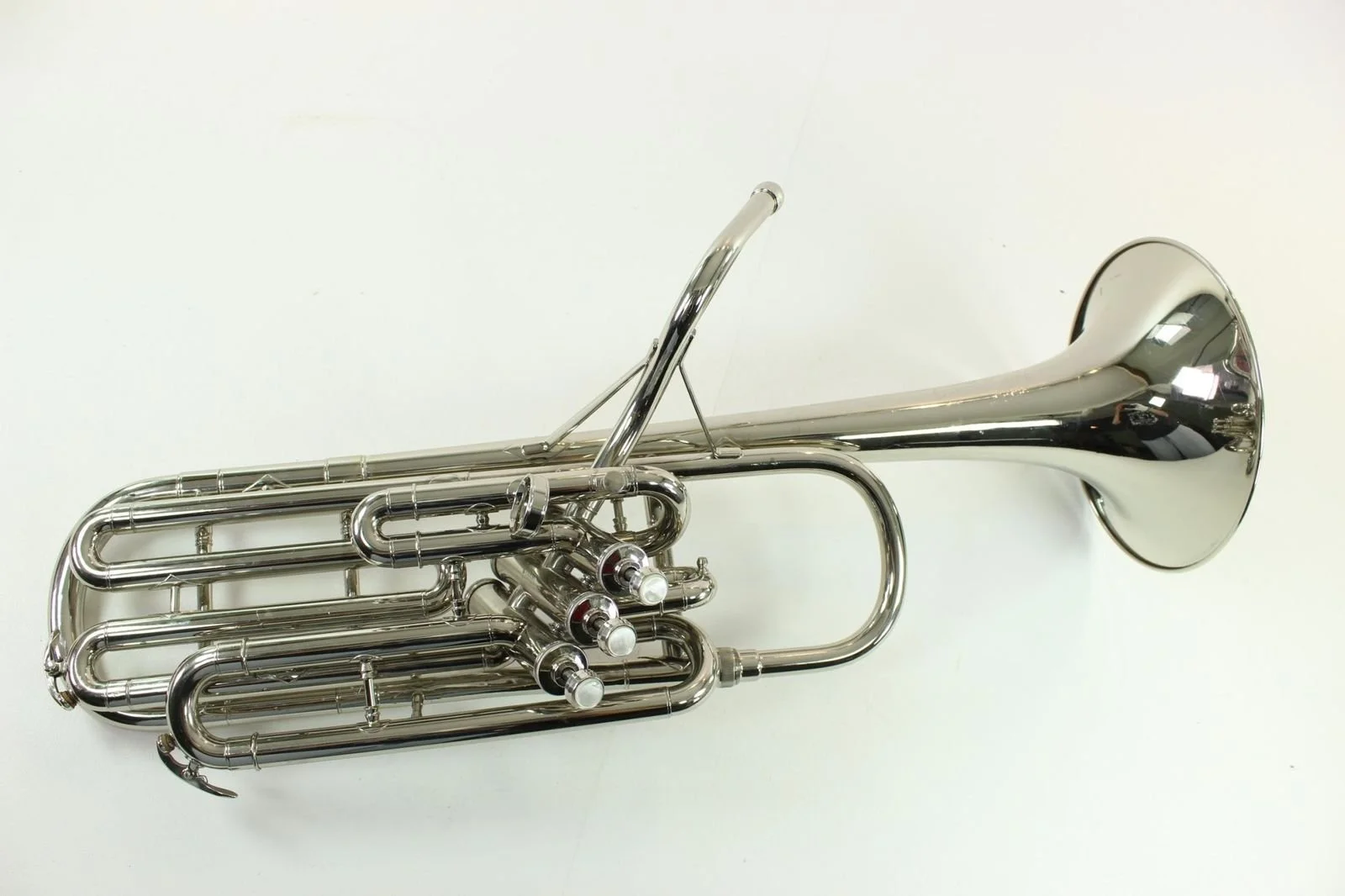
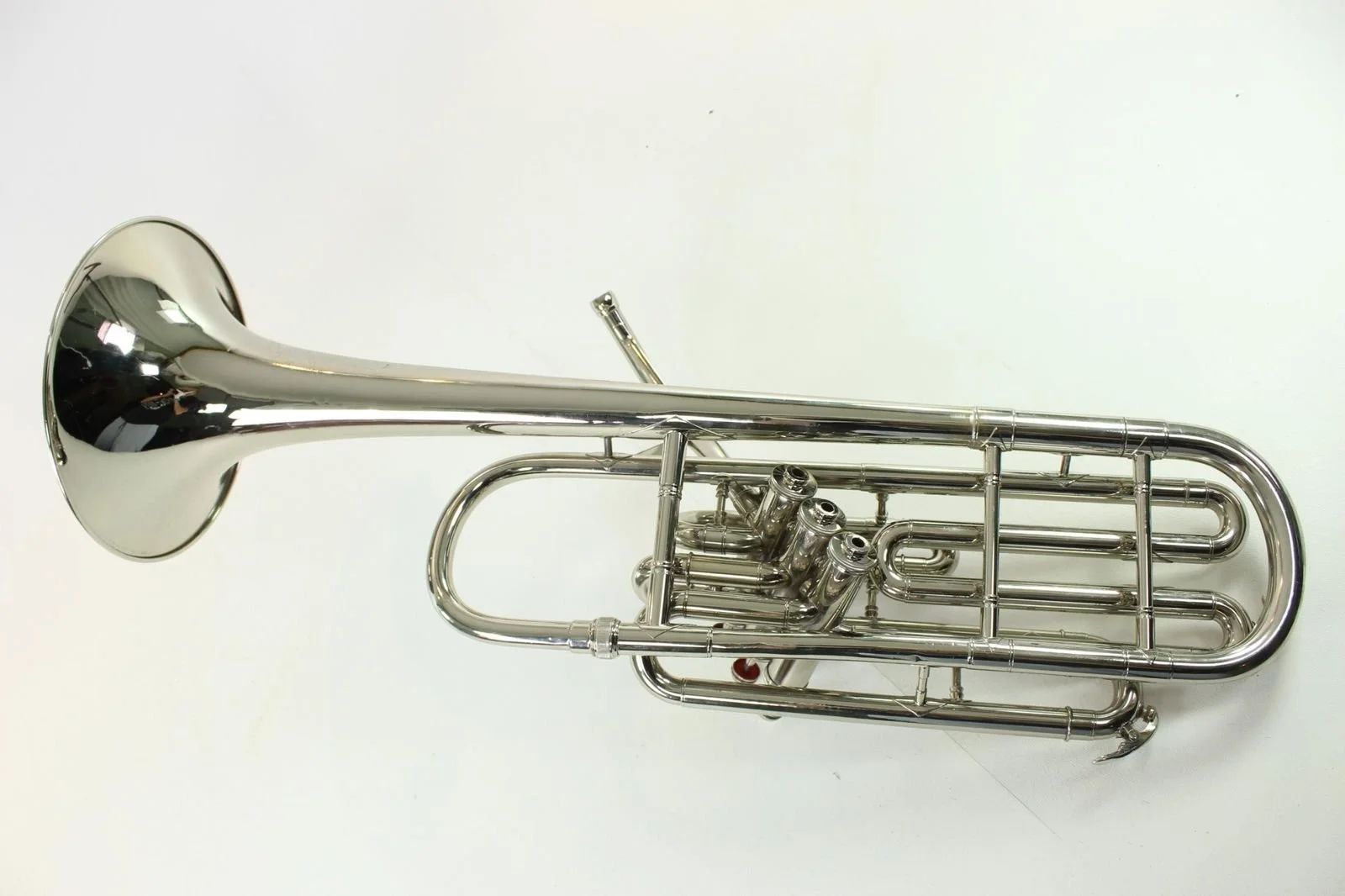
The Conn 90G is something of a legend among trombonists interested in valved brass. They rarely show up for sale, and when they do they fetch collector prices. In theory it’s the ultimate valve trombone for a classical trombonist, as large bore valve trombones of any form factor essentially don’t exist. However, everyone I know who has played one says they are pretty terrible instruments. I haven’t played one myself, and I’d like to just to see if that assessment is accurate. If it is, it’s a shame because a large bore trombonium could have some pretty cool specific niches, like playing the trombone part in a brass quintet playing Bach or something.
As far as I know, this is a comprehensive list of all factory tromboniums out there. If you know of any more, please let me know!
But what about non-factory tromboniums? And maybe even tromboniums not in B-flat…?
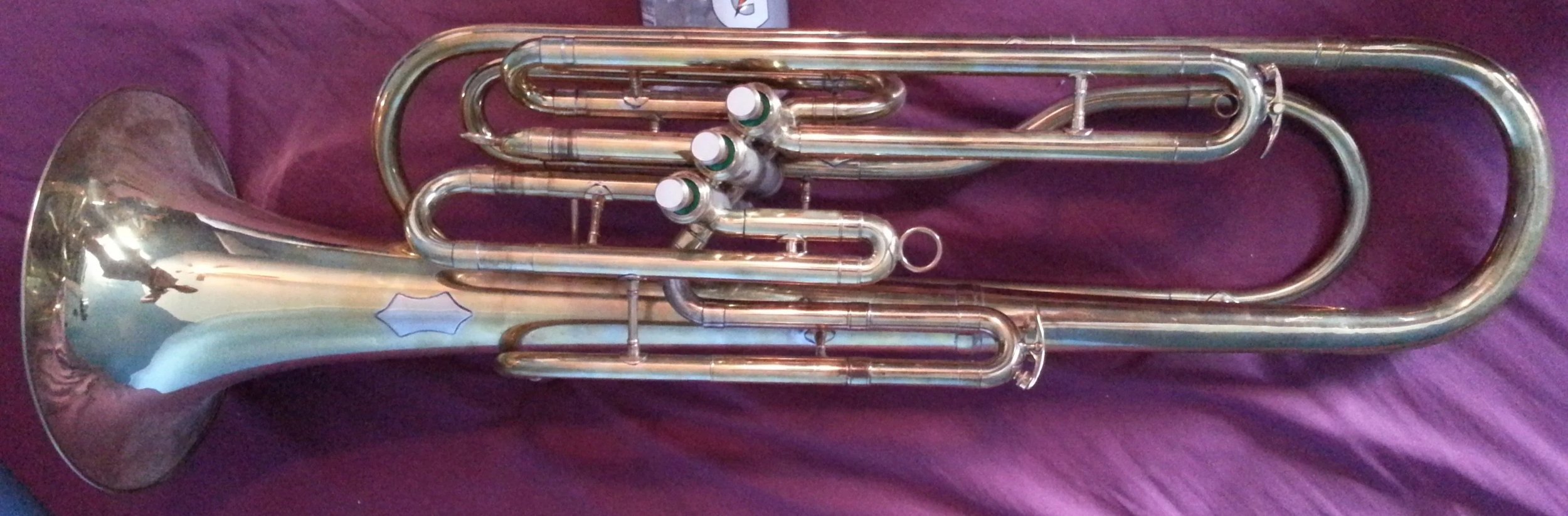
Seen above is an E-flat bass trombonium, made from parts by J.c. Sherman. It uses a fairly similar wrap to the King 1143, but with the leadpipe coming in from the other side of the bell. J.c. Sherman made at least two of these, using 10” G baritone bugle bells, baritone horn valve sets (typically .562”), and lots of straight tubing. I wish you could buy one of these straight from the factory!
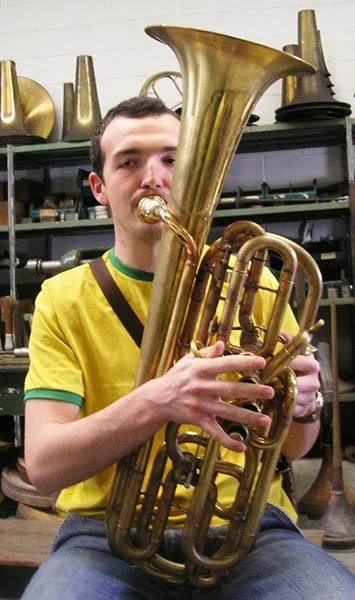
Kurath upright cimbasso in F
To the left here is a Kurath upright cimbasso in F. It has never strictly been called a trombonium as far as I know, but being as a trombonium is a valve trombone in baritone horn form and cimbasso is a contrabass valve trombone, then technically this instrument is a contrabass trombonium!
Finally, we should briefly discuss the King “altonium”. King appears to have introduced the term post-World War 2, changing its model 1146 (F and E-flat) and 1148 (E-flat only) alto horns from “recording model alto” to “altonium”. In the mid-1970s, presumably at the same time that the 1140 trombonium was succeeded by the 1143 and 1144, King replaced the 1146 and 1148 with the 1147 and 1148, in F only and with a French horn shank and oversized bell. These instruments are quite rare, and are fundamentally different instruments from the 1146/1148 before, and so I believe “altonium” is the only correct term for those specific models.
Both versions of King altonium were always paired with the trombonium in catalogs, suggesting some sort of relation. I don’t believe there is any real relation other than a similar wrap, and in even in the catalog drawing below you can see that the altonium has a larger bow than the trombonium does. A true alto trombonium would be just as small, if not smaller, through the bell.
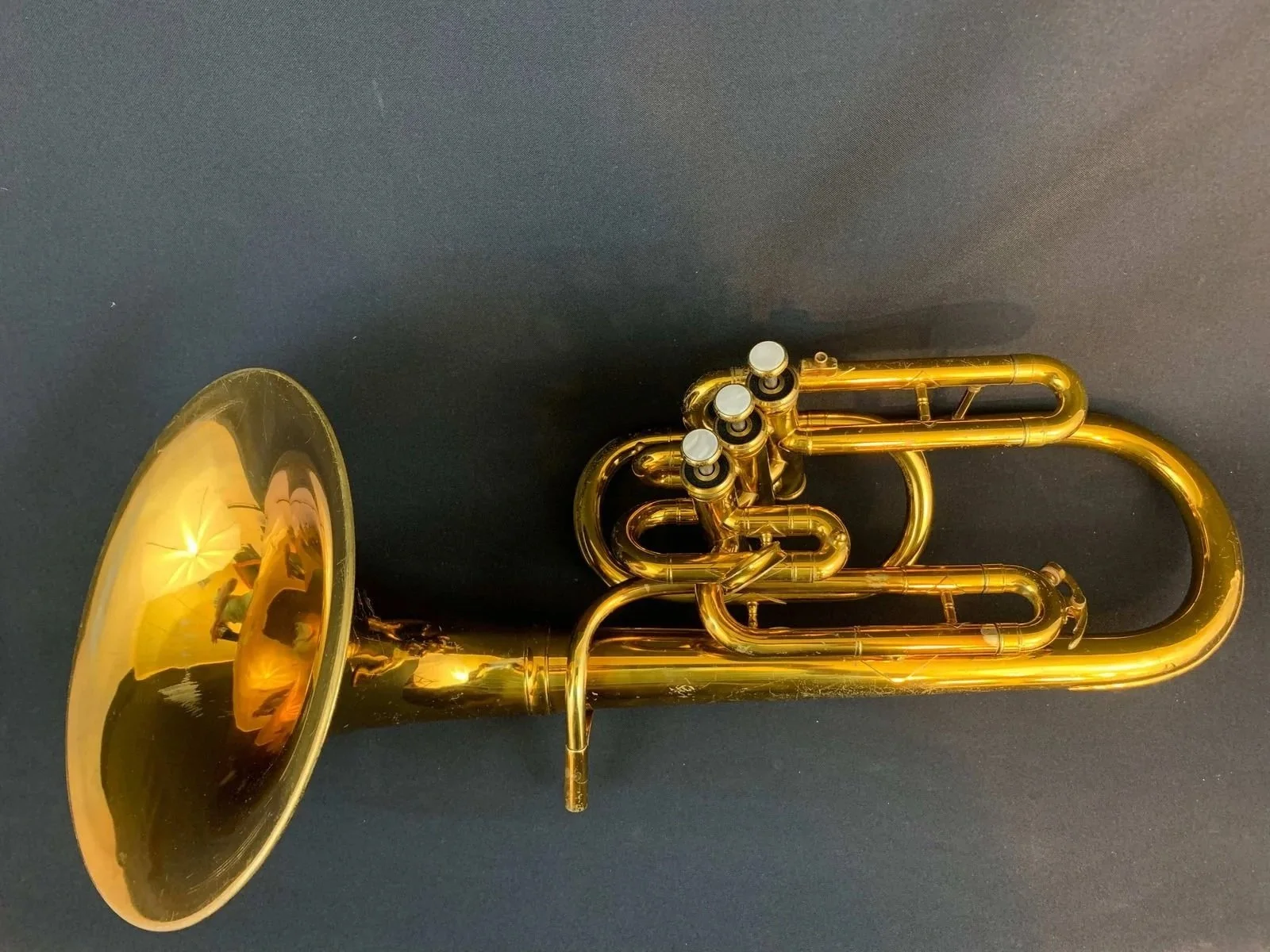
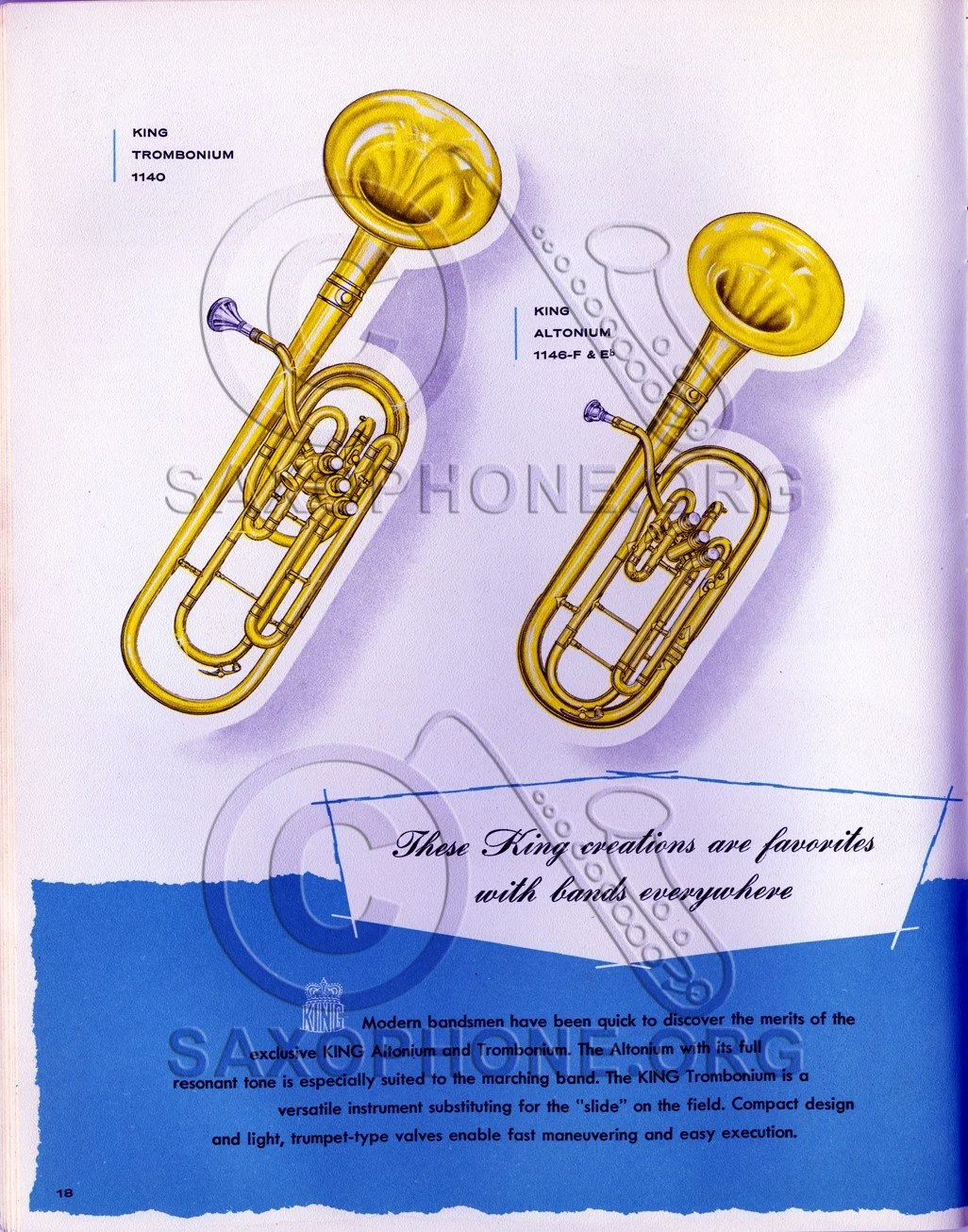
Note the oversized bell flare and smaller overall wrap in the 1147 pictured above, compared to the 1146 in the catalog to the right. True altoniums are rare, and I’ve never had the chance to play one, but I’d love to see if out of all the attempts to make a marching high F instrument with a French horn mouthpiece (frumpet, high F marching horn), King actually made it work. I’d also enjoy seeing someone make a real alto trombonium, though out of all the useless instruments I’ve owned and wished existed, that might be one of the most useless!