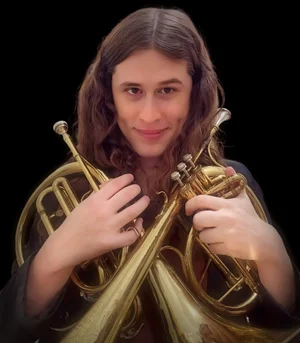
Contrabass Trumpet
The contrabass trumpet is a very rare beast, and very few people have even seen one let alone played one. But they do exist, and more of them should exist, so let’s talk about it.
The contrabass trumpet is a member of the trumpet family in 12’ F or 13.5’ E-flat, the same length as the equivalent tubas. But it’s much smaller than a bass tuba or even a cimbasso, and it truly sounds like a trumpet. The Lars Gerdt model GS contrabass trumpet, the only model you can order new, has a .563” bore and 9.6” bell, which are bass trombone dimensions. Meanwhile, the Haag cimbasso has a .623” bore and 10.6” bell, while the Meinl-Weston cimbasso has a .728” bore and 10.6” bell. It’s the same relationship as orchestral bass trumpet and valve trombone, just a 4th or 5th lower and with a much larger gap between them.
The instrument is a modern invention, and was the brainchild of tubist Roger Bobo in 1967. He played in the Los Angeles Brass Quintet (among many other things!), and he found that neither tuba or contrabass trombone felt correct for certain baroque works by Gabrieli and Pezel, especially as the rest of the group was using all trumpets (hornist on F alto trumpet, trombonist on B-flat bass trumpet) on those pieces. So he had brass technician George Strucel build him a contrabass trumpet in F, using a bass trombone bell and a hodgepodge of other existing parts. This was the answer Roger had been looking for, and he used it on the Los Angeles Brass Quintet recordings of those pieces.
While Roger Bobo’s Strucel contrabass trumpet was not technically the first contrabass trumpet, it was the first valved contrabass trumpet. It was beaten by at least one very long valveless fanfare trumpet. The one we know of was made in the early 20th century by Evette & Schaeffer, and is in contrabass E-flat. But that instrument is little more than a historical curiosity, while the Strucel instrument is a fully functional modern trumpet in every aspect.
Roger Bobo with the contrabass trumpet
Lars Gerdt GS contrabass trumpet
The aforementioned Lars Gerdt GS contrabass trumpet is an instrument the maker offers new, though it will cost you $10,000 and only a couple have been made. One of them was used on the live premiere of the largest work written for the instrument, Igor Krivokapič’s Symphony No. 5. This mammoth piece, subtitled “Seven Trumpets of the Apocalypse”, also uses bass trumpet, piccolo trumpet, contrabass trombone, a full family of helicons from soprano to contrabass, and several rare woodwinds including subcontrabass flute and subcontrabass saxophone. Lars Gerdt is a Swedish maker, and his contrabass trumpet is based on the Strucel instrument. George Strucel himself moved to Sweden towards the end of his career, so I would assume the two corresponded at some point.
Tubist and brass maker/technician Carl Kleinstuber is the most recent builder to carry the contrabass trumpet torch in the United States, when he built 4 contrabass trumpets in F out of spare parts in the 1990s. These instruments have a much smaller bore than the Strucel or Lars Gerdt instruments, instead using a large trumpet bore somewhere between .460-.470”, and they reportedly feel very restrictive to play as a result. They change hands the most frequently out of any contrabass trumpet, but that’s still almost never.
That’s usually the end of list in other sources about the contrabass trumpet, such as Wikipedia. But there are likely at least a handful more we don’t know about. A couple of years ago, a contrabass trumpet in E-flat made by the revered German brass maker Heribert Glassl went up for sale and was quickly sold. Because of this instrument, I would guess that between the dozens (if not hundreds) of brass makers in Germany, a few more contrabass trumpets have been made over the years.
Kleinstuber F contrabass trumpet
H. Glassl E-flat contrabass trumpet
Subcontrabass Trumpet
Those of you who knew about the contrabass trumpet before reading this article have probably noted that I still haven’t discussed the giant tuba-sized trumpet played on television in 1962. This predates the Strucel instrument, but as it is in 18’ B-flat, I consider this a subcontrabass trumpet. Subcontrabass trumpets are even rarer than contrabass trumpets, and thus far pretty much useless (more on that later), but they are out there and they deserve mentioning here.
The instrument featured in this program was made by H.N. White (King) sometime during 1925 to 1930, and is technically a Liberty model, part of their line of normal trumpets and trombones at the time. Only the one, which was used on the show and now resides in the Musical Instrument Museum in Phoenix, is known to exist. Even though American brass makers at the time did all kinds of wacky things, I would guess that H.N. White only made one of these!

H.N. White Liberty subcontrabass trumpet in the MIM
About eighty years later in the early 2000s, Vairis Nartišs out of Latvia built four B-flat subcontrabass trumpets (model NATU711-1). His marketing for the instruments was overly flowery, claiming them to be the world’s first subcontrabass trumpet. Two of the instruments were sent to museums, one was kept for Nartišs’ personal use, and only one was made for sale to private hands. It was listed on Reverb for nearly $11,000. There are multiple videos of the Nartišs subcontrabass trumpet on YouTube, and to me they all telegraph the same thing: subcontrabass trumpets, as built so far, are just tubas in trumpet form. The H.N. White subcontrabass trumpet literally is that, and while I don’t know what parts and mandrels Nartišs used to make the NATU711-1, the resulting sound is much the same as the H.N. White: it…just sounds like a tuba. They are invariably used with tuba mouthpieces in the videos, and I think that’s a big reason why they sound the way they do. But I would also like to know the bore size, and I would definitely like to hear one played with a cimbasso or contrabass trombone mouthpiece instead. Mouthpiece choice is very important with these specialty low instruments.
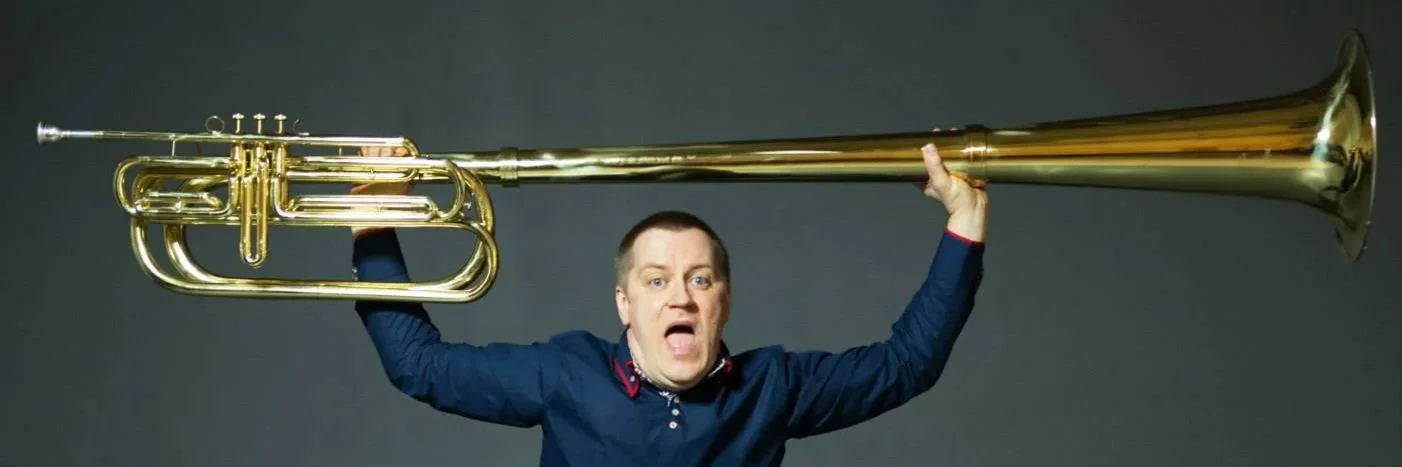
Nartišs NATU711-1 subcontrabass trumpet
I do think it’s possible to make a worthwhile subcontrabass trumpet, with a tighter wrap that keeps the bell close to where it is on a contrabass trumpet. A bass trombone or euphonium bore and a contrabass trombone or cimbasso bell, a generally smaller tapers than these stick tubas, and a contrabass trombone mouthpiece seem to me like they would be the correct formula to make a subcontrabass trumpet that actually sounds like a trumpet. Of course, with a tighter wrap you would need a bipod or something to hold it up, as it would be far too heavy to hold up alone. But this has already been done with Jim Self’s fluba, so we know it can be done well. I also think it would be good to build the instrument in C, rather than B-flat.