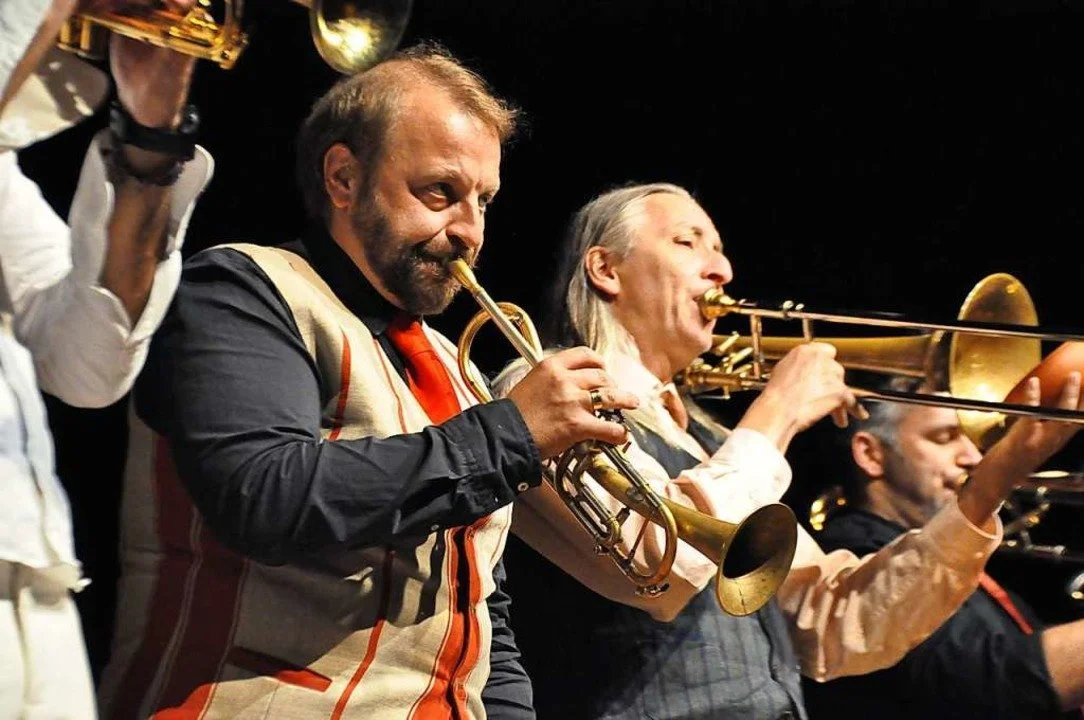
If you are a brass nerd, you’ve probably seen, heard, or at least heard of the inimitable group Mnozil Brass. (If you haven’t, change that ASAP!) One of Mnozil’s most iconic members, Thomas Gansch, plays a trumpet made for him called the Ganschhorn. I’ve seen some confusion and incorrect information floating around about the Ganschhorn online, so I figured I’d write a quick article to lay it out.
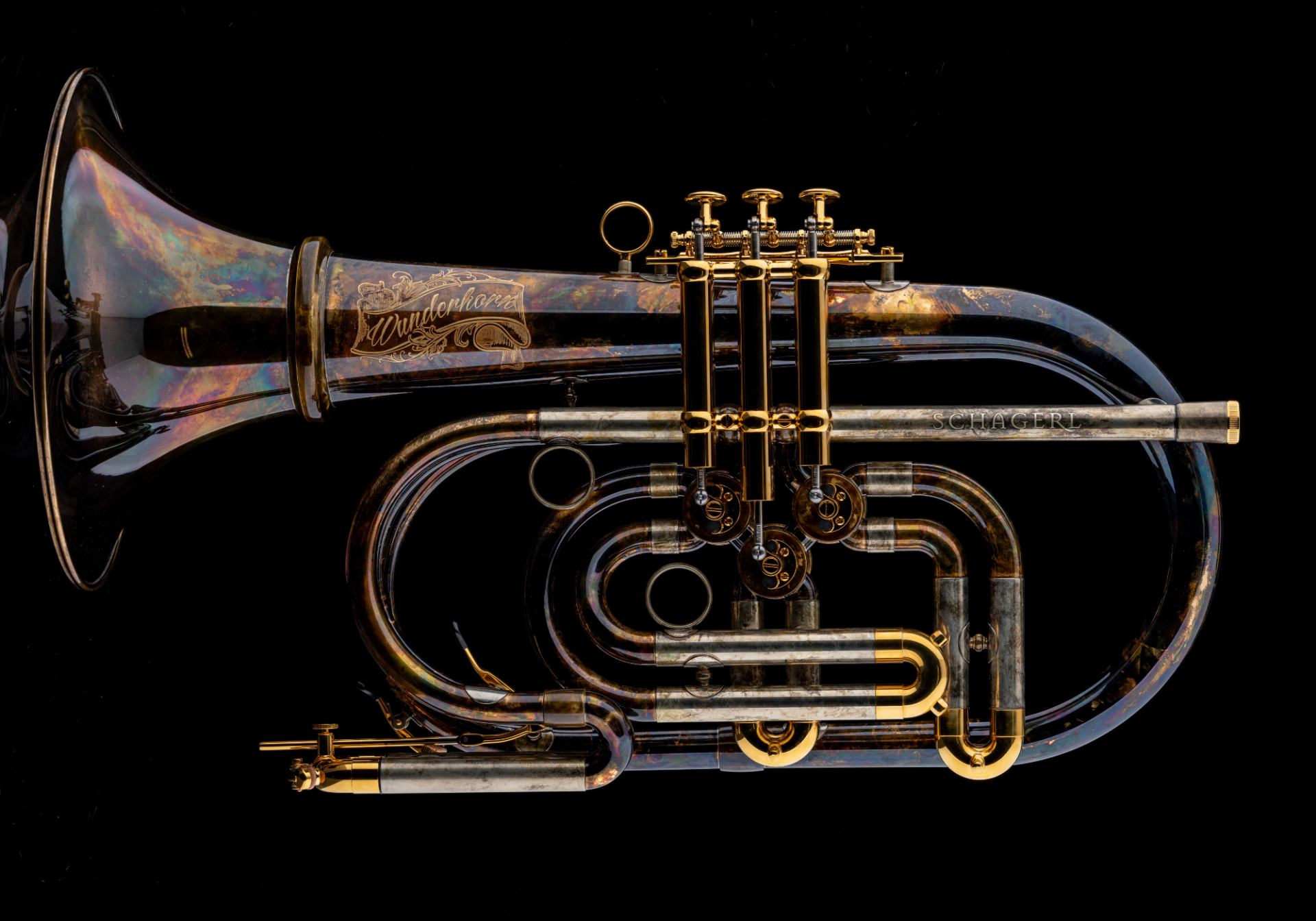
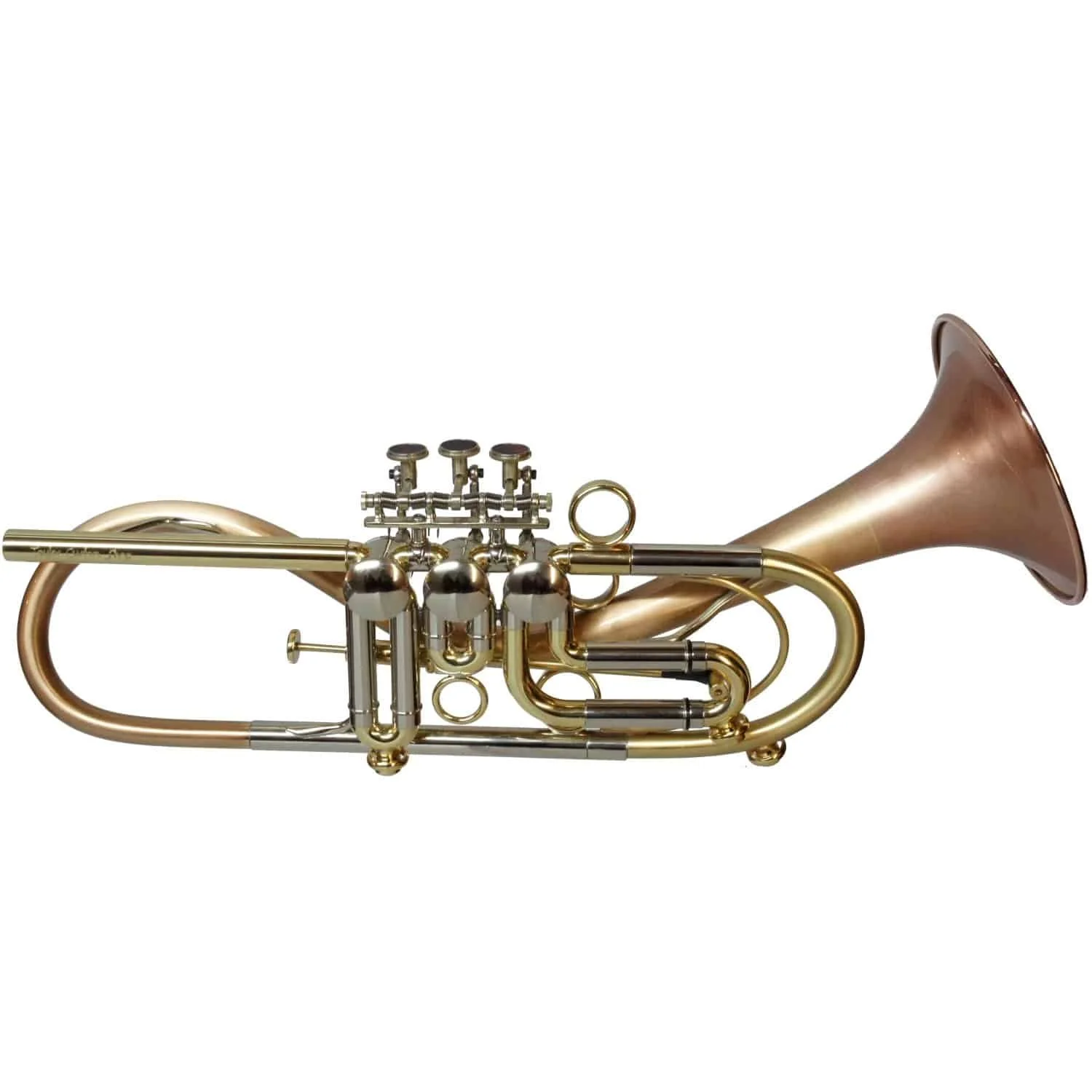
The Schagerl Ganschhorn is a Bb trumpet with top-action rotary valves (TARV) and a unique bell shape. Schagerl designed it for Thomas Gansch in 2012, who wanted the sound and feel of a rotary trumpet with the better handling and ergonomics of a piston trumpet.
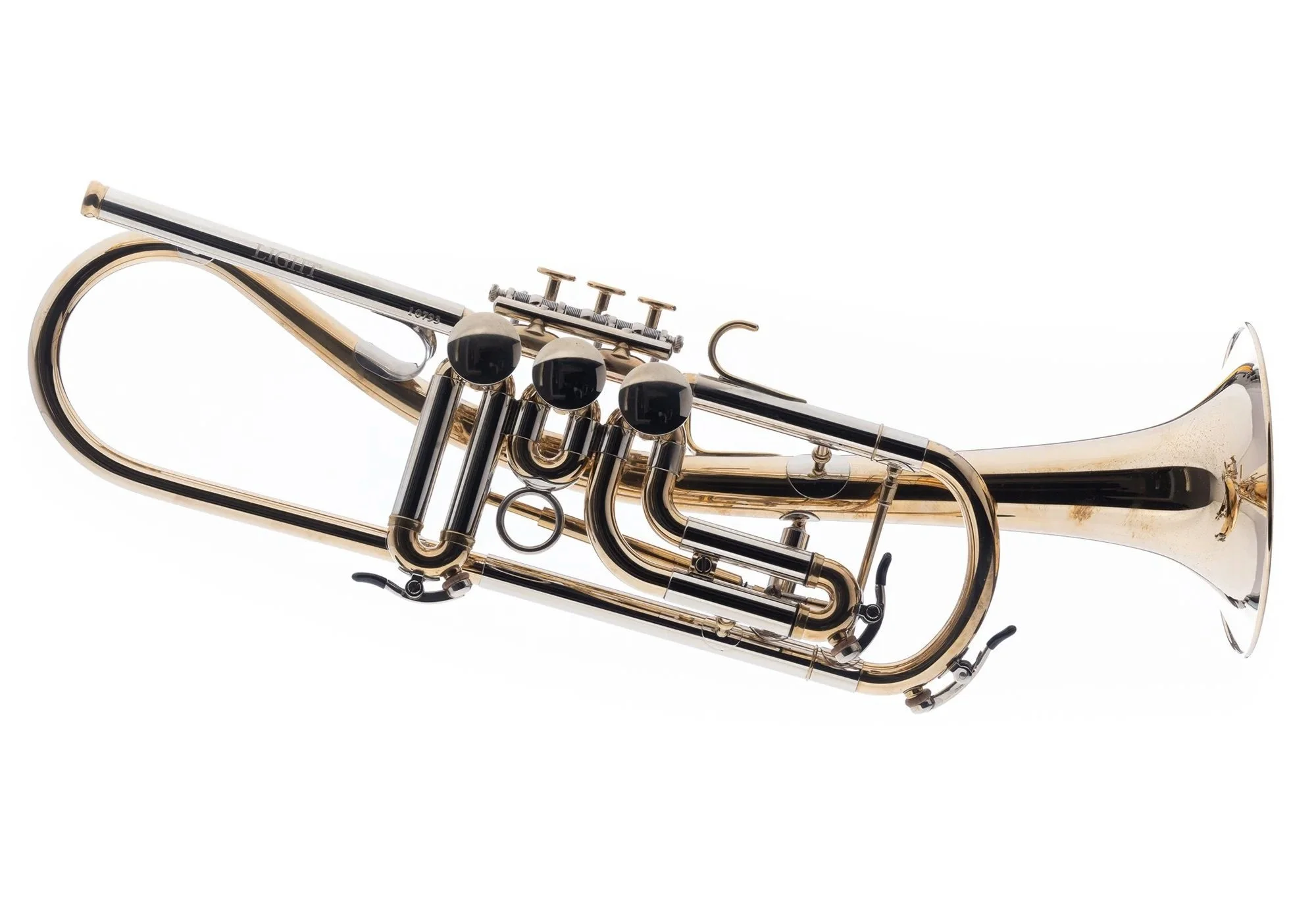
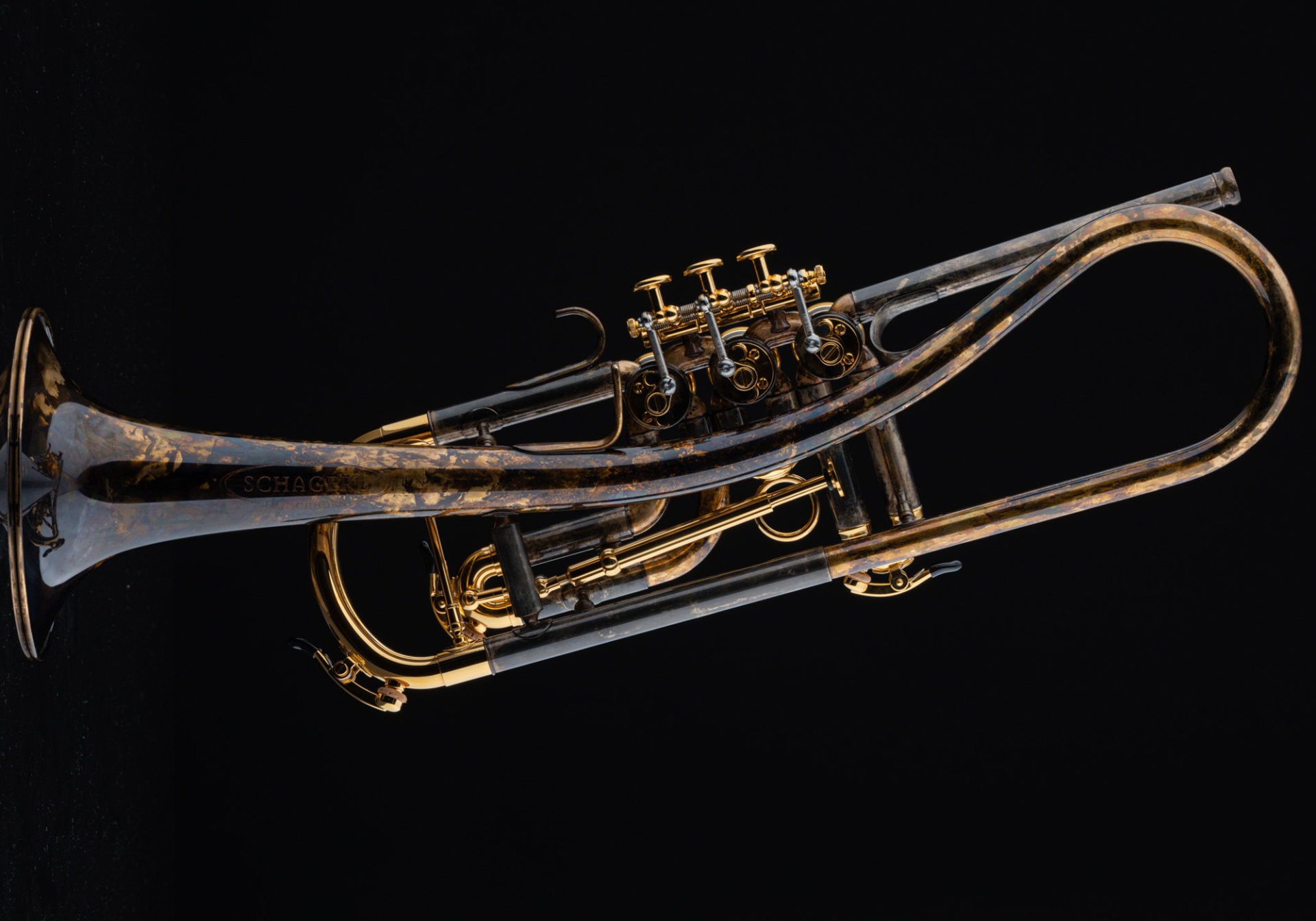
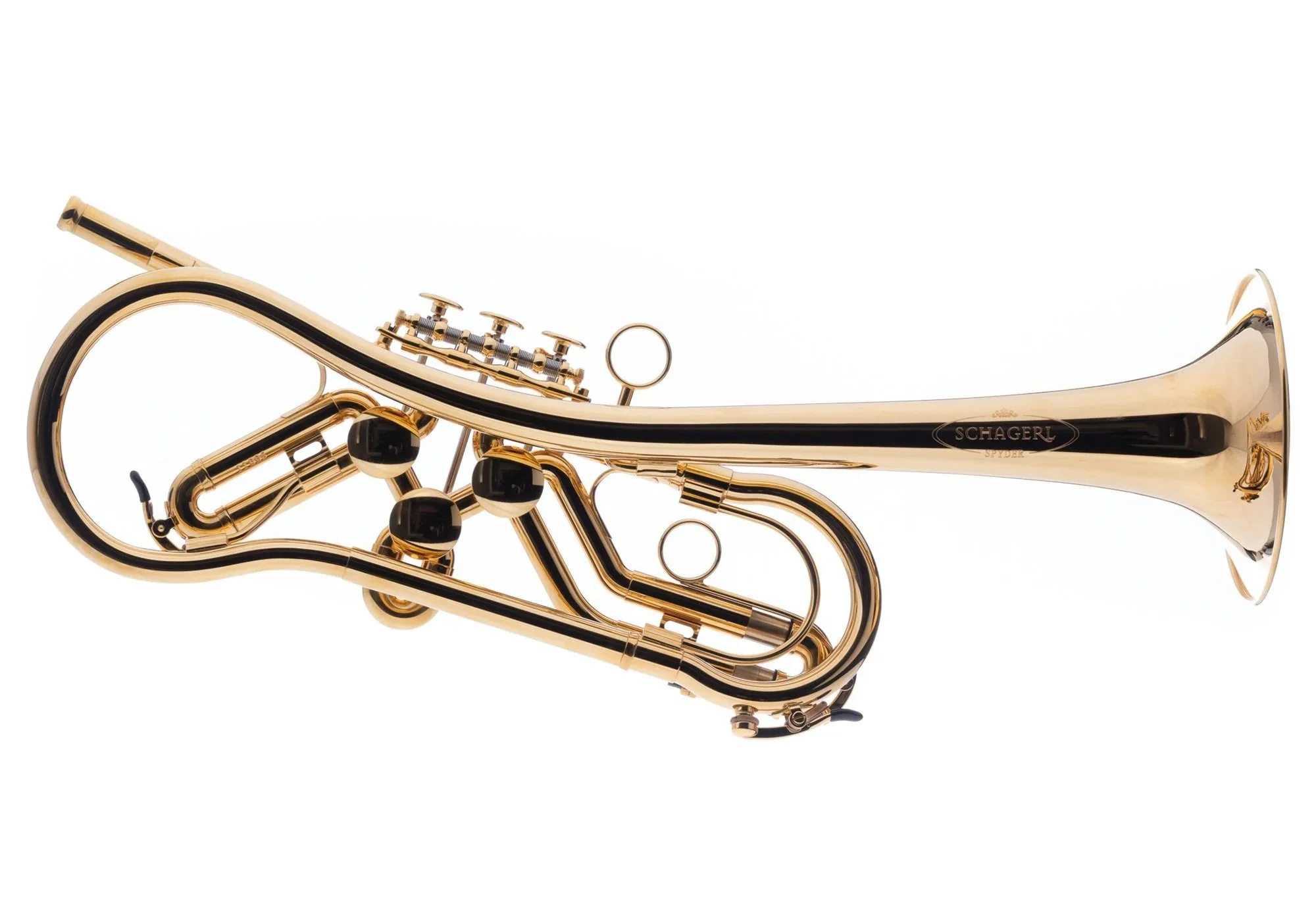
The Ganschhorn was far from the first TARV trumpet, but it was the first one to gain some widespread (at least among brass players) appeal, thanks to the popularity of Mnozil Brass and Schagerl’s reputation for being one of the best brass makers in the world. (I’ve played a bunch of Schagerls, including some Ganschhorns, and I’d say that reputation is well-earned.) After the Ganschhorn, Schagerl used the same wrap on the Killer Queen flugelhorn, the larger Killer King flugelhorn, and to a lesser extent the Spyder trumpet. The Spyder is the same general idea, but the wrap is significantly different from the Ganschhorn and Killer Queen/King. Schagerl also used the TARV system with more conventional wraps on the Raven/Raweni and Wunderhorn V.
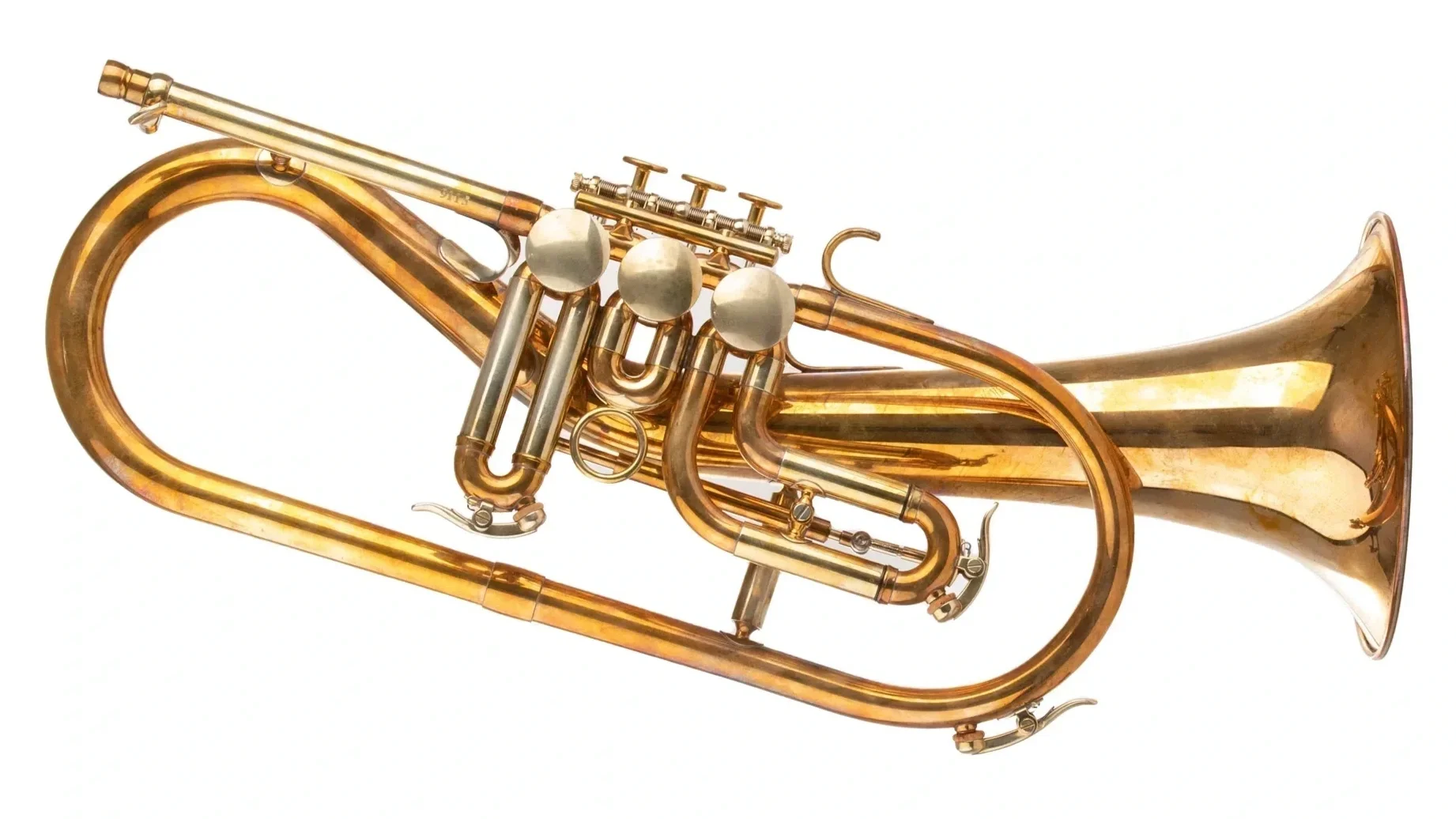
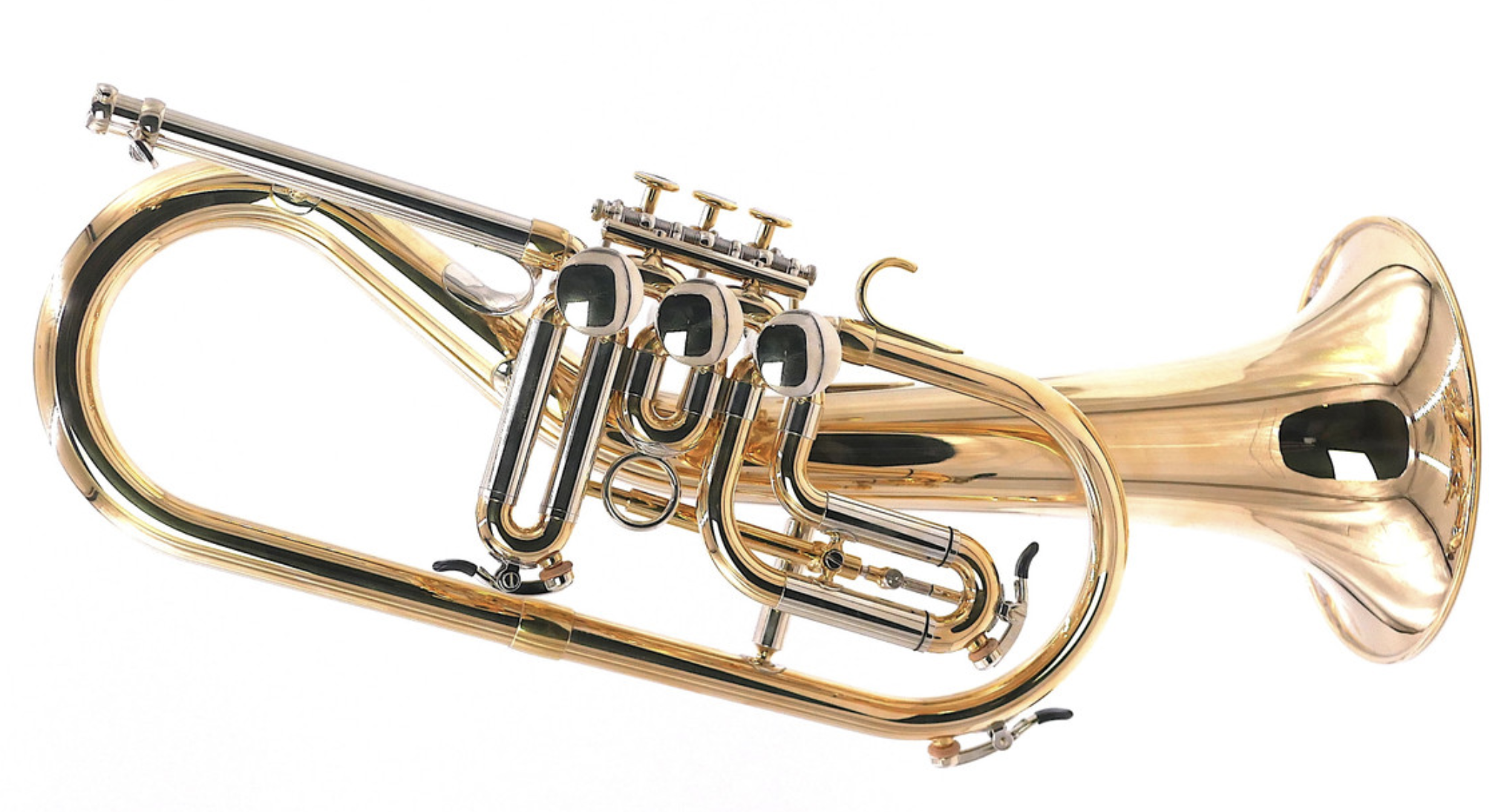
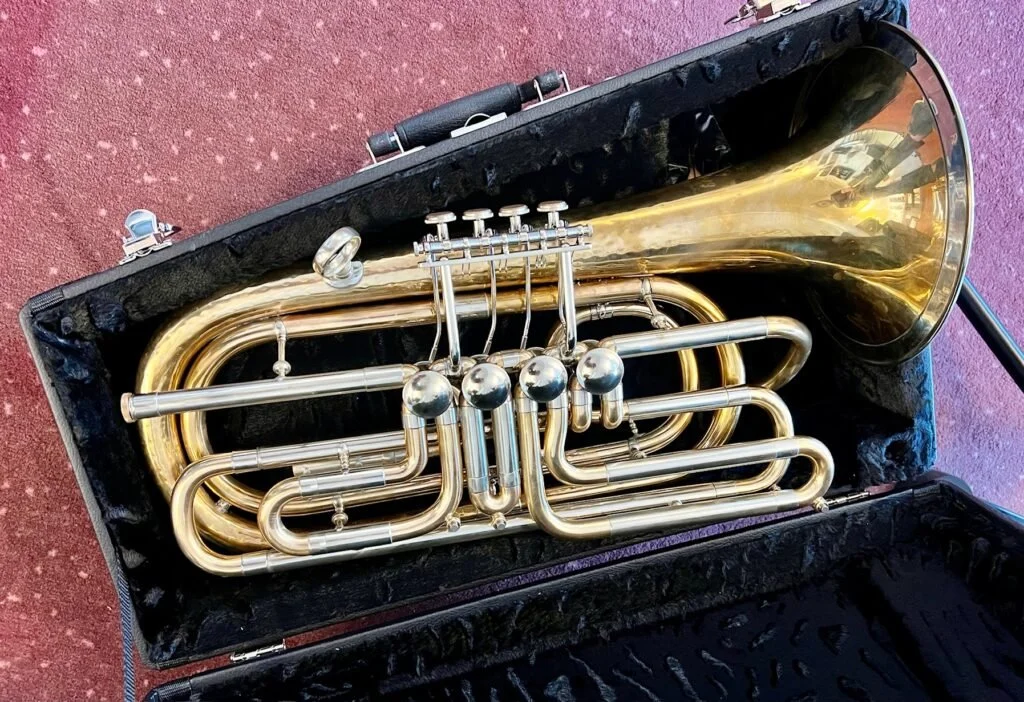
While Schagerl was the first to use the Gansch wrap, a few other custom makers have used it as well. Schlub Brass Works out of Ohio offers trumpets and flugelhorns in the Gansch wrap, Taylor in the UK has made at least one Gansch-wrap trumpet, and Fabian Huber in Austria offers Gansch-wrap bass trumpets with 3 or 4 valves. I haven’t seen a Chinese clone of a Ganschhorn, but considering they sell clones of the Taylor trumpet with jagged corners, it doesn’t seem far-fetched that one of those factories would eventually do a Gansch wrap.
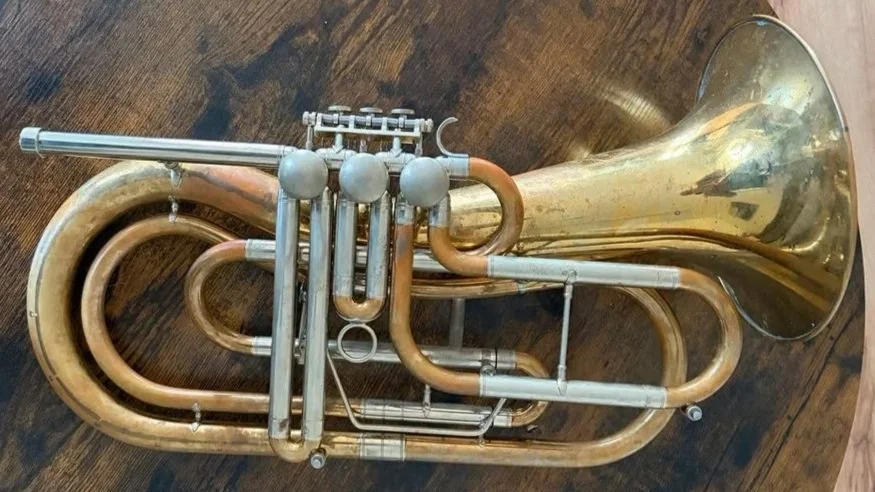
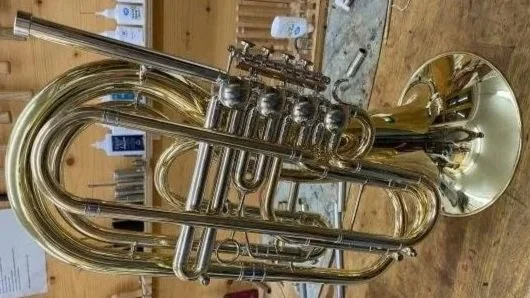
It’s important to clarify that the Ganschhorn is not the same thing as “Dizzy bell” trumpets. These are normal piston trumpets with upturned bells, in the style of Dizzy Gillespie. The story goes that in 1953, someone fell on Dizzy’s trumpet as it sat on a trumpet stand, and it bent the bell way up. Dizzy ended up liking it better than before, and from that point on had his trumpets custom made with the bell at a 45-degree angle. Not all modern trumpets with Dizzy bells, whether bent at the factory or modified later, have the same extreme bell angle. Some have much milder angles that are close to the bell angle on the Ganschhorn. Some makers have gone one step closer to the Ganschhorn by using “Euro” bells, which have the slight upturn of a mild Dizzy bell and the additional Shepherd’s crook at the back like the Ganschhorn. I tend to think these “Euro” bells are pretty hideous…the design works much better on the Ganschhorn and similar TARV designs.
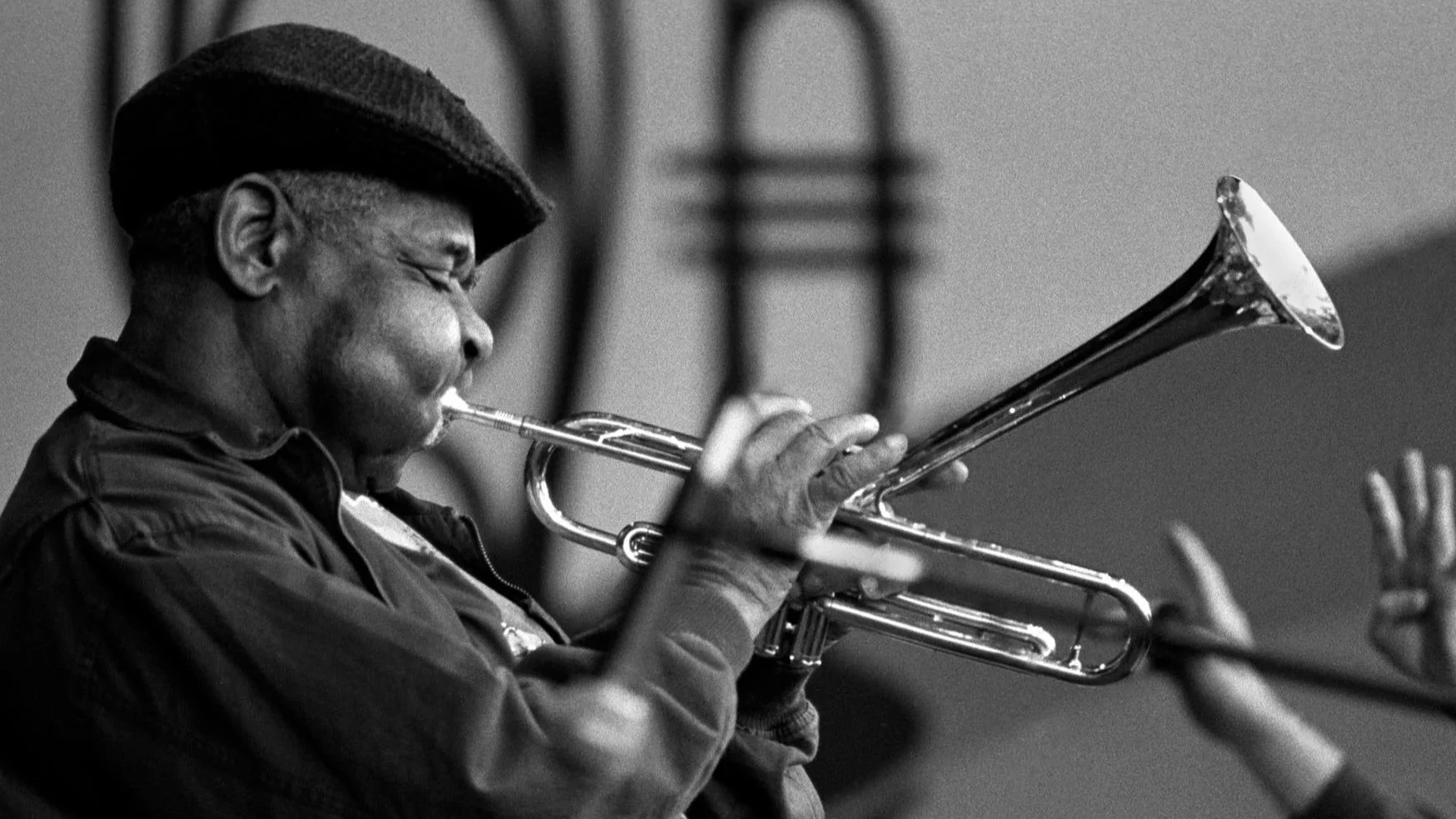
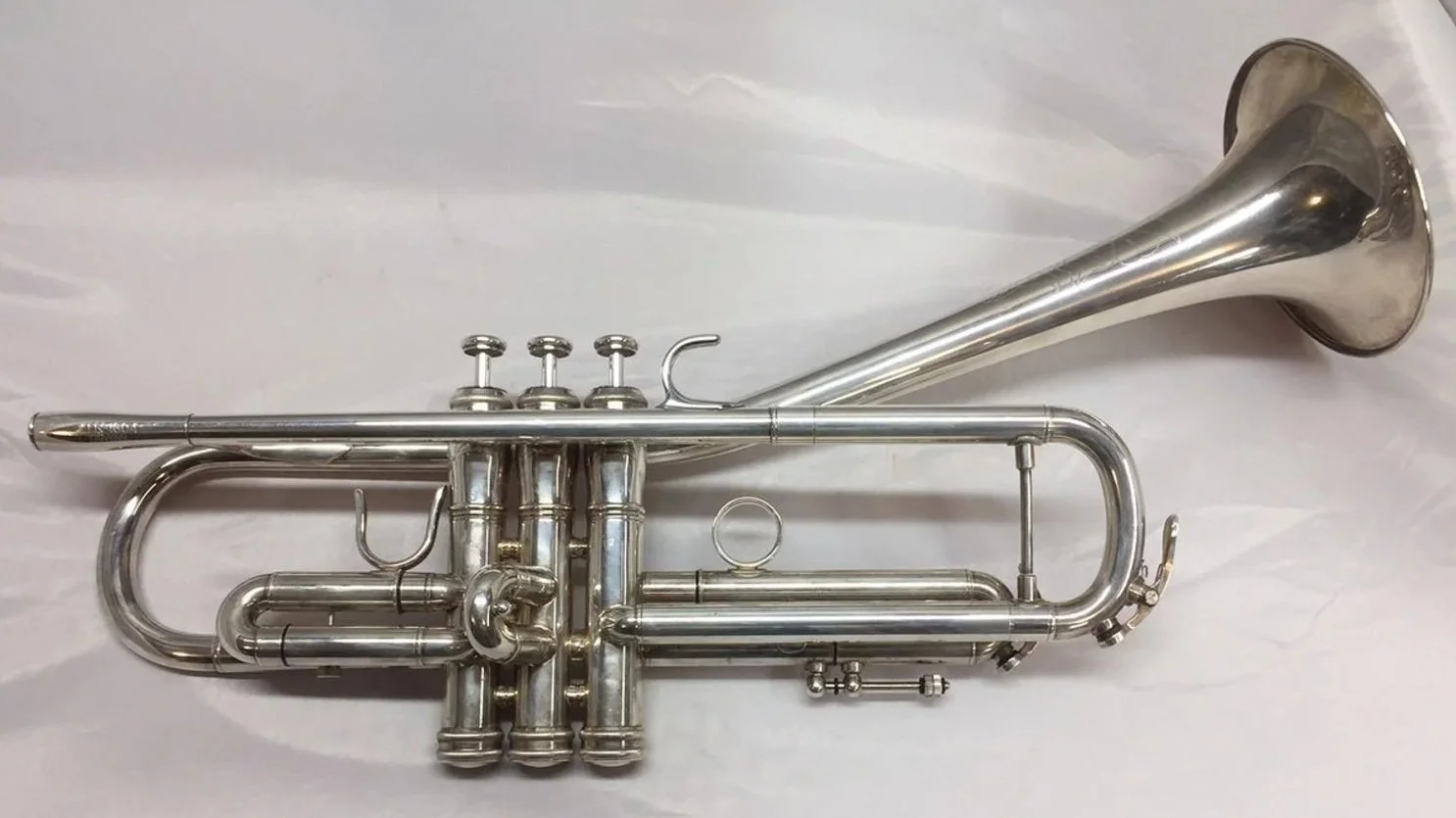
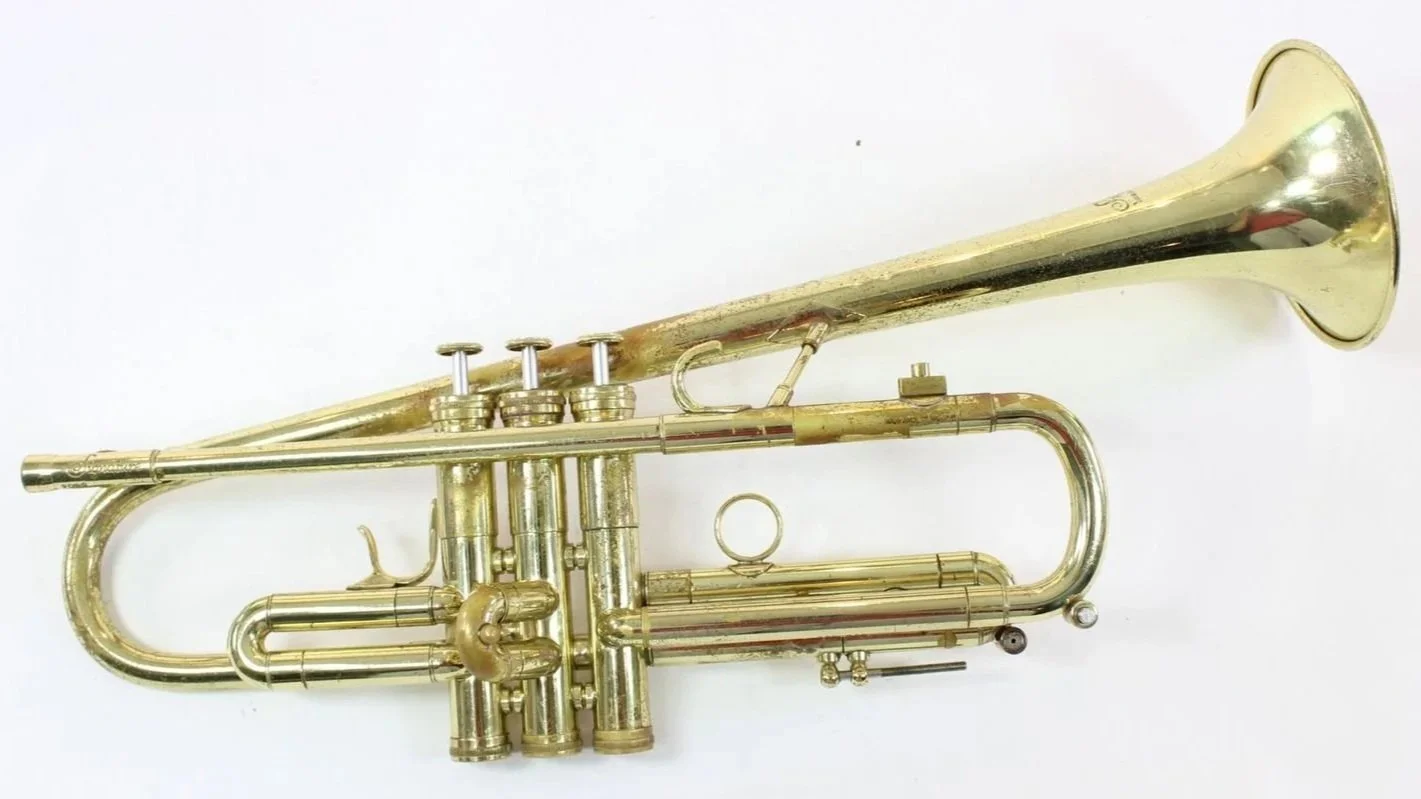
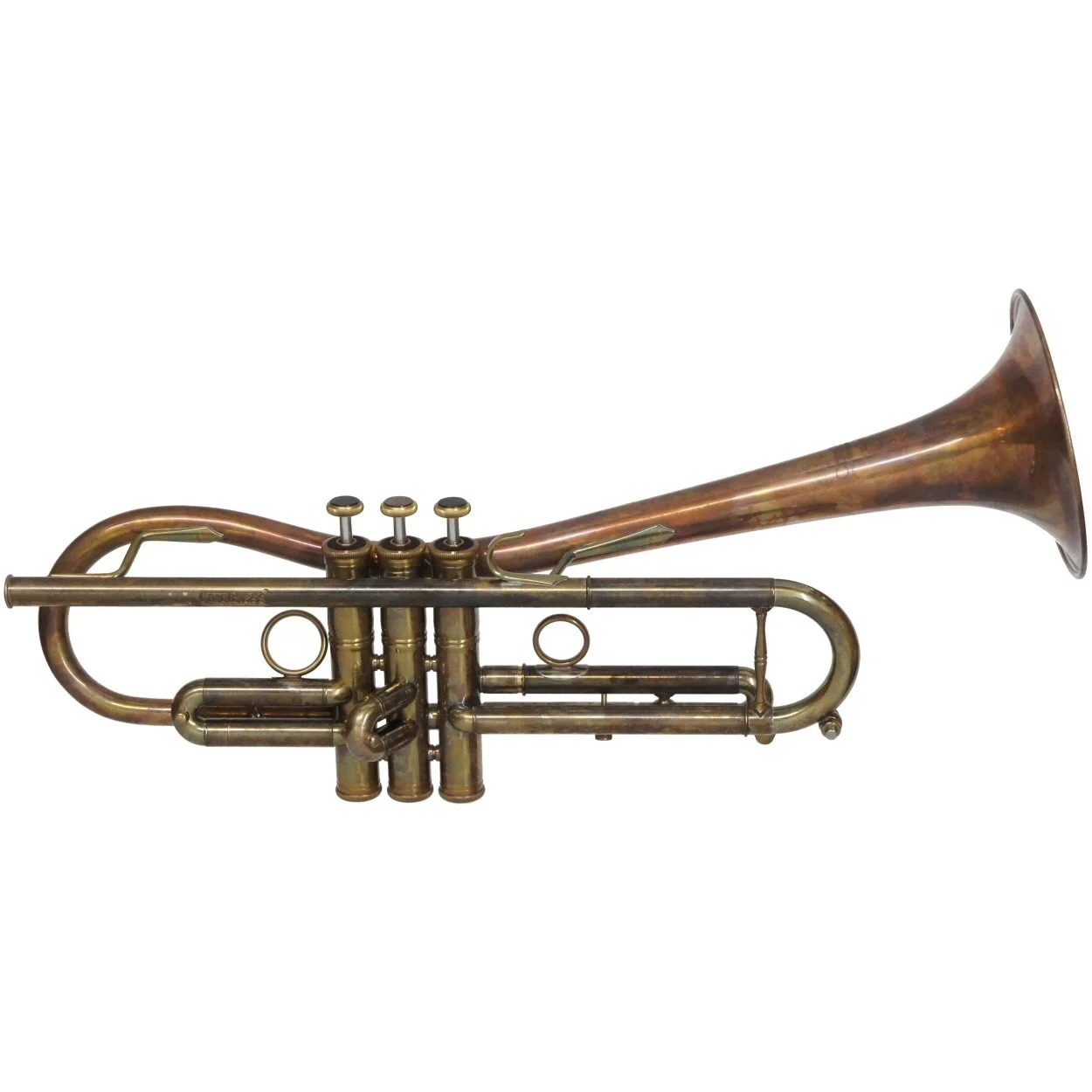
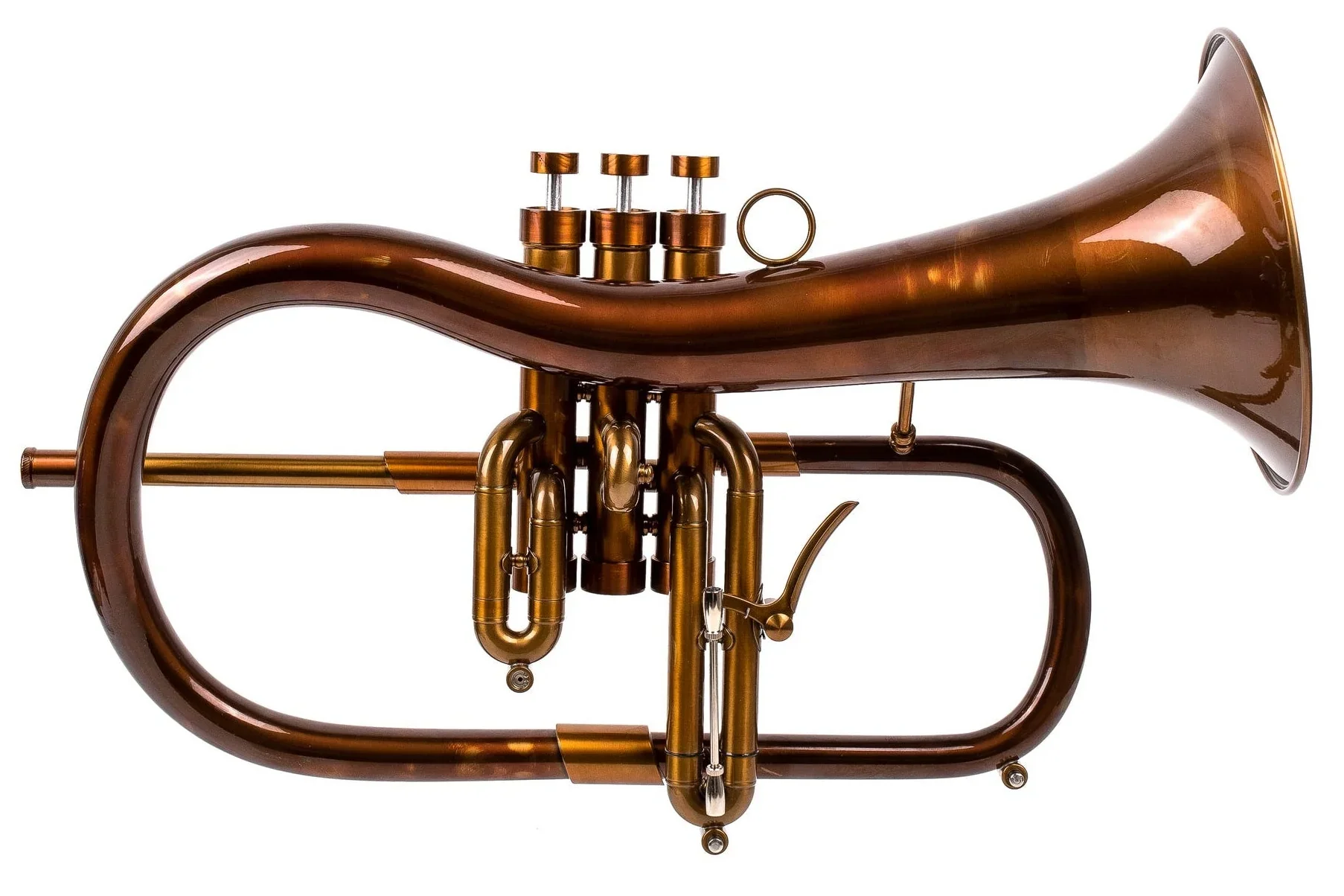
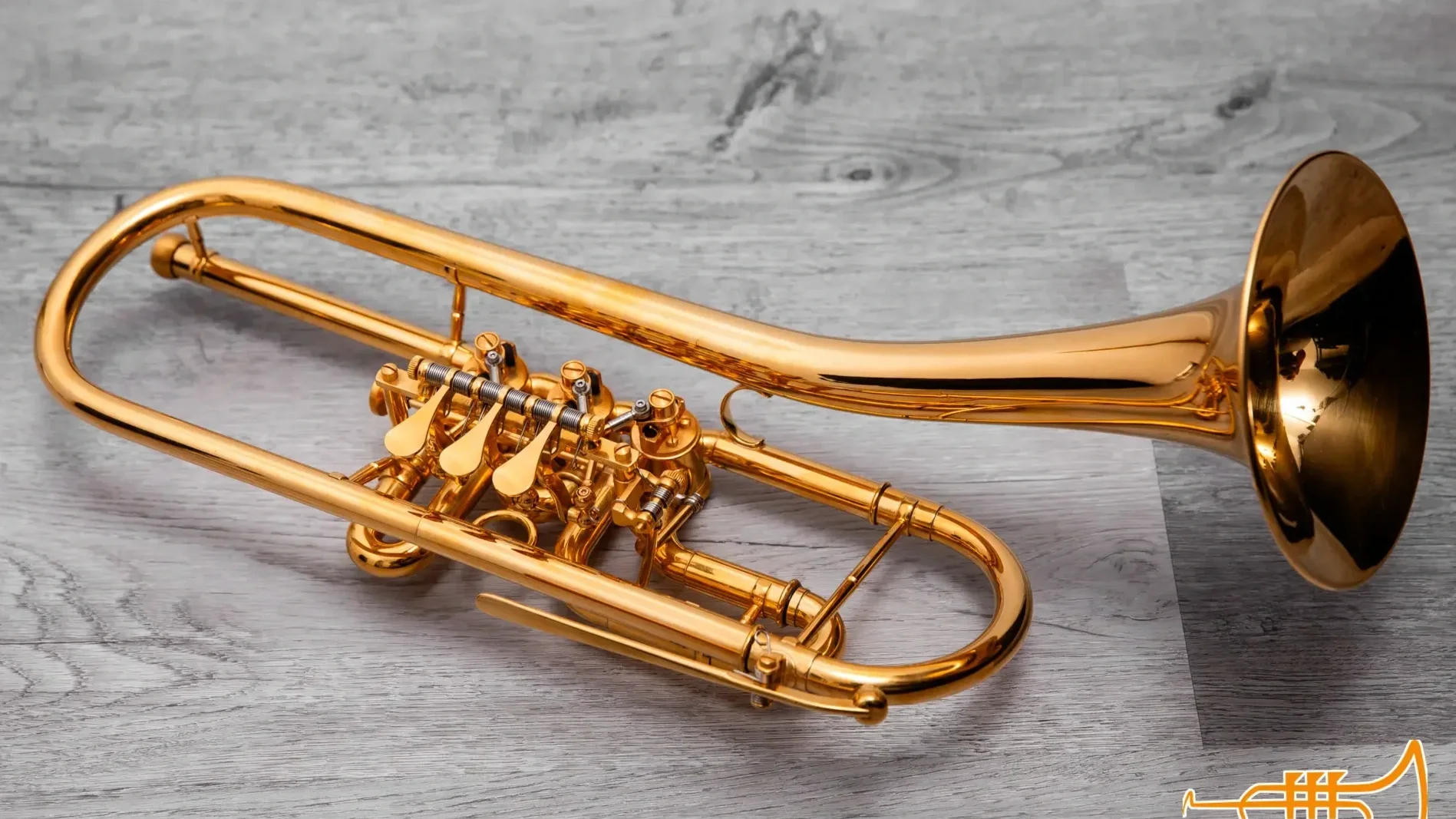
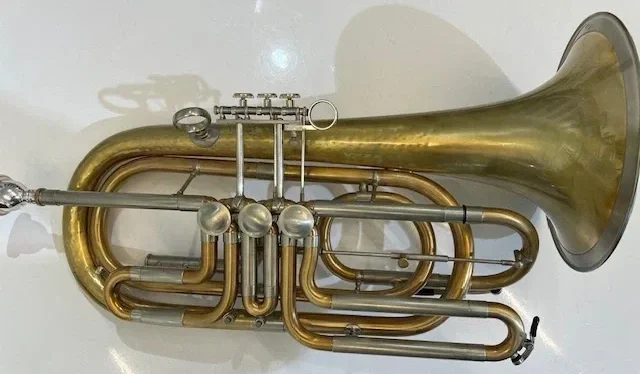
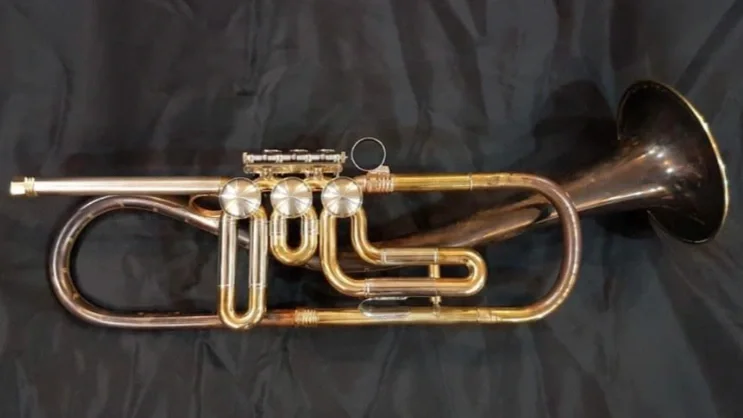
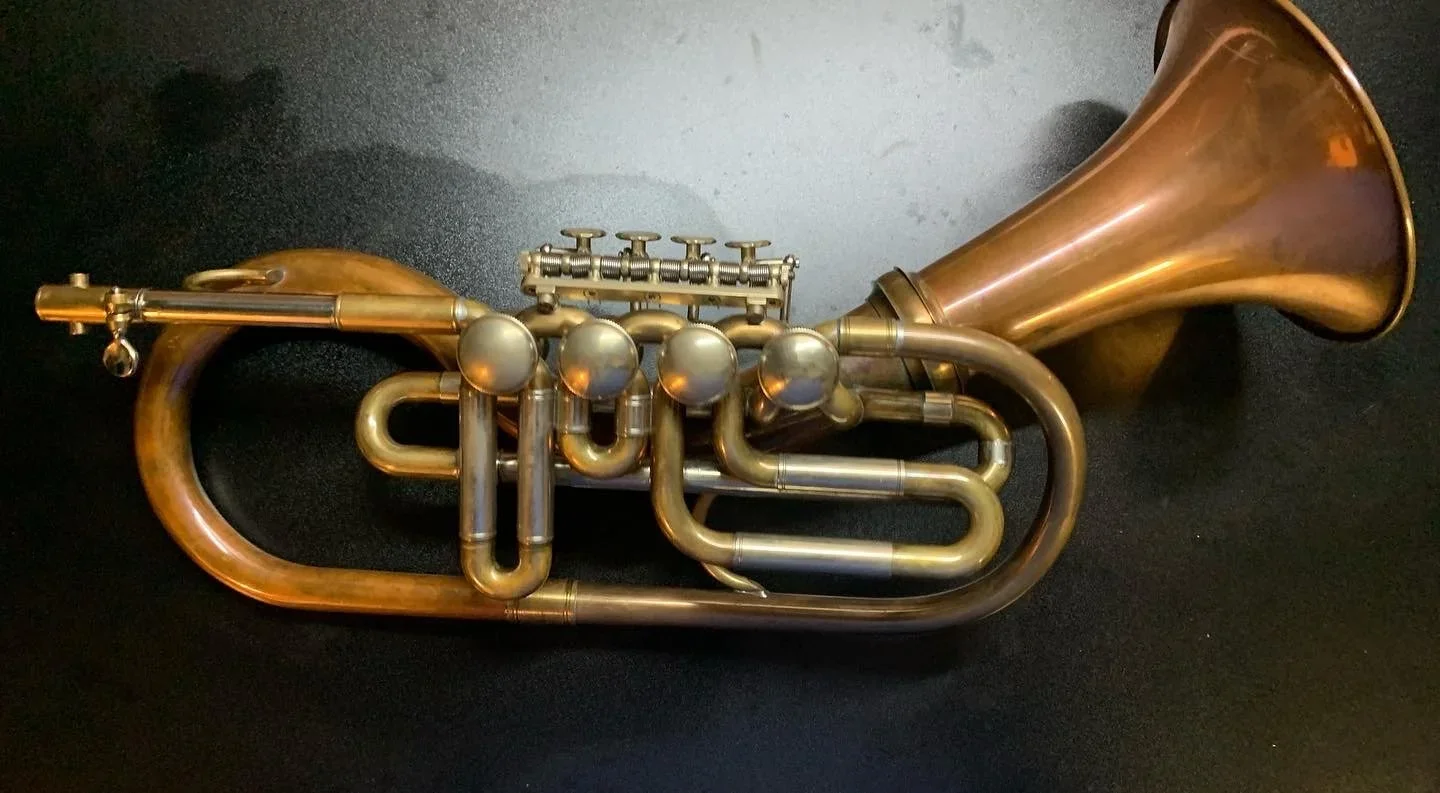
Before the Ganschhorn, there were other TARV trumpets that did not have the unique bell shape, and were shaped more like normal piston trumpets. These instruments never gained much popularity compared to standard piston or rotary trumpets, but plenty were built nonetheless. Revered rotary trumpet maker Scherzer had a whole line of TARV trumpets, including high D, Bb, low F, low Eb, and bass Bb. Soviet brass factories built both TARV trumpets and TARV cornets.
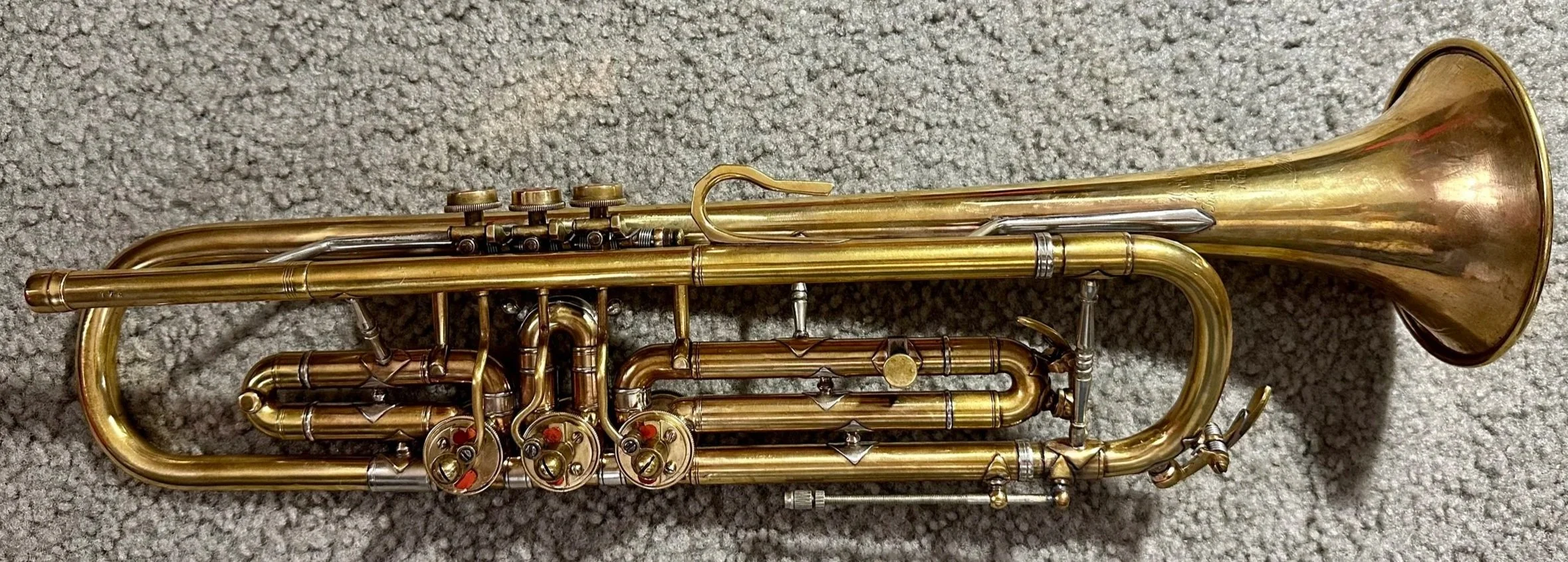
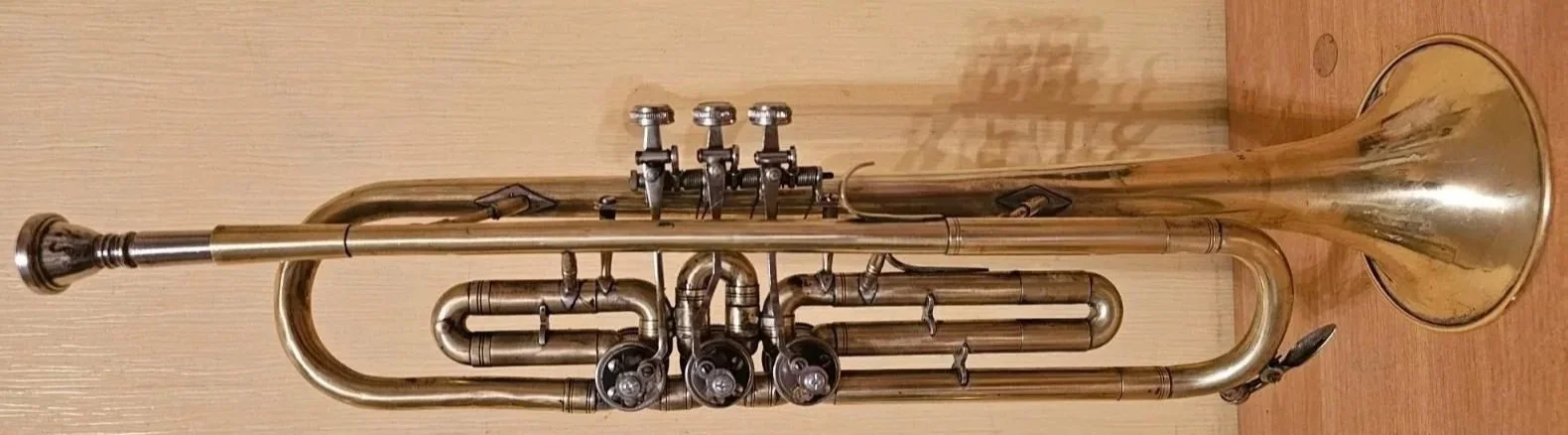
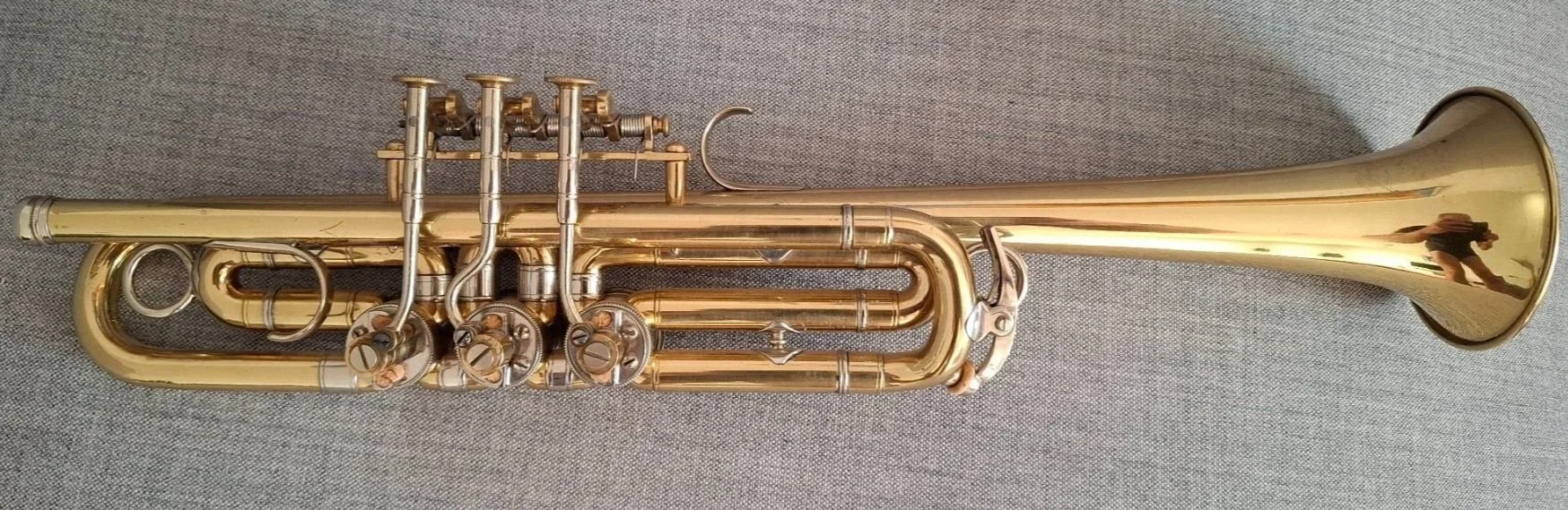
While traditionally-wrapped TARV trumpets seem to be a thing of the past, more traditionally-wrapped TARV bass trumpets are still alive and well, especially among high-end Austrian makers.