NAMM Show Report 2026
You know it, you love it, a surprising number of people have asked me when I was going to write it: it’s the NAMM report! I spent two days at NAMM this year, tried a lot of instruments, and have a lot of comments on them. For previous years, check my 2023 and 2025 articles.
Adams
Adams consistently has one of the best booths at NAMM, and this year was no different. It wasn’t much different than last year’s, but there was still a lot to be excited about.
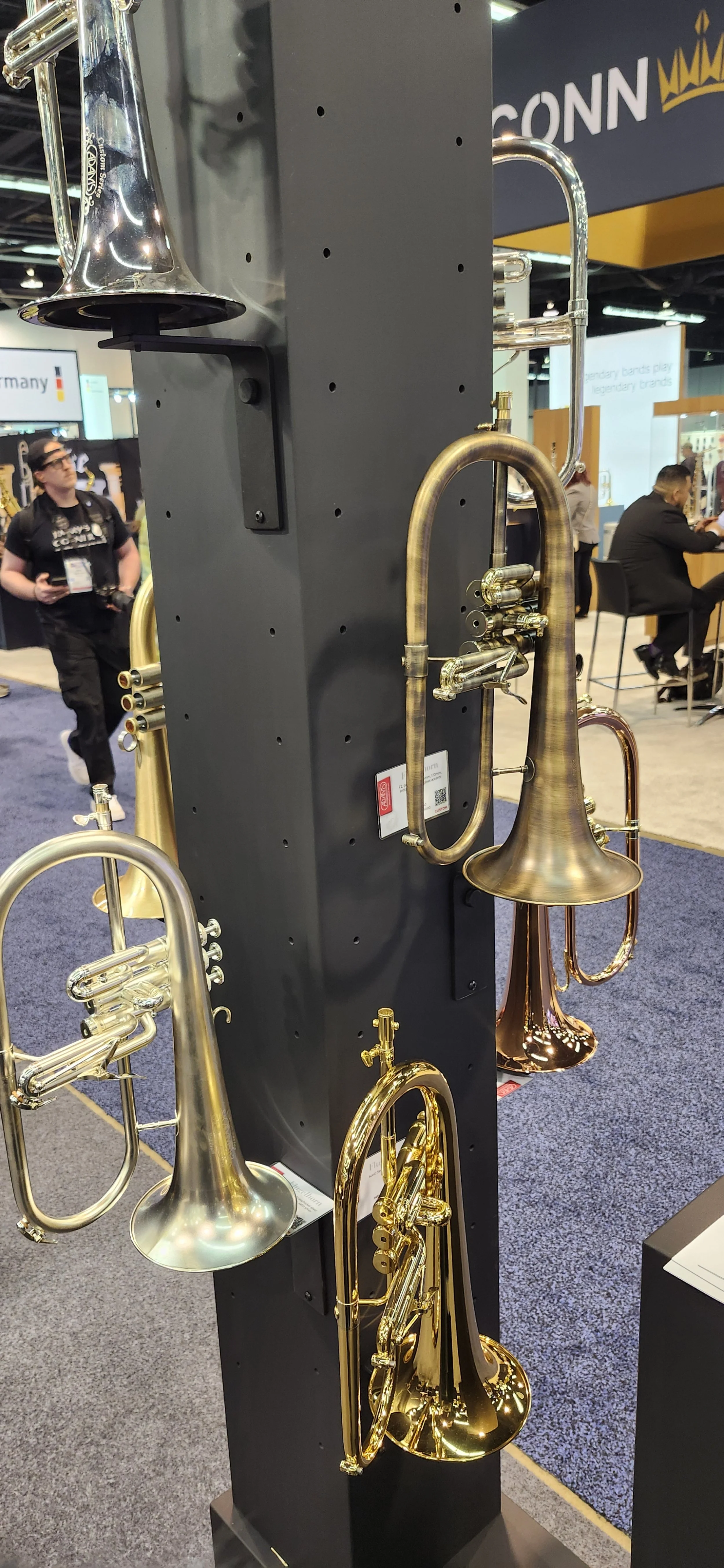
As always, the flugelhorns were the star of the booth. For my money, Adams flugels are the best playing and sounding flugels on the market, along with the Taylor Phat Boy. It is very well known amongst trumpeters how great Adams flugelhorns are, and they might be one of the only instrument lines that everybody universally likes. Adams brought a bunch of them like they always do, and they all met all lofty expectations. It took a long time trying them all to decide which one was my favorite, and I eventually settled on a particularly gorgeous-sounding F3. As I spent awhile carefully going back and forth in between the flugels, a lot of passers-by stopped to comment how much they loved the sound. Sure some of that is me, but it’s also the instrument. I didn’t get love like that on any of the other flugels in the show!
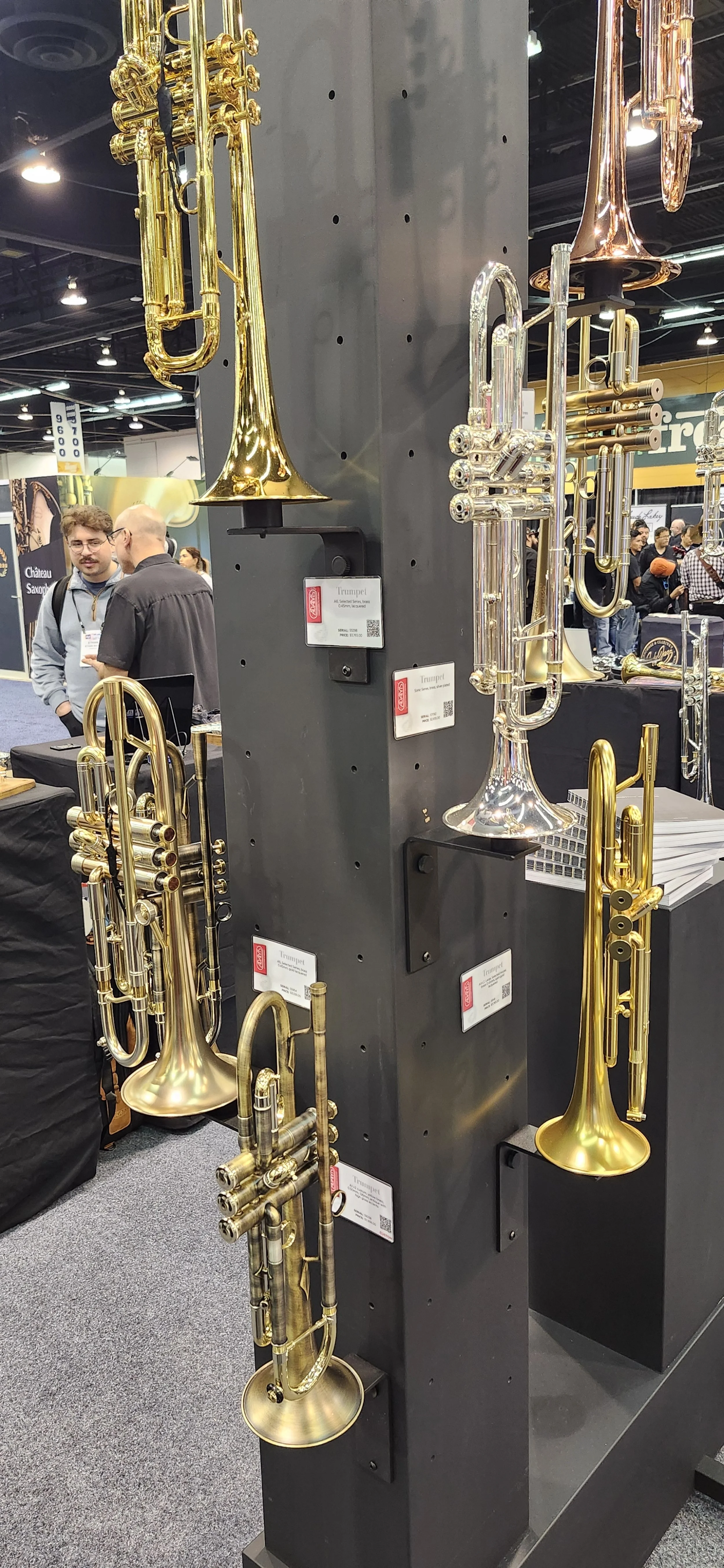
The Adams trumpets were also very good, but not to the same level of perfection as the flugels. There were over a dozen trumpets, and unlike the flugels I didn’t love all of them. My favorite was the lone E-flat trumpet, which was a wonderful instrument. The C trumpets played well, but weren’t my cup of tea in how they felt compared to a Yamaha or Bach. The B-flat trumpets were nice, and I did really like the A1s on offer, but most of the others weren’t my vibe. The Coppernicus is always a treat to play, but I probably wouldn’t own one myself.
There were two Adams cornets, which played well but didn’t have the dark British-style sound you get from a Besson.
The trombones had a better showing than previous years. I’m still not convinced on the tenor trombones, but the TBB1 bass trombone they had this time was excellent, as was the AT1 alto trombone.
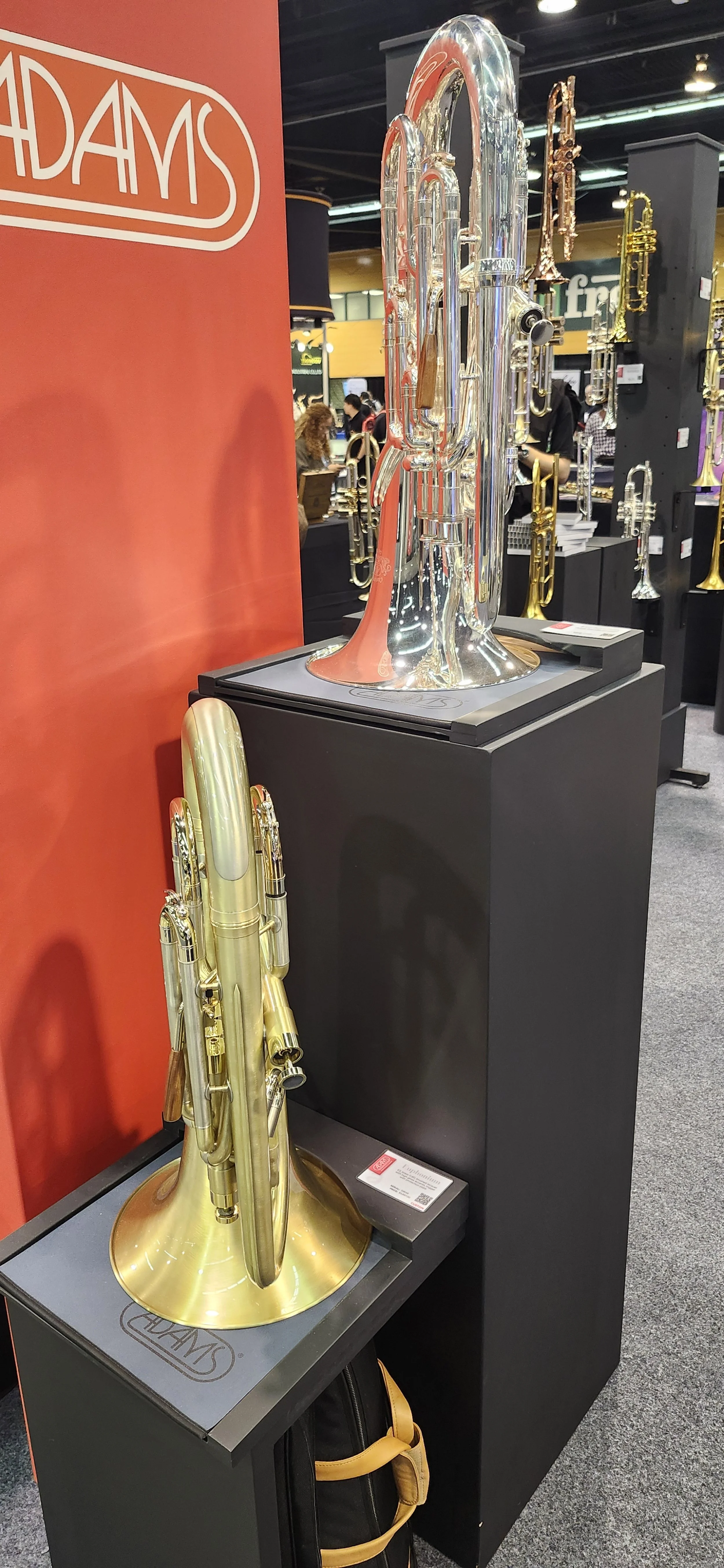
Adams euphoniums are always very good, and there was an E2 and an E3 that really stood out to me. The E3 had the edge in sound, with a really vibrant sound that the others didn’t quite match, while the E2 beat all the others in playability. There were other E2s and E3s there that weren’t quite on the same level as these two.
Adams had the same two tubas (and F and a C) they had last year, and those instruments remain standouts that are absurdly easy to play.
Sadly, Adams has yet to bring their marching brass to NAMM. I’m eager to try their mellophone especially, but I just have to hope they finally bring one next year.
BAC
I’ve played a lot of BAC instruments, and honestly I didn’t like most of them. A few of my friends here in LA have their own custom BAC horns that play really great, so I’ve always known what the company is capable of, but the demo horns at booths usually don’t meet that expectation for me. Last year’s BAC NAMM booth was a nice surprise, as they had a couple of trombones that I thought were very good. This year they upped their game again, as I thought every trombone at their booth was excellent. It’s nice to witness the progress of a company in real time. There were a couple BAC trumpets I liked a lot as well - a brushed-finish yellow brass B-flat, and a vintage finish C. The C played a lot more like a B-flat than most C trumpets do, and was a lot of fun.
Buffet Crampon
I spent very little time at this booth, as it was MUCH smaller than previous years. The Hans Hoyer Kruspe wrap double horn was excellent as they always are, and the Besson BE165 non-compensating 3+1 euphonium was quite good (but of course hampered by not being compensating). The only Courtois trombone they had was the student model, and there was pretty much nothing else except some trumpets, which I didn’t bother with this time.
Cannonball
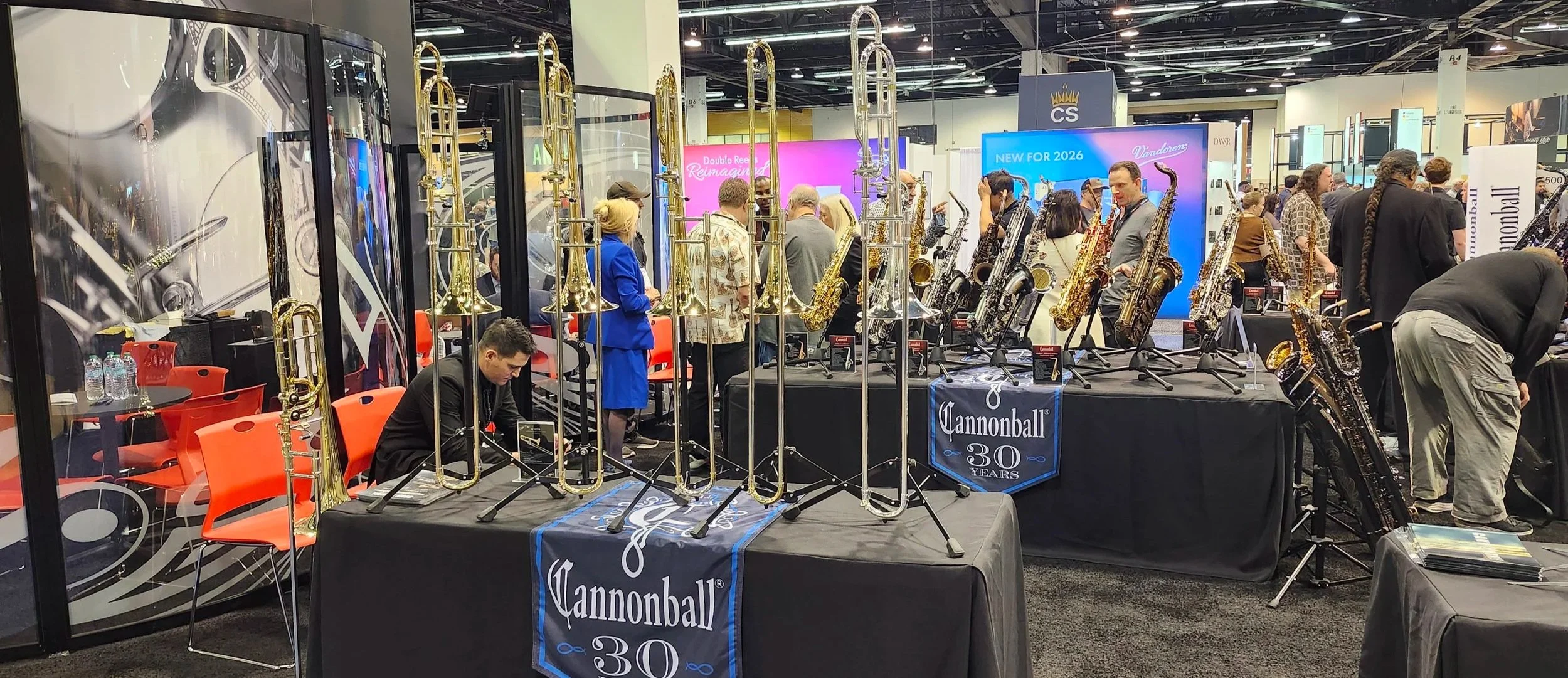
Cannonball is a company that’s mostly focused on saxophones, but they have a small line of brass instruments as well. I thought the large bore tenor trombones (with F attachments) were pretty good, as was the small bore tenor trombone. The .525” tenor with F attachment and independent bass trombone were not that good.
Conn-Selmer
Conn-Selmer brought fewer instruments this year, which a rep told me was deliberate but other NAMM-goers I know thought it was unfortunate. Still, they had a few interesting things on offer.
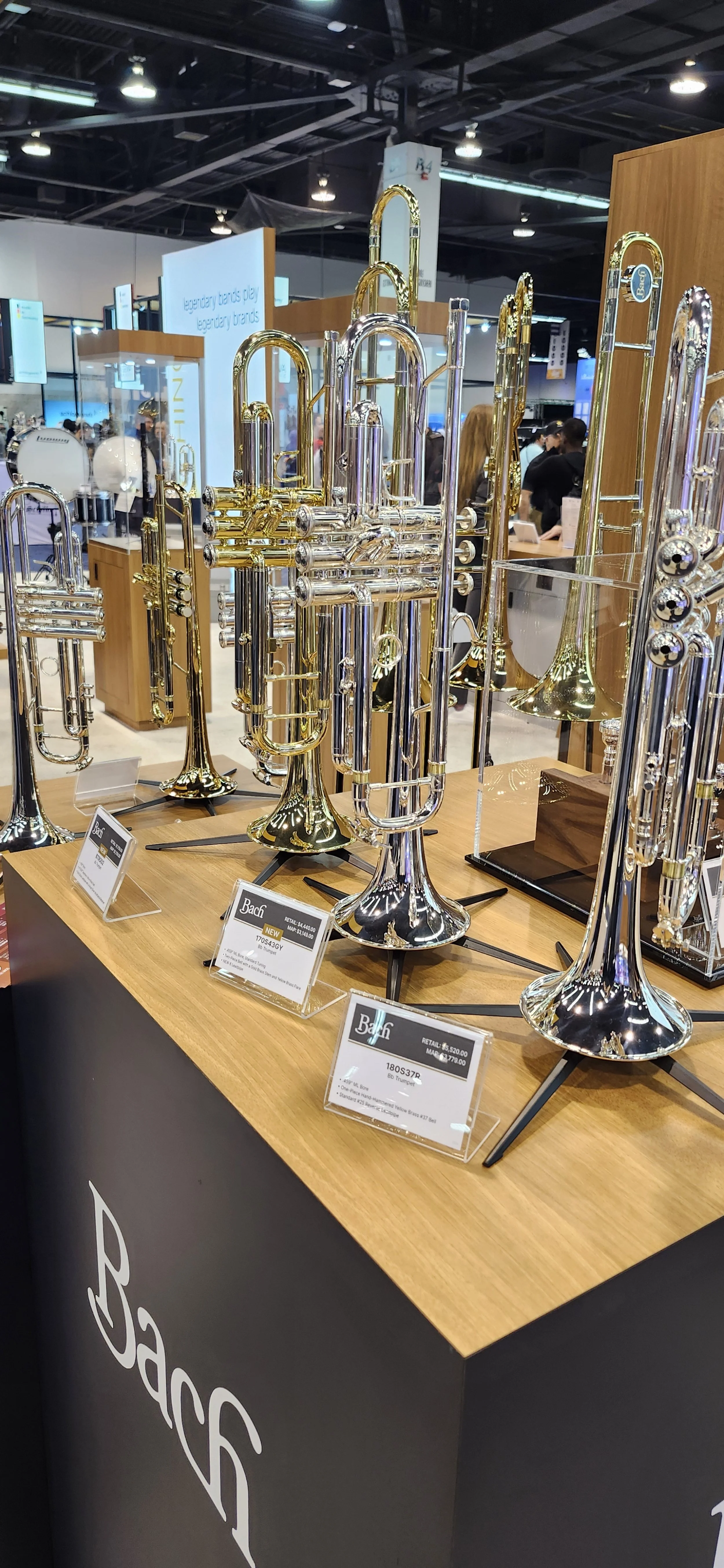
Most notably to me was the Bach Peter Steiner tenor trombone. This is a model that I’ve tried multiple times in the past at previous NAMMs and at ITF last year, and every time I hated it. Very dead playing and sounding, and much worse than the Bach 42BOF that usually sat on the stand next to it. One of the Conn-Selmer reps recognized me as I walked over to their booth this year, and he told me I had to try the Peter Steiner this time, promising it was different. Well, he was right: this example of the Peter Steiner model was amazing! It had a great classic Bach sound and instant response, and was very easy and fun to play. I asked him what changed, and he said they deliberately slowed down production time on the horns, so more time is spent on each one. I told him they shouldn’t allow any Peter Steiner that doesn’t play like that one out of the factory, because that horn was what a modern Bach should be. Hopefully this is a sign of better things in the future for Conn-Selmer’s pro horns.
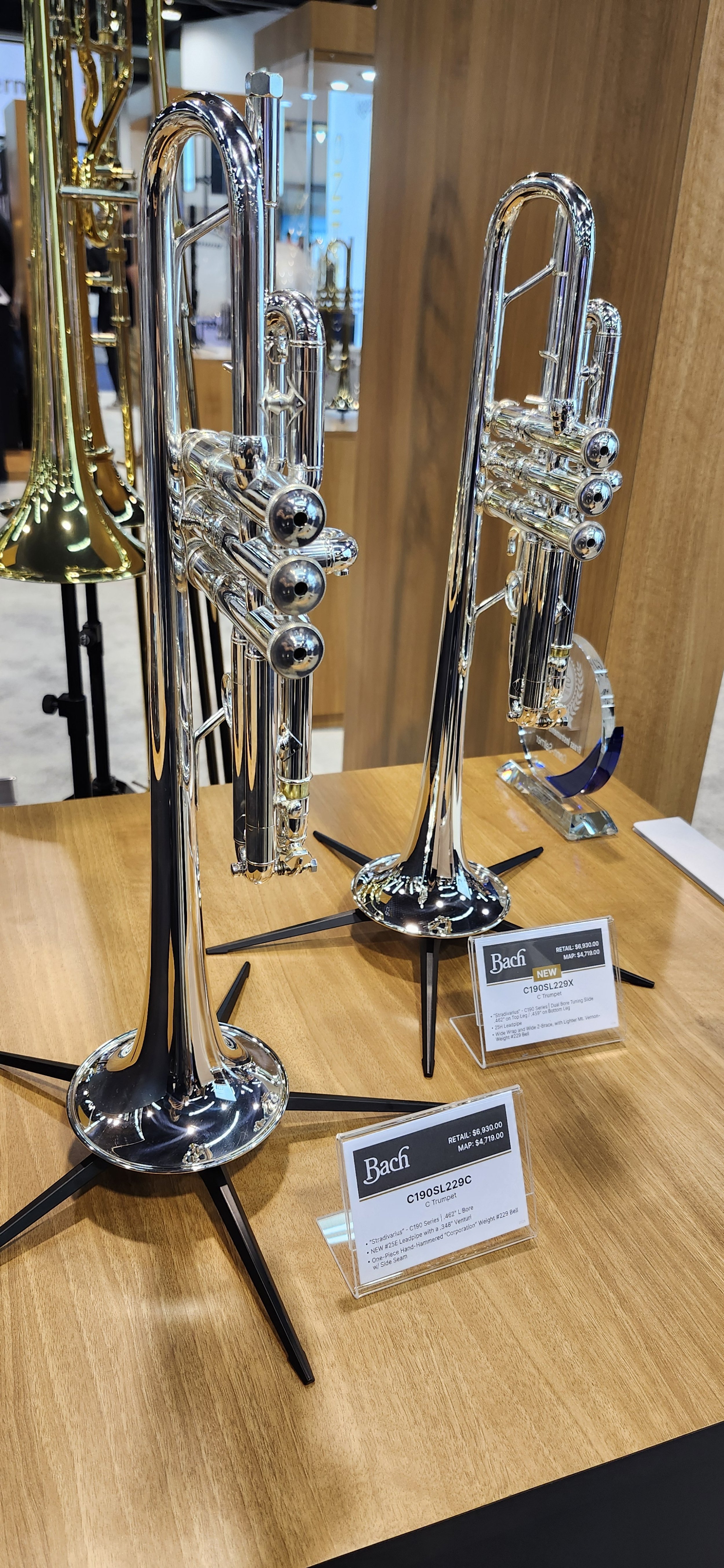
The Bach C trumpets at NAMM are consistently great, and the two they had here were no exception. I preferred the 229C over the 229X, and it played just as a Bach C should.
Conn also had a new compensating euphonium model, which I believe is still not for the American market. It doesn’t really matter though, because I thought it was nothing to write home about.
Other than that, I didn’t play much at the Conn-Selmer booth as it was the same stuff as last year. 8D, H179, KMP611 mellophone, a few assorted Bach B-flat trumpets, a couple other Bach large tenors, the Conn 88HNV (which I did try, and it was as okay as ever), and so on.
Eastman/Shires/Willson
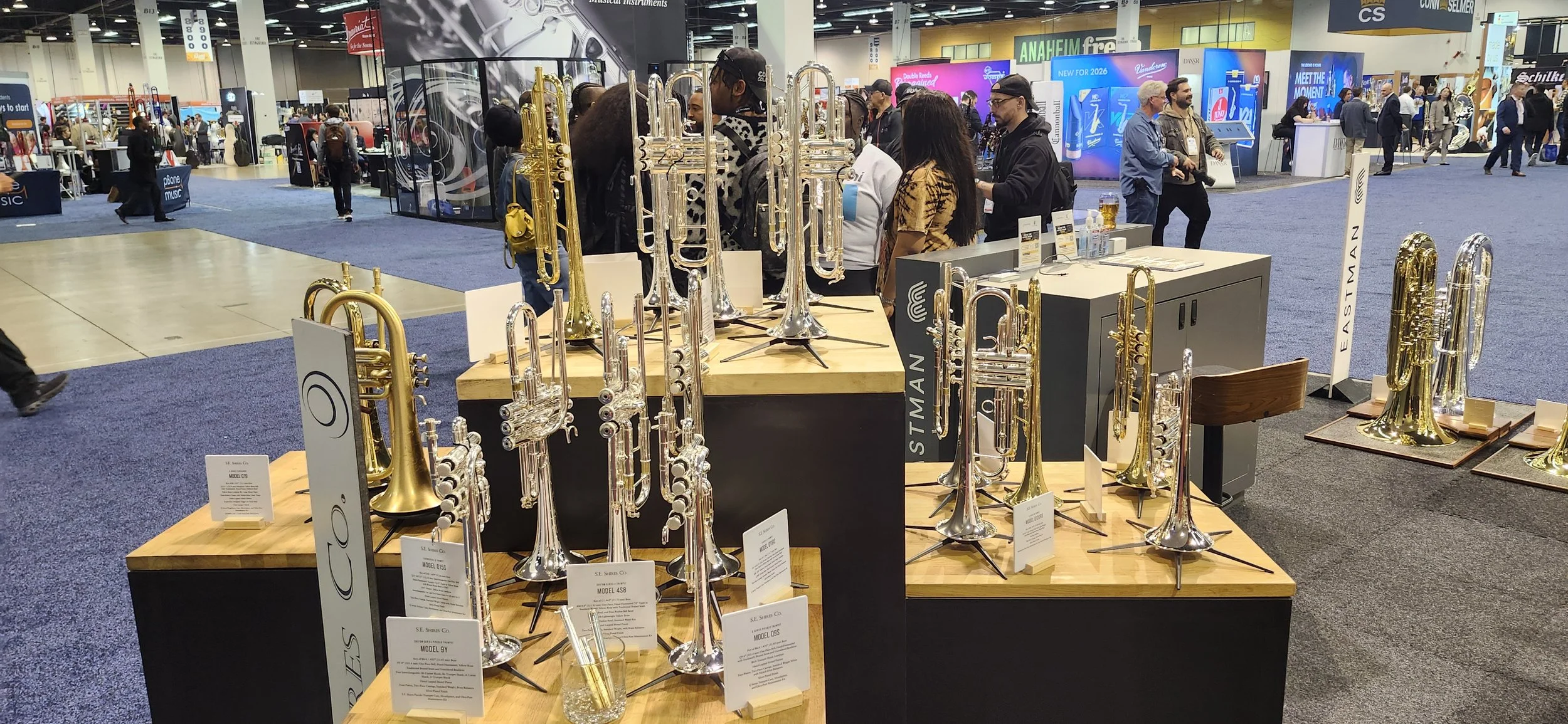
Eastman-Shires always brings a lot of horns to NAMM, and such was the story again this year. They had some notable new models, as well as other models that have been present at the booths in previous years. I focused mostly on the new models.
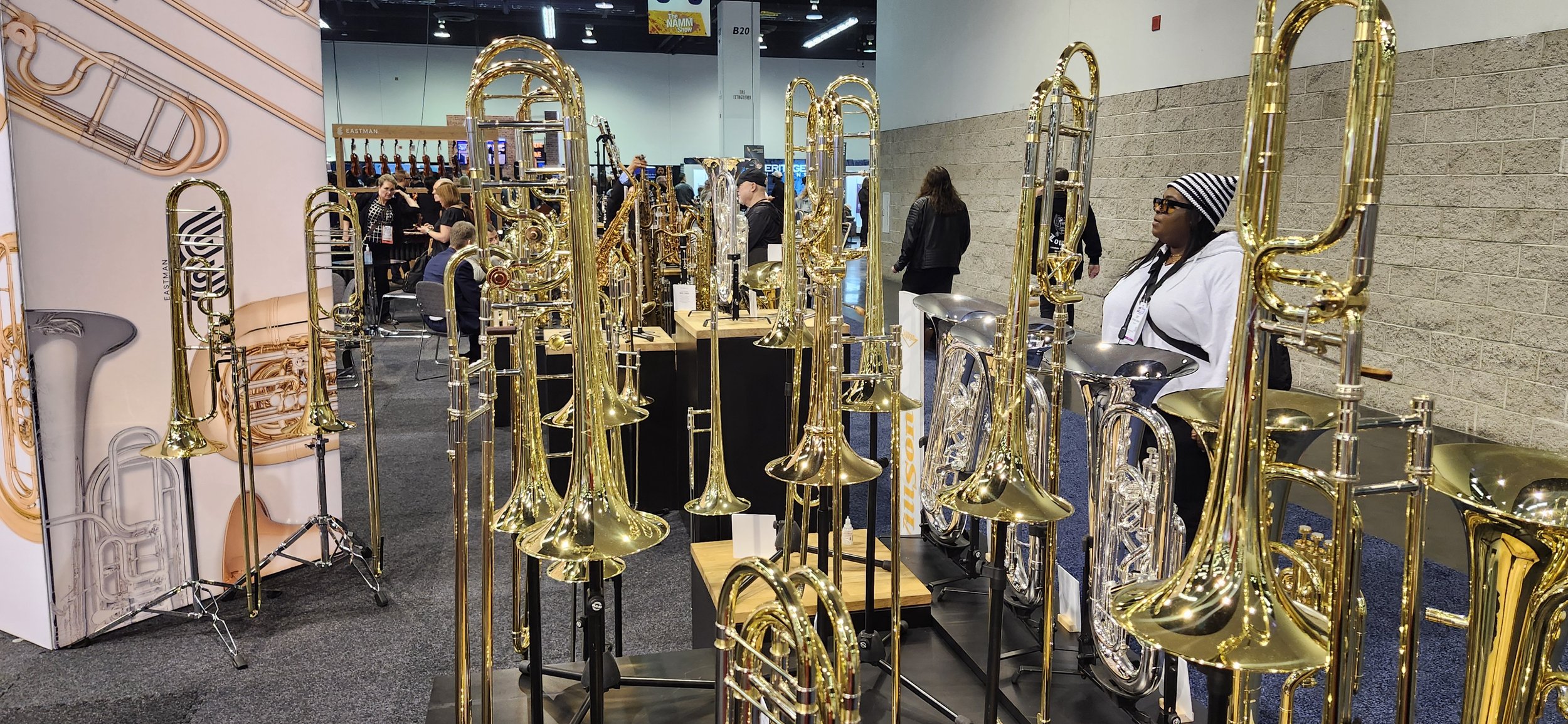
The biggest draw, of course, was the new Shires Q38 and Q39 contrabass trombones. They brought both versions, the Q38 in European tuning and the Q39 in American tuning. I played the pre-production Q38 at ITF, so I knew what to expect, and the Q38 at NAMM was very solid. Weirdly though, the Q39 was a lot worse. It was much stuffier and not easy to play, which does not bode well for the average quality of these instruments. While they are cheaper than the high-end European instruments that cost as much as a decent used car, $7k is still a very large sum of money to spend on an instrument that might be good. It’s not a good sign, especially when Shires is usually excellent at bringing the best possible examples of their horns to conventions.
The other interesting new model at Shires was the Vintage LA bass trombone. This is a single valve bass that they say was designed in the Williams style. From the start I don’t really know why they decided to make this instrument, as nobody is asking for a new Williams-style bass trombone, let alone one with only one valve. If any region would be interested in it, it’s here in southern California, but even here we don’t really get the point. And unfortunately, it only gets worse from there. First, it did not play or sound anything like a Williams. Second, ignoring the Williams influence it just didn’t play well to begin with. And third, it is so front-heavy that it’s really not usable at all. No counterweight, no braces, and only one valve is an obvious recipe for left hand injuries. This thing is useless, and I have no idea how or why it was approved for production.
Shires also brought the slightly less new Vintage LA small tenor trombone, which was also apparently intended to be like a Williams. But just like the bass, it just isn’t. I have played multiple Williams 6s from different eras of production, and they are still the best small bore trombones I’ve ever played. The Vintage LA tenor is nothing like that in sound or feel, and I also just don’t think it’s very good on its own either. I tried this model at ITF last year, and had the same opinion. I’ve spoken to a few other top studio LA trombonists who were there, and they have the same opinions as I do about both Vintage LA instruments. They are just not good, and not even in the same dimension as the instruments they’re supposed to be emulating.
In better news, the Shires Rejano large tenor is still amazing, and the Shires Q41 is still one of the best euphoniums on the market. The Willson Q90 euphonium is still a mystery to me, as it seems like it’s not much different than the Q41, except for having the signature Willson bracing. They play very similarly, but I prefer the Q41 overall. A new model this year was the Willson K56 euphonium, which slots below the Q90/Q41 in the lineup. The K series sits in between the student A series (which are still often excellent, pro-quality instruments) and the Q series. I found the K56 to be a very good instrument, not quite as good as the Q90/Q41 but also retailing for $1k less. For those whose euphonium budget tops out at $6k, I think the K56 is a great option. I prefer it immensely to every Eastman euphonium I’ve played, as well as the Besson BE165. There is also a K46, which is a non-compensating 3+1 version and the real competitor to the BE165. I think the Willson A27 (which might be my favorite euphonium they make) and K56 are the only cheaper-than-Q41 euphoniums worth considering in the Shires/Willson lineup.
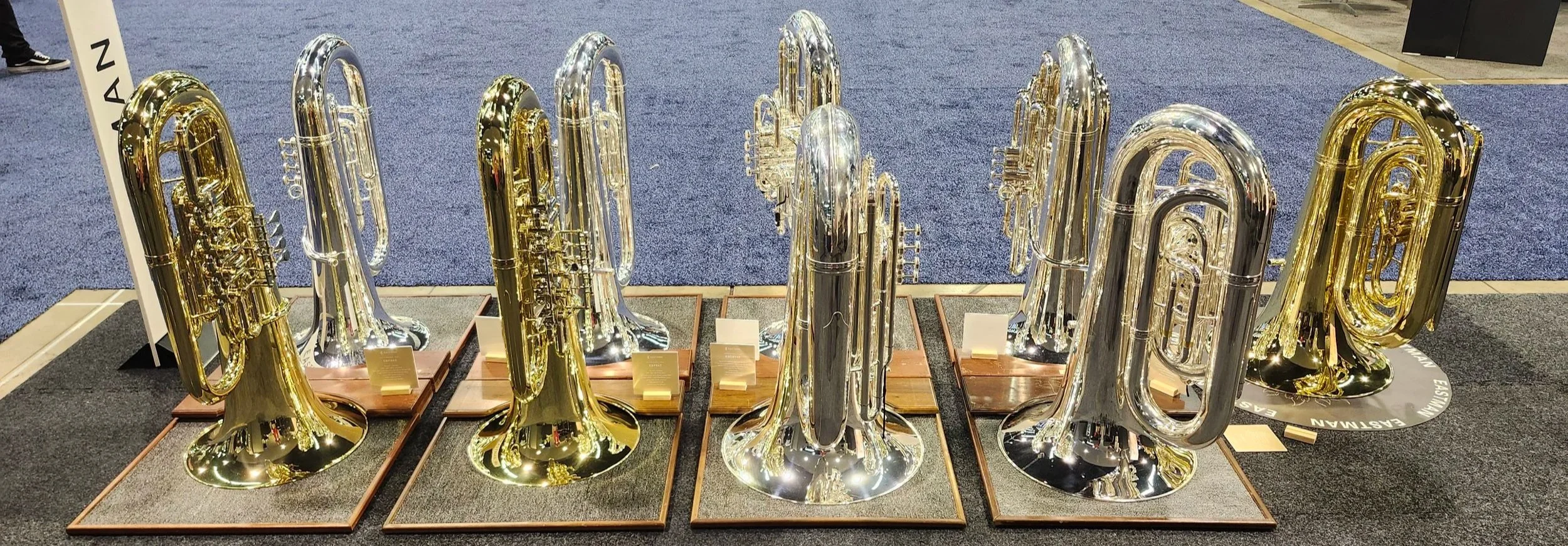
Eastman brought a bunch of tubas, and I tried the 834 (4/4 C) and 836 (6/4 C). Both were excellent, which is not surprising as so many people play Eastman tubas. I have yet to play one that isn’t top tier.
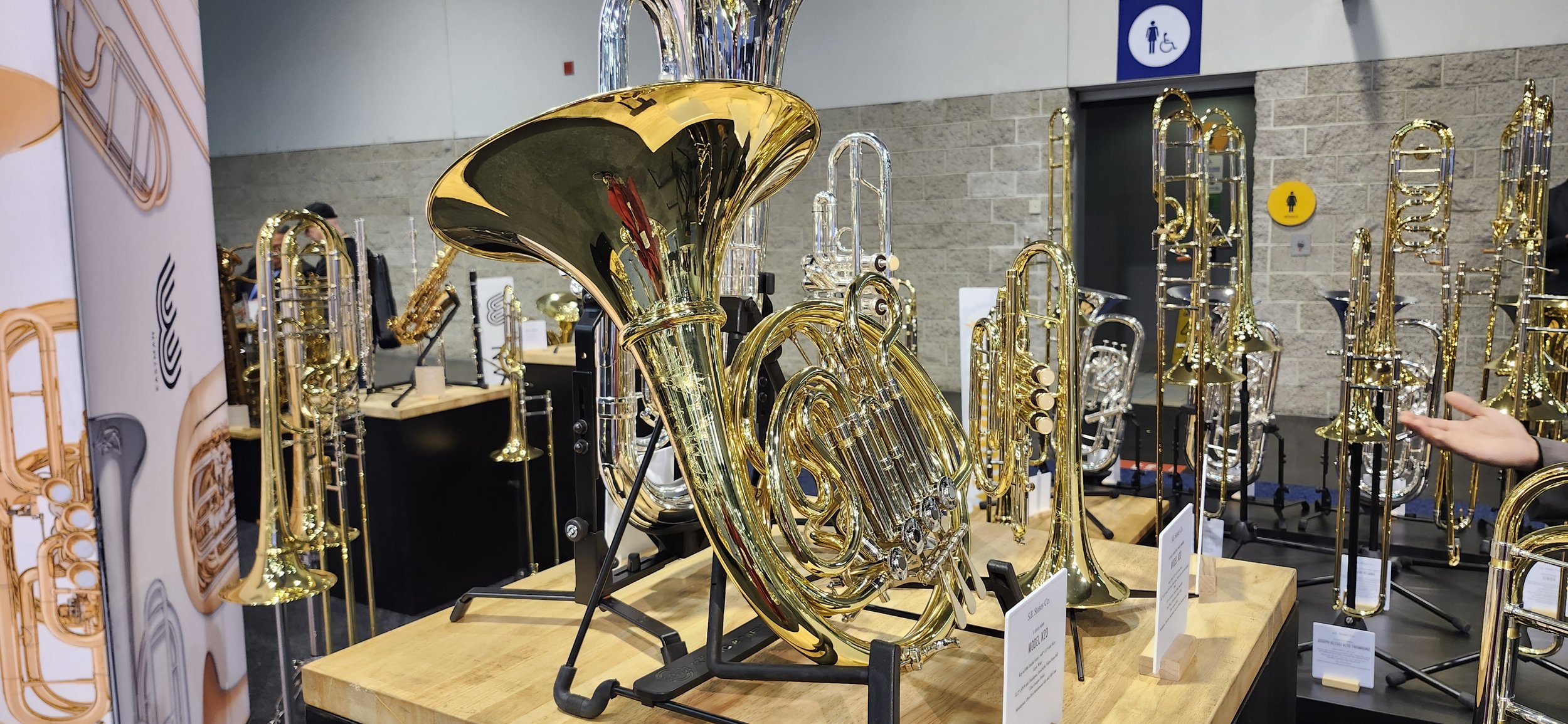
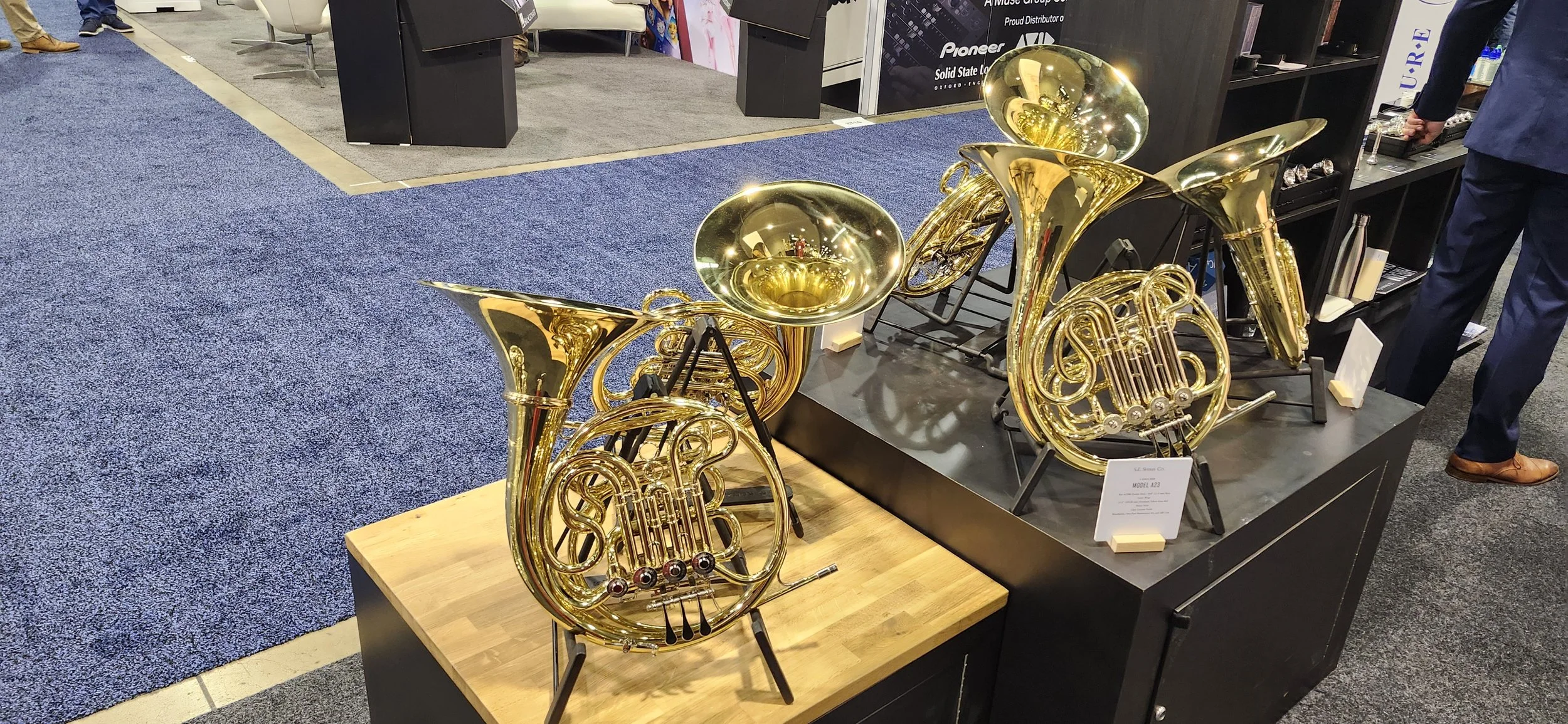
Shires also brought their new Custom series double horns, as long as the Q-series double horns from last year. All were yellow brass Geyer wraps, and I didn’t really like any of them. I had better luck with the two Shires flugelhorns, which were not great last year but much better this year. Both were very good, but I preferred the Q19.
I didn’t spend much time with the Shires trumpets and cornets this year as I tried them all last year, but I briefly tried a couple at random and found them very good as before. The 4S8 C trumpet was the standout for me.
Apart from the tubas, the only Eastman-branded instrument I tried was their marching mellophone, a clone of the Yamaha. I wasn’t a fan.
John Packer/Rath/Taylor/Sterling
The JP family booth was once again huge, with lots to try. A lot was the same as last year, but I still spent quite a lot of time at the booth trying everything. The reps also immediately recognized me from last year, which felt good!
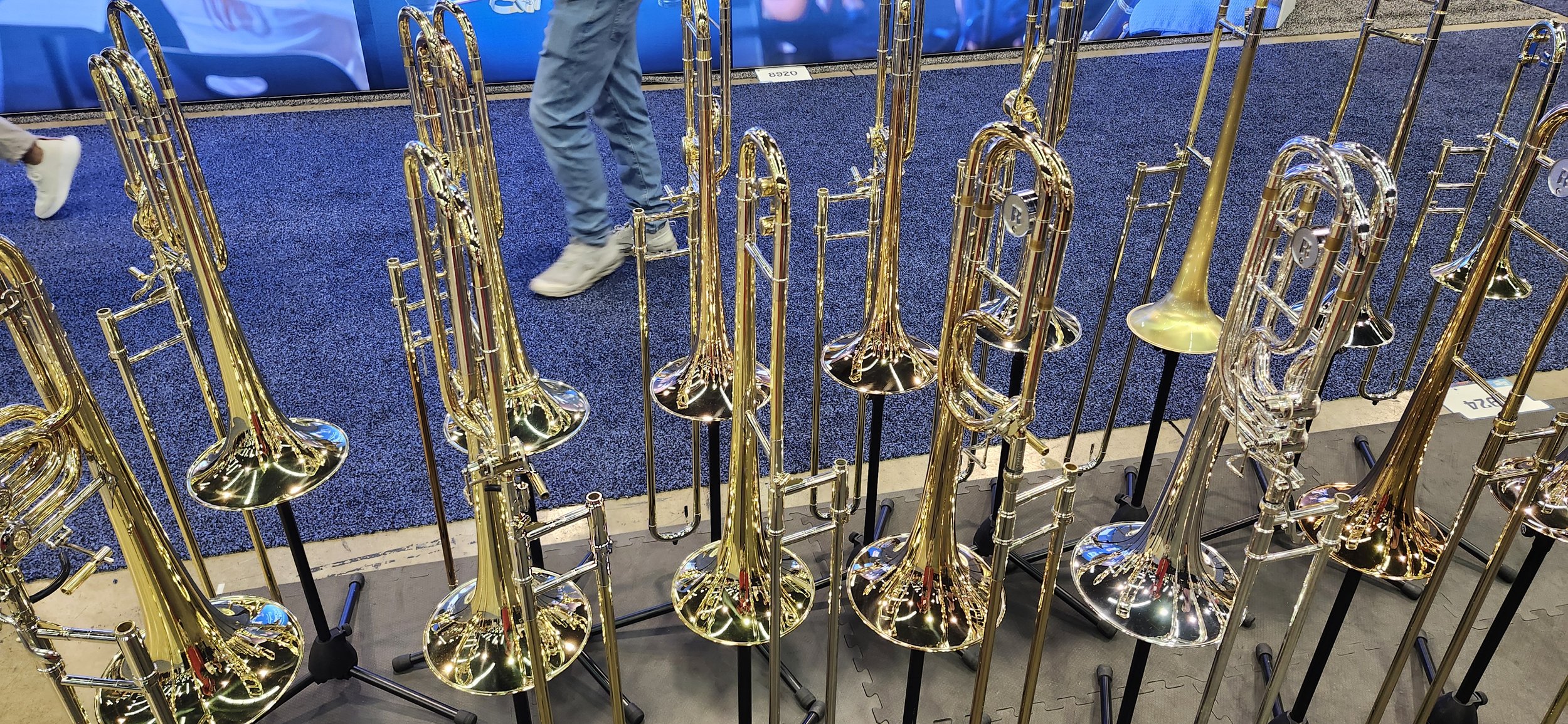
Rath had a fleet of trombones there, and my favorite was the yellow brass R2. Since my main small bore tenor is a King 3B, the R2’s .510” bore feels right at home, and I had lots of fun playing it. The Rath reps could apparently tell, because they ended up filming me playing it and posting it all over their social media, which was fun.
There was a nickel-bell R3F as always, which I appreciated because I can’t get enough of that instrument. I think there is some magic in Rath’s nickel bells, and they pair so well with the R3. I’d love to own a nickel bell R3F one day. As before, I found the R6 to be excellent and much better than the R4F next to it. The R9 and R9DST were good, but not my favorite examples despite being pretty standard configurations. The R11 alto was very nice.
The cheaper side of the trombones held some surprises. The John Packer 131, which is the lowest model in the range (and apparently identical to the BAC Elliot Mason student model), was excellent. I’d even say it was one of the best trombones at the booth. The JP Rath 231 next to it was also very good, as were the Rath R100 and JP Rath 333 bass trombone. I’d gladly own and play any of those instruments.
John Packer also recently acquired Sterling when the original single craftsman retired, and they brought along their new euphonium and baritone horn models. The euphonium was very good, but the baritone horn was exceptional. They said they have a tenor horn in the works, which I’m very excited about if it plays anything like the baritone does.
There were a ton of Taylor trumpets as usual, and there were some new favorites. The star for me was the short model Taylor E-flat trumpet, which was my favorite instrument in the entire show this year. It played SO easily, as all Taylors do, but it was another level on this particular horn. And despite being an E-flat, it sounded much bigger, like a big C or even B-flat. I was addicted. There was another heavier E-flat with a red bell and sheet metal bracing that I didn’t like as much, but that yellow brass E-flat is a new dream horn for me. The Orpheus cornets played great but didn’t have that dark British sound I look for in a cornet, and the B-flat trumpets all played very well but none stood out to me, except for visually. There was an incredibly heavy trumpet with a hexagonal bell that was wild to look at and even wilder to hold, but still played great, and of course there was the trumpet with sharp bends they’re famous for, which also played great. Sadly Taylor didn’t bring along the Phat Boy flugelhorn this year, instead only bringing their odd trumpet-shaped flugelhorn, which I didn’t like at all.
Finally, Taylor also had a trumpet with bent leadpipe so the bell pointed upward - essentially the sax-shaped trumpet thing (properly called a soprano normaphone) but done in a jankier way. I did not enjoy playing it, as it did not seem very well thought out even compared to the two Chinese normaphones present at NAMM.
Schilke/Greenhoe
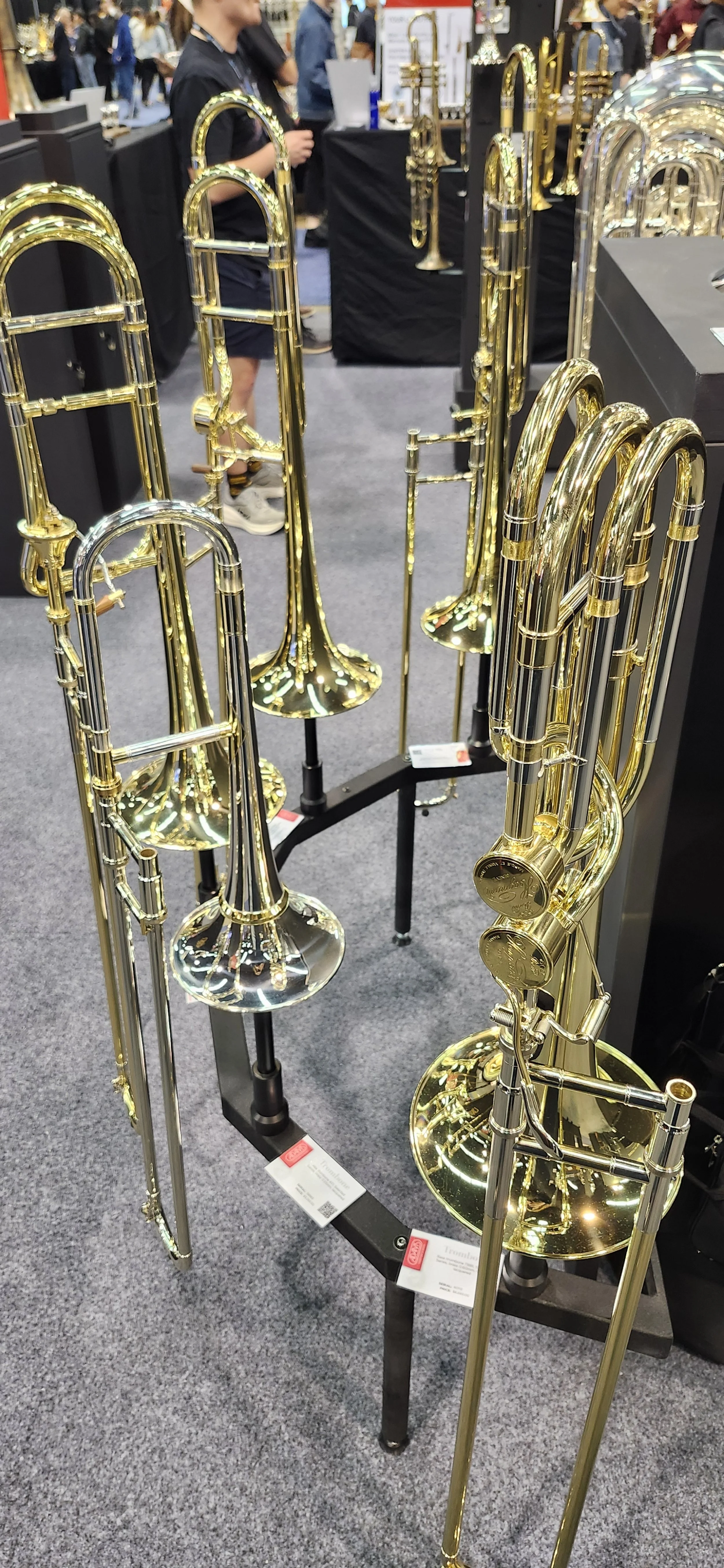
The Greenhoe trombones at NAMM this year were ALL some of the best in the show, just as they were at ITF last year. The Conn-style GC4 tenor/GC5 bass, the Bach-style GB4 tenor/GB5 bass, and the GC2-Y/GC2-N jazz horns, were all wonderful instruments that I would gladly play every day. My favorites were the tuning-in-bell GC4 tenor and the tuning-in-slide GC5 bass, but for my money all of the basses were better than any other bass at the show. Greenhoe really has it down right now, and it’s great to see.
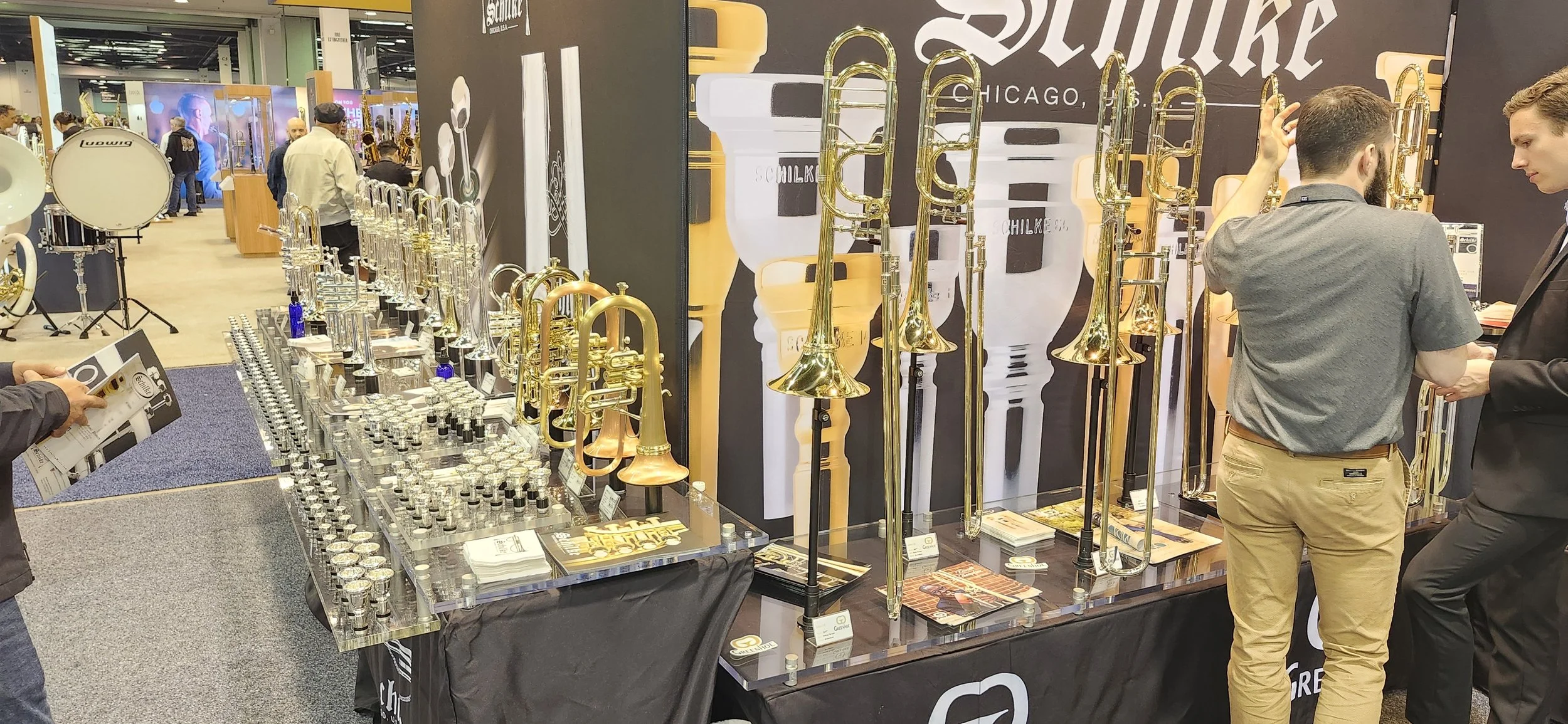
I didn’t spend too much time in the Schilke side of the booth, as it was all the same horns as last year, which I tried extensively then. I did try the two flugelhorns they had, one of which had a screw bell. Good horns, but can’t compare to the Adams flugels. I really like Schilke trumpets, and the brief time I spent on a few of them just told me what I already know. They are great!
Valkyrie (Opus)
Valkyrie/Opus was back with a big booth this year, and it was hard to get some time there as there were often banda players flocked around it giving impromptu banda concerts (which was awesome). A lot was the same as last year, including the brushed-finish nickel marching euphonium and their normaphone (sax-shaped trumpet). There were two new interesting things, though.
First was a purpose-built mellophone mouthpiece, not sold separately but sitting in their King 1120 clone. It had a much bigger rim than most modern mellophone mouthpieces, closer to the Conn 1 that the Conn 16E mellophonium came with. I found the rim very comfortable, but unfortunately the mouthpiece was wayyyyy too deep and the high register (or any edge to the sound at all) was completely nonexistent. Still, I was excited that a Chinese company bothered to make a new mellophone mouthpiece instead of just including a trumpet mouthpiece.
The other new thing was a very small sousaphone. This is an instrument still in contra B-flat just like a normal sousaphone, but MUCH smaller in every dimension. It’s also much lighter as a result, which meant I was happy to try it on and see what was up. It was a good player, with a much raunchier sound at low dynamics than most sousaphones. Not so much when I played it, but when the banda guys got a hold of it, they made it scream. It seems perfect for that kind of sousaphone playing, but I also had the thought that it would work as a sort of cimbasso with the right mouthpiece. It would be interesting to experiment more with it, but I was glad I got to try it and very happy a company would try something different.
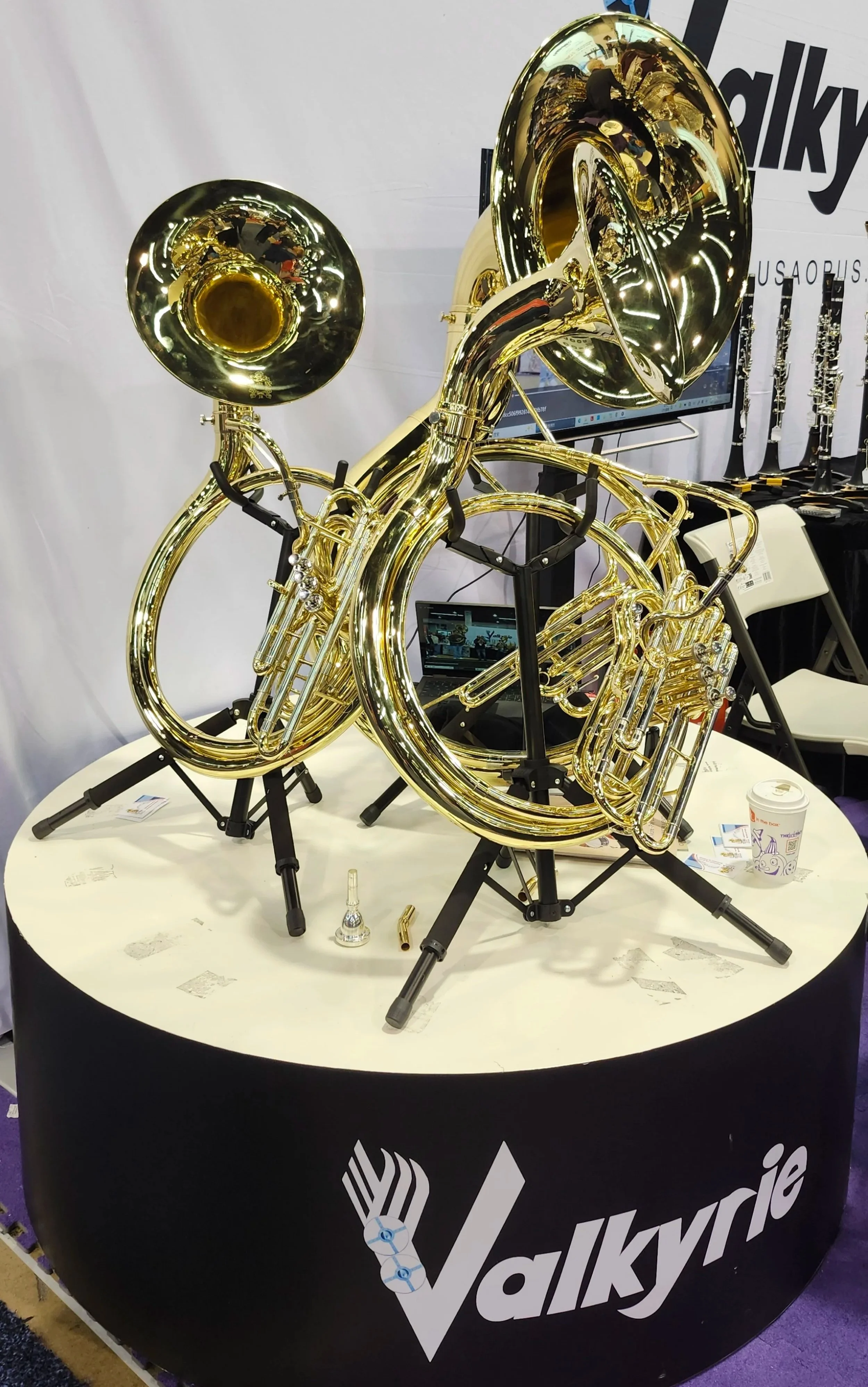
The rest of the horns were business as usual for Valkyrie. The normaphone, marching euphonium, marching baritone (Yamaha copy), and tenor horns were all good. The C valve trombone, in silver this time, was not as good of an example as in NAMMs past, but still decent. The King mellophone clone was fine, nothing special.
Yamaha
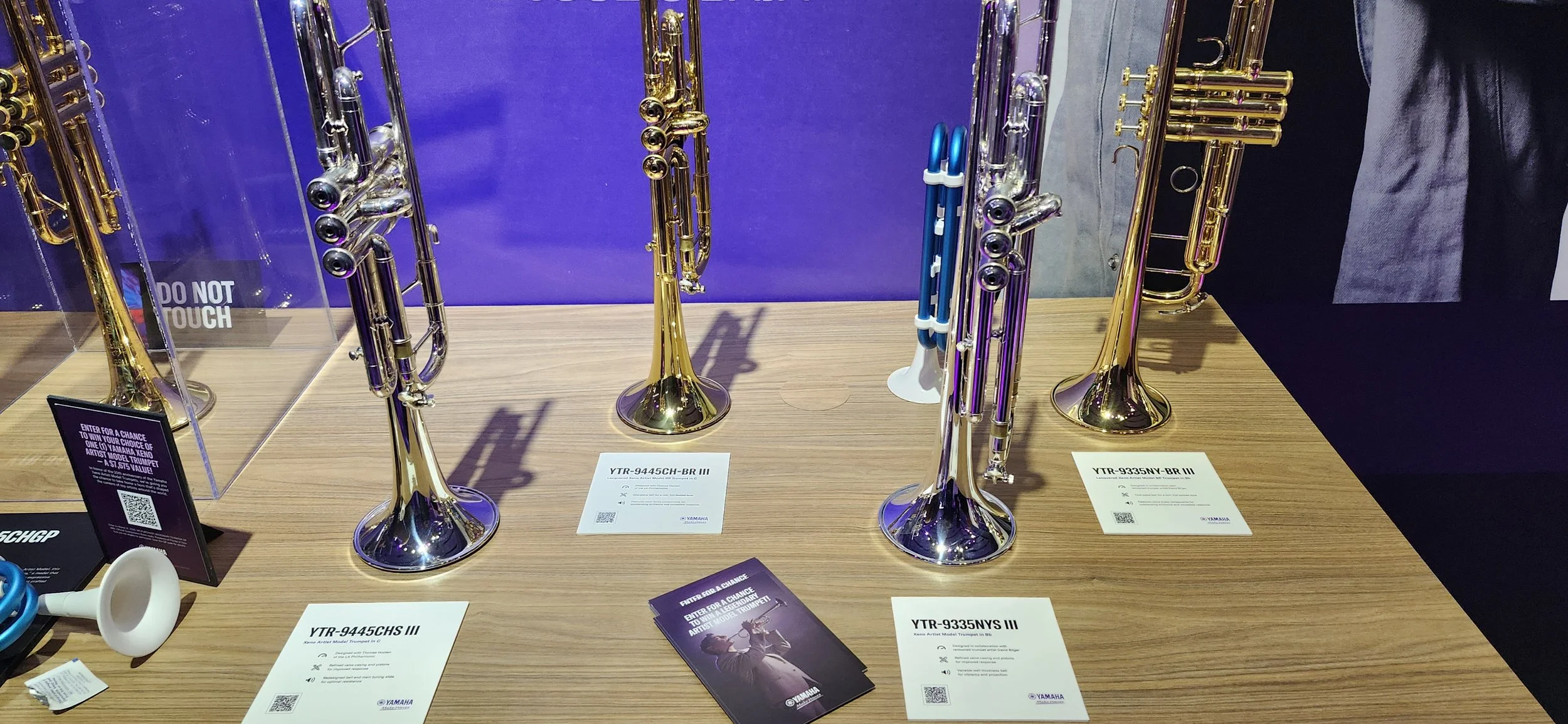
The brass portion of Yamaha’s huge 3rd-story booth essentially ran it back from last year, so there’s not much to say about most of what’s there. The BR trumpets are still the best in show, with the non-BRs only slightly behind, the YBL-835D bass trombone is still very good, the tenor trombones are still so unfun to play, and the euphoniums and tubas are still some of the best in the business. My favorite instrument at NAMM last year, the YHR-872ND Kruspe-wrap double horn, is still as pure magic as I remember. This year it brought a new stablemate, the YHR-871II Geyer-wrap double horn. This horn was just as easy and addicting to play as the 872, and one of the best factory horns out there, but ultimately I still think the 872 is the magic horn with the magic sound. For some reason, Yamaha also threw a plastic valveless Bb bugle in with the trumpets. It sure played notes!
ZO
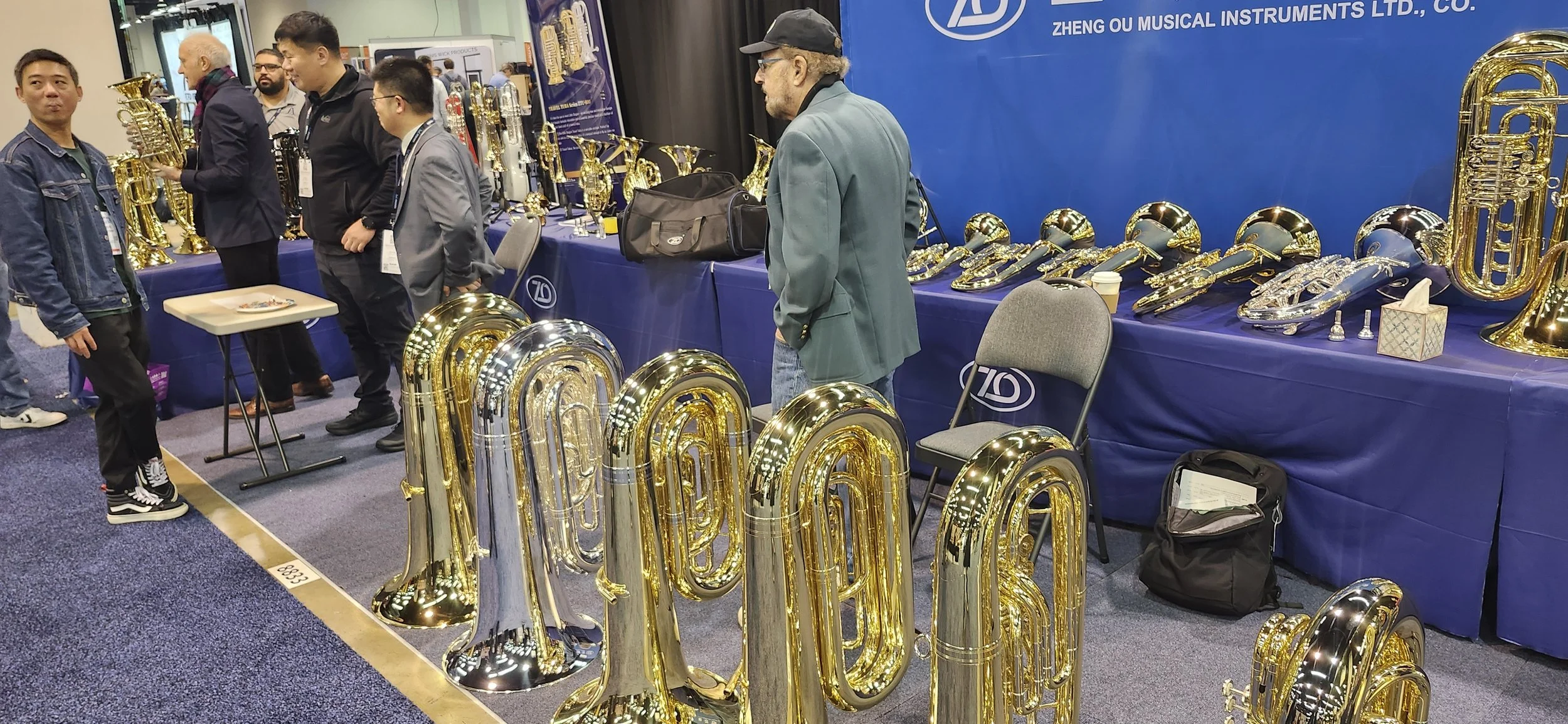
ZO is always one of the booths I look forward to the most at NAMM, because they have so many great and unique instruments. I started with the travel line of tubas, euphonium, and baritone, only spending a brief time on each because I’ve already played them many times. They are just as great as ever, sounding MUCH bigger than they are. The brass tubas also met expectations from previous years, and were excellent across the board. One difference from years past is the plastic tubas with brass valves. In previous years they did not play very well, but they must have updated the model because this year I thought they were very good. I would love to have one for polka gigs and really anywhere that a light tuba is advantageous.
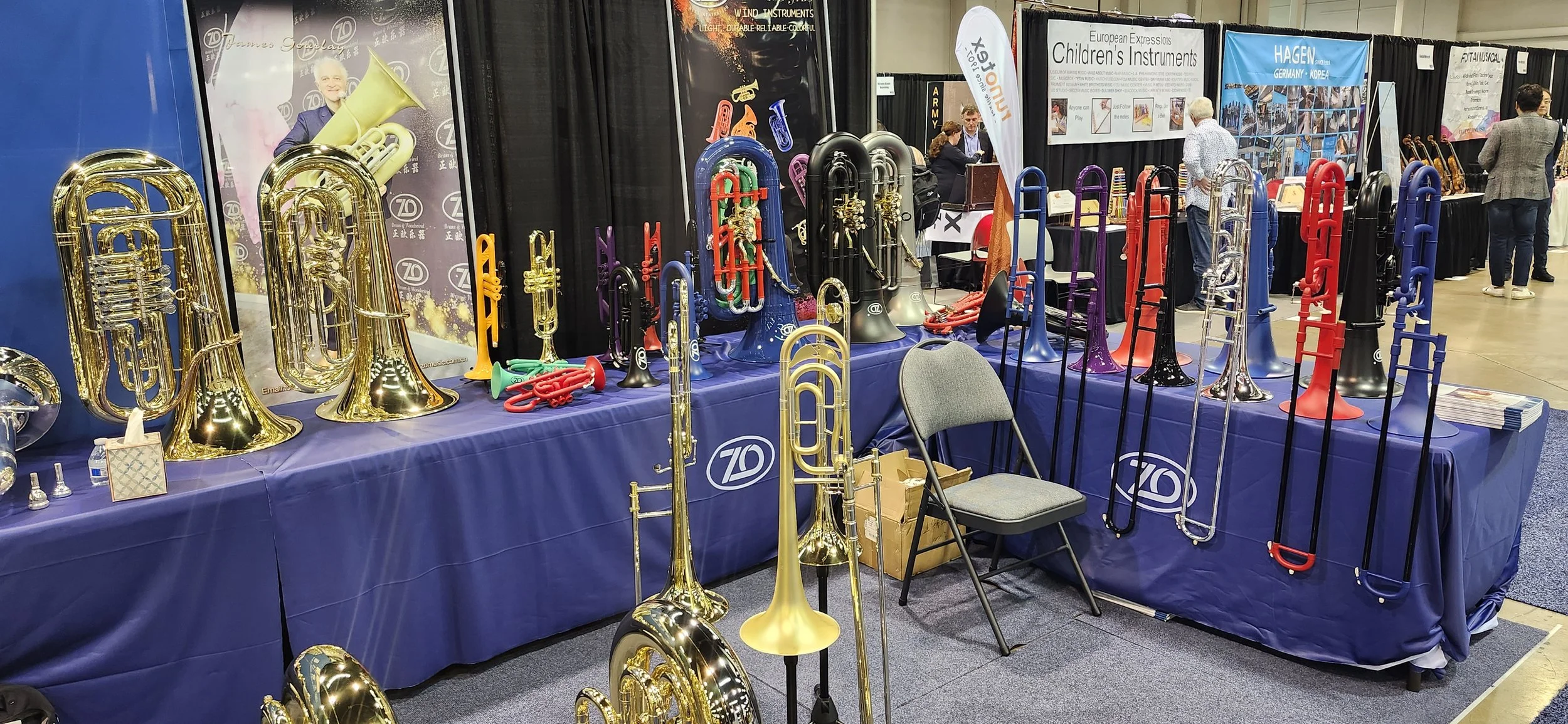
The compensating euphoniums were solid but nothing special, similar to some other Chinese euphoniums. I’d say the same for the brass French horns (single and double) that I tried - there was no standout like before. ZO brought along two new plastic single horns instead of the plastic double horn they had last year. One of the singles was in B-flat and the other in F. The F was not great, and was very out of tune with itself. But the B-flat was great! It played great, responded lightning quick, and had a nice bright sound that would be perfect for outdoor and jazz applications. I was a big fan of this one! And of course, extremely light, so nice for long gigs.
Continuing with the plastic instruments, they had multiple examples of their trumpet, cornet, and flugelhorn. I didn’t bother with the trumpet as I didn’t like it last time. The cornet was just okay, but the flugelhorn remains quite good and something I could absolutely envision picking up as a car and travel instrument for the right price. The plastic euphonium and F-attachment trombone were the same story as before (not great), and the plastic small bore tenor with the King-style curved brace was also the same as before (amazing). I actually wanted to buy one of the plastic small tenors, but when they told me they only accepted cash I lost interest. Who’s going to walk around NAMM with hundreds of dollars in cash??
Anyway, the brass trombones were a mixed bag, with the small bore being the standout. Just like last year, it was very good and fun to play.
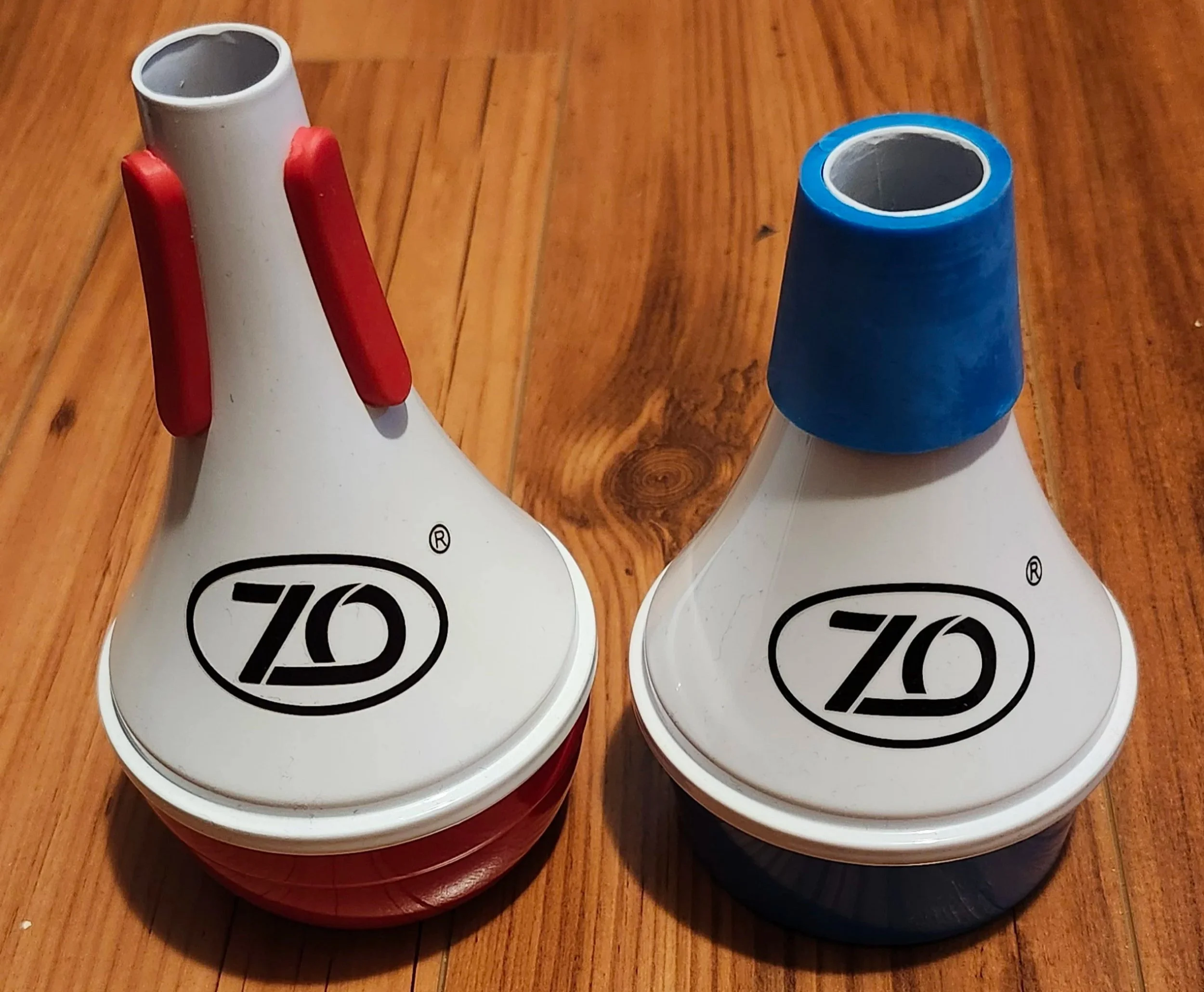
I did end up buying two trumpet mutes from ZO. They were there last year, I liked them, and kinda regretted not buying them afterwards. So when I saw they were here again this year, and only $10 each, I gave them $20 cash and walked out with them. They are good, fun little plastic mutes!
Other Manufacturers
As always, NAMM featured a variety of Chinese manufacturers trying to break into the American market. There were some interesting instruments this year!
Hunter had a small booth like they always do, and while I found their compensating euphonium and double horns meh at best, their King mellophone clone was the best one there. It was very good!
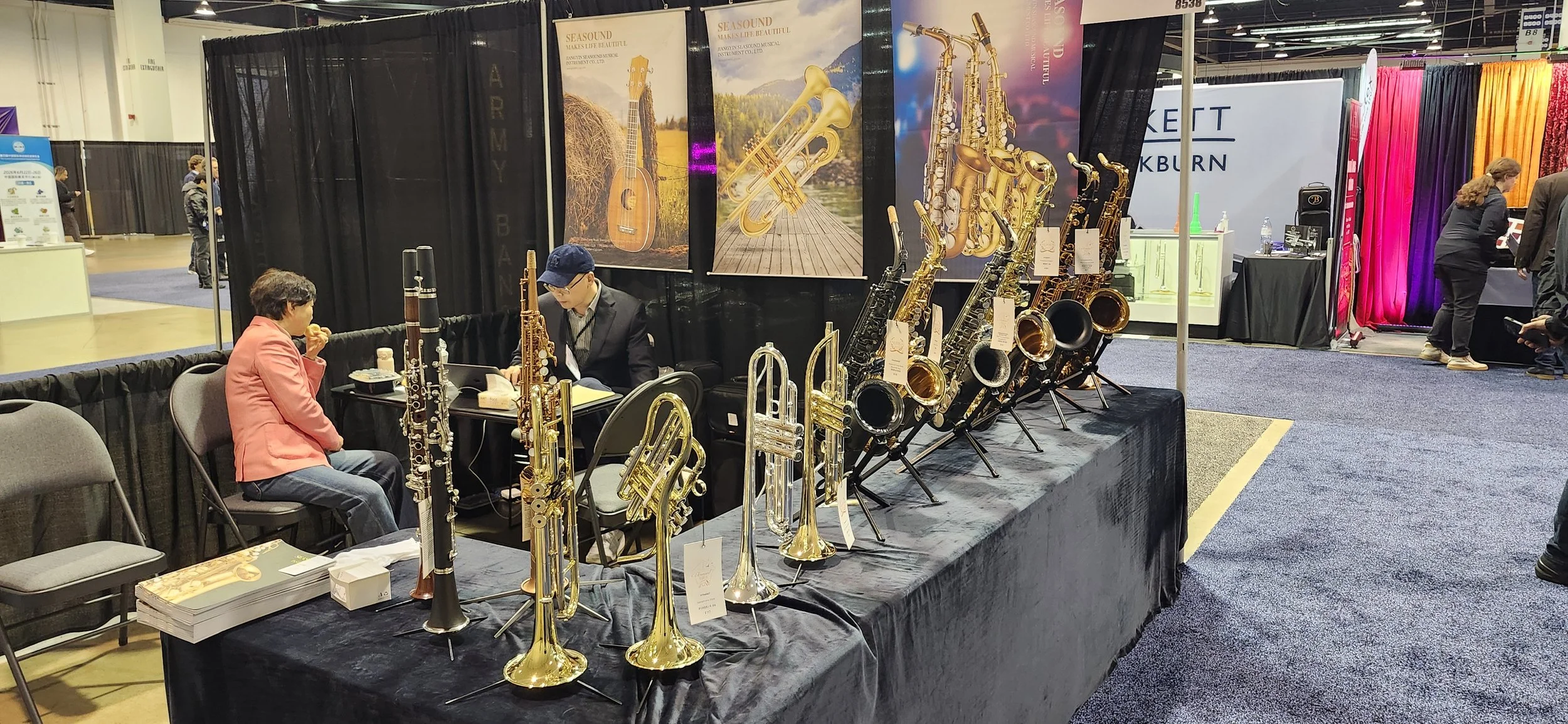
Jiangyin Seasound only had a few brass instruments, but one of them was a normaphone! It was the best out of the 3 there (Seasound, Valkyrie, Taylor) by a big margin, and the only one that really felt like an instrument I’d really play instead of just a gimmick. It was excellent! Their normal trumpets were very good as well, and they even had a clone of the Taylor trumpet with the sharp bends. I was impressed with everything they had on offer.
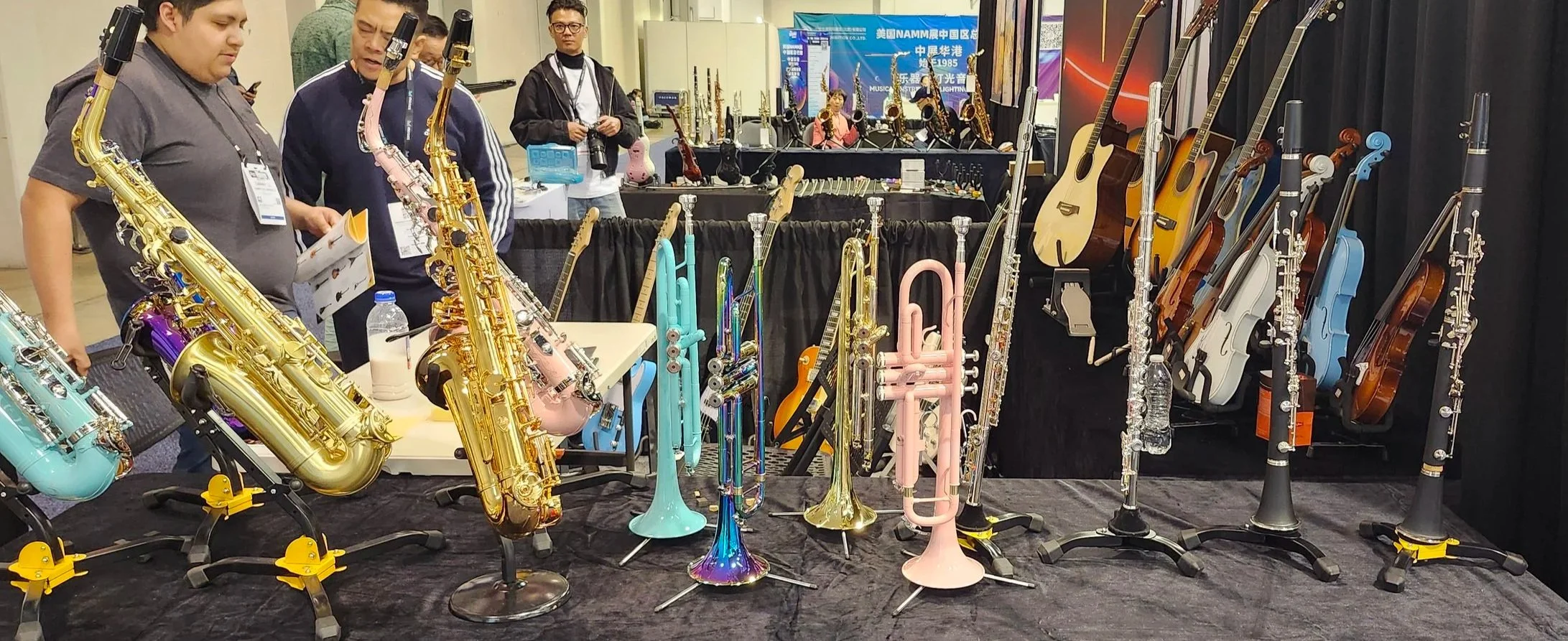
New Bee Music Supply was an interesting one, only carrying standard B-flat trumpets but in a few crazy finishes. My favorite was the pearlescent color-changing finish. They were all pretty good instruments, nothing to write home about it but fun party horns.
Conclusion
That was my experience at NAMM this year! I didn’t try everything, especially a lot of the things that were there in years prior, but I still spent a full two days going around trying a lot of stuff, running into a bunch of friends and colleagues, and generally having a great time. It was also exhausting though! That much walking will take it out of you, but it’s always worth it.